THE Church of England’s vision is that every person in England has access to an enriching and compelling community of faith. For clergy, this responsibility is formalised in the cure of souls: a duty of care and mission to every person in the parish, not only to those who already gather.
Yet step into many parish churches on a Sunday, and the contrast with the surrounding neighbourhood is often striking: congregations that do not reflect the social, cultural, and ethnic range of the local community. If the parish is to take the cure of souls seriously in today’s England, that calling now includes learning how to become an intercultural parish church.
During the past half-century, the UK has been transformed. Globalisation, migration, urban expansion, and affordable travel have accelerated the movement of people. Added to this are those seeking asylum, including many arriving irregularly from countries marked by conflict or economic instability. This diversity is not a passing phase, but a new settled reality. Cities, and an increasing number of towns and villages, now host tens, sometimes hundreds, of ethnocultural groups, each with its own customs, languages, and, in many instances, distinct Christian traditions.
The difficulty of reflecting the whole neighbourhood is not unique to the Church of England; for example, some black-majority churches report a similar challenge, often drawing mainly from their own community rather than from the wider breadth of the area.
Still, many Anglican parishes respond generously by sharing their buildings with denominations that serve particular communities and with ethnolinguistic congregations. These arrangements can be important expressions of hospitality and partnership. Nevertheless, they still fall short of the parish ideal: a local church that gathers and serves all who live in its area.
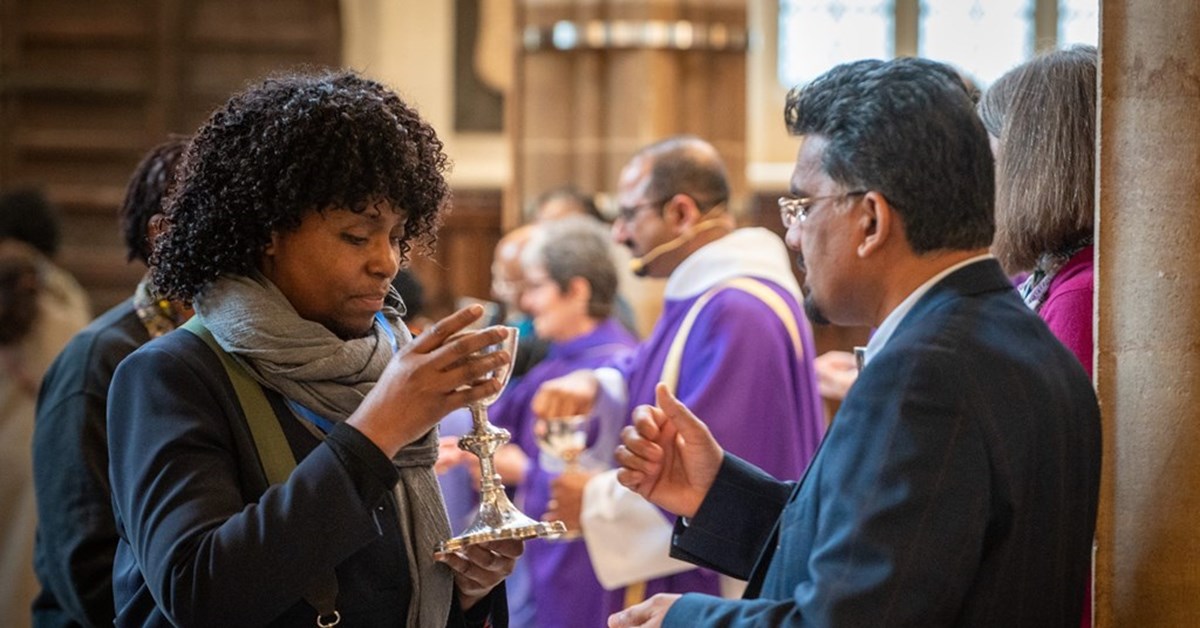
SOME churches are already taking deliberate steps in this direction. During the past couple of decades, a number of congregations have become multicultural, welcoming people from different backgrounds into the life of the church. A smaller number are moving further towards becoming intercultural: communities in which those who join not only participate but help to shape the worship, leadership, and shared imagination. One bishop summarised the difference neatly: a multicultural church is where you are invited to the party; an intercultural church is where you are allowed to share your dance moves.
This shift is not a departure from Christian tradition, but a recovery of it. The same convictions as once sent missionaries to other nations should now inform local parish ministry. Responding to the belief that Jesus Christ is dismantling the barriers that divide people (for example, Galatians 3.28), past generations crossed traditions, learnt languages, and adapted their practices so that others could hear the good news in their own culture.
The geography is different, but the calling is not; the nations are now in our parishes. The New Testament’s vision of a people from every tribe and language gathered before God is not only a hope for the future, but also a summons to begin living towards that reality now. The intercultural instincts that shaped global mission now have a rightful place in parish life, guiding how we think, plan, and practise ministry with the people who live near by.
WHAT might this look like in practice? Emerging intercultural churches are discovering, gradually and imperfectly, what it means to be shaped by all who gather rather than by a single group.
None of this is simple; it is slow, sometimes uncomfortable, and we are still learning what genuinely helps. On a Sunday, it may mean inviting people to pray the Lord’s Prayer in their first language, or drawing appropriately on worship from the global Church, rather than relying on a single tradition. It means noticing who stands at the front and who is involved, so that those who lead reflect the breadth of the community that the church hopes to serve. It can mean preachers’ considering how tone, humour, and examples land across cultures, and leadership teams’ learning to ask who is missing and why.
The day-to-day task for clergy and senior church leaders in the 2020s is to set an intercultural tone through their language, choices, and expectations, making it clear that the gifts of others are wanted, welcomed, and taken seriously.
We now live in a mixed ecology of churches, with varied traditions and expressions connecting with different people in different ways. One congregation cannot reach every cultural or language group, and other denominations share many of the same questions and responsibilities. Even so, the parish remains at the centre of the Church of England’s identity and ministry.
A multicultural society invites the Church to widen its reach. A parish that grows interculturally moves towards a Church of England that more fully reflects the diversity of its communities. And, when a church does this, it signals to its neighbours that it is genuinely a church for everyone.
Canon Christian Selvaratnam was born in London into a dual-heritage family. He is Dean of Church Planting at St Hild College and serves as an NSM in his parish. He is writing a book on the intercultural church.