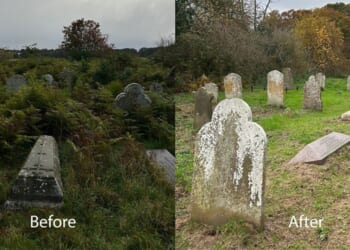
EVER since the pandemic, I have been part of a group of neighbours cultivating a small plot of land in our street. We grow fruit and vegetables, have a small wildflower meadow (“patch” might be more accurate — something that you can walk round in less than a minute is probably not a meadow), and a community composting area.
The inspiration for this humble little project came as lockdowns ceased and people began to return to something like their normal lives. It seemed to many of us that we had discovered community and solidarity during lockdown in ways that we had not experienced before, and that this was something worth keeping. But how? In some small way, the community garden became a place where the flame of that local, neighbourhood, solidarity was kept alive.
For most, if not all, of us, 2020 is not a time that we would want to return to. As the Covid inquiry hearings continue, we also become more deeply aware of the pain of that time and its lasting consequences for many people. Yet what we glimpsed, briefly but powerfully, in those days was something of a world lost: a world of local connections and local support, care, and attention to one another and the neighbourhoods that we share. Many saw that, and saw that it was good.
What had brought that world to our attention again? A crisis, yes. A need to care for one another until the crisis was averted, absolutely. But, more deeply, this world of solidarity flowered again in the space created by a pause in the march of modernity, as planes were grounded, stock markets were stilled, and shops were closed. The noise of global capitalism ceased. In the silence, the local found its voice.
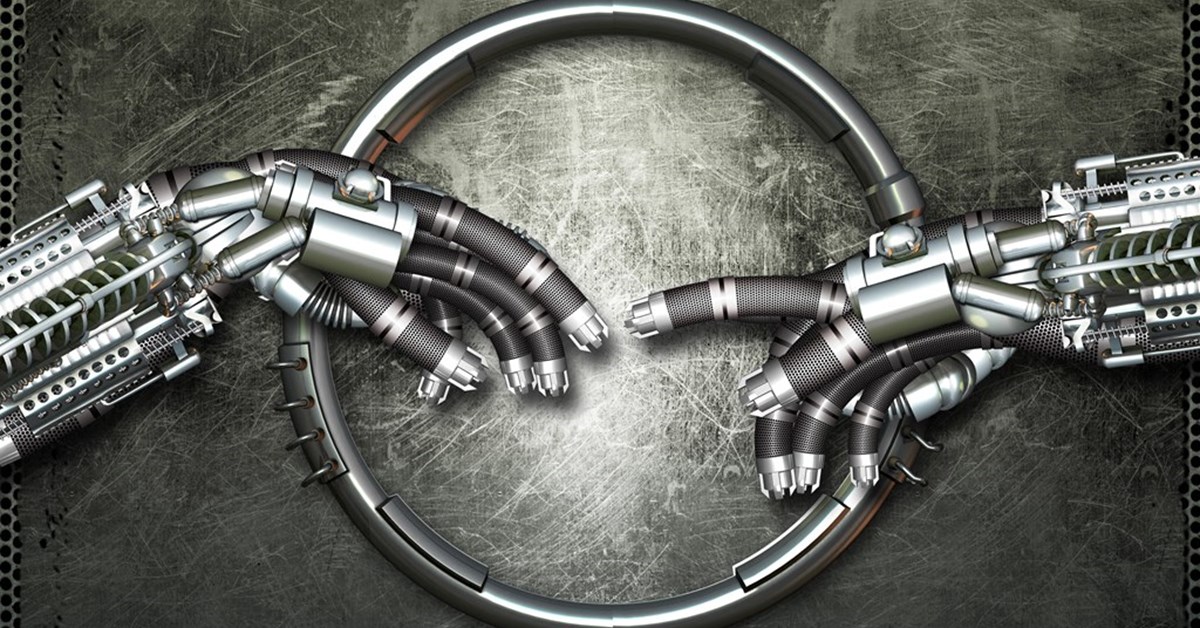
IN HIS most recent book, Paul Kingsnorth calls the system of modernity “The Machine”. The logic of The Machine is: the aim of endless economic growth, the Creation (including humanity) as fuel for economic growth, and science, technology, and corporate agency as the means of advance. Furthermore, the growth and efficiency of this global logic happens through the colonisation of the local. To smooth the passage of The Machine around the globe, the local — with its traditions, crafts, myths, stories, cultures, and local ties — must be uprooted.
Maybe, just maybe, however, there are signs of a disillusionment with The Machine. Perhaps the pandemic revealed The Machine for the spiritual desert that it is. The Bible Society’s report The Quiet Revival alerts us to a movement of young people wandering into places of worship looking for meaning. Those swimming in the limitless fluidity of modernity are looking for something formed, something real, to cling to. Religion, tradition, communities of faithful people who are still trying to work out how to live lives of faithful obedience to Christ in a particular place — these are islands of refuge in the wild seas created by The Machine.
The witness of the Church in these times, then, must be to help people become rooted again: rooted in God, rooted in one another, rooted in place — these three together and in dynamic with one another. This, however, will require churches also to discover what it means to be rooted again. Machine thinking has influenced our own. The imperative of church growth, for the sake of the Church, turns the local into a resource for our techniques and technologies (read “projects and programmes”), with all the accompanying metrics and management that take so much of our attention away from the real business of being in relationship with our communities.
THAT managerialism has been a theme in the conversation regarding the transition from one Archbishop of Canterbury to another is, therefore, significant. The degree to which managerialism — strategies, targets, outputs, and the rest — has crept into our culture suggests a deeper colonisation with The Machine than many of us feel theologically at ease with. Have we lost our roots? Not only with the gift of the local, but with our trust in a God whose work of salvation always begins in the unlikely and the particular.
In my research evaluating the work of pioneering parishes (PP), I saw churches inspired to become rooted again. PP helps parishes to rediscover the roots of their life in community, enabling parish priests and their congregations to extend the care of souls into all the parish. PP is inspired not by the latest model or programme from elsewhere, but by the encouragement to put out roots into the community, to become entangled again in the soil of the parish, and to listen to and to shape the church’s life around what is heard.
In one parish, such a disposition has renewed the congregation whose church was near closure to become a vibrant worshipping community embodying the rhythms and seasons of its locality — and, yes, growing numerically, too.
SHIFTS in the imagination of mission are hard to quantify, and much of what then takes place will not lend itself to being registered neatly on a spreadsheet. This is the stuff of solidarity, relationship, the Kingdom, and love. This is the sort of thing that grows when The Machine — with its thinking — is dethroned: the sort of thing of which the Church is the taste and the sign.
Of course, when we think of things rooted, we may also think of the wheat and the tares (Matthew 13.24-30). Seeing weeds among the wheat, the servants ask whether they might uproot the weeds. But, no, the two must grow together: otherwise, uprooting one will uproot the other. We live entangled in the roots of modernity, and yet we must seek to demonstrate the Kingdom distinctively in the sight of the world.
Twenty years ago, Wendell Berry argued that “The next division of the world will be between people who wish to live as creatures and people who wish to live as machines.” Fundamentally, we must live as creatures, for whom the world is a gift, and our communities are the soil of our lives, not the resource for our ambitions. We must be rooted in God, one another, and places, and demonstrate to the world that to be rooted is to be human.
Canon Paul Bradbury is a freelance writer and researcher, and an associate tutor in pioneer ministry with Sarum College, CMS, and RCC Cuddesdon.