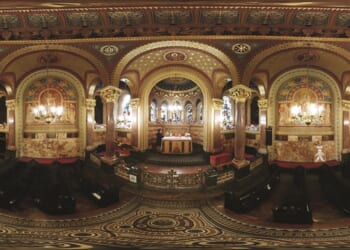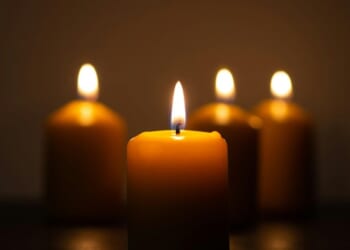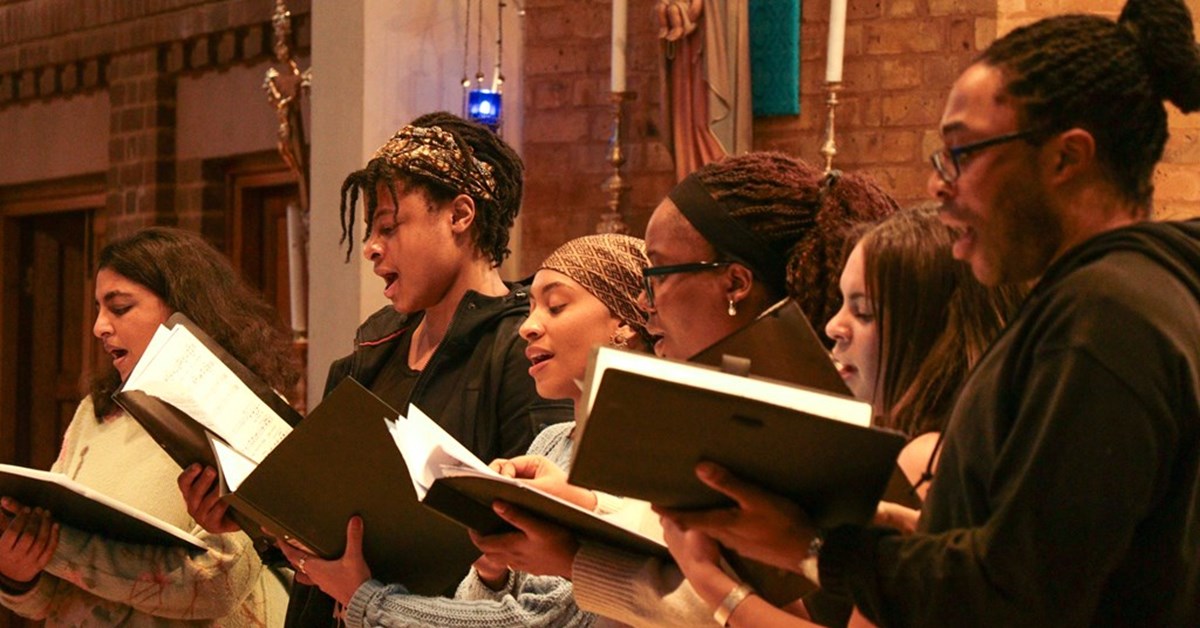
WHAT began as a Christmas celebration in a rum bar in Brixton, in south London, has grown to become a highlight for those with a love of opera and classical music. One evening every December, the Black British Classical Foundation (BBCF) hosts its annual Christmas concert in a church in the capital (this year’s took place at St Mary’s, Newington, in Kennington). The concerts follow the traditional format of nine lessons and carols, but with a twist — especially when it comes to choosing the lessons.
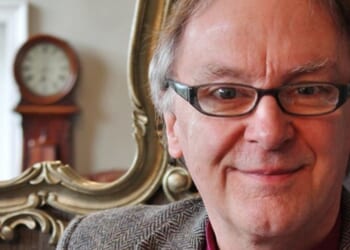
“Our Christmas programmes are very much about trying to find new ways of telling an old story,” the BBCF’s founder, Vincent Osborne, explains. “We try to find fabulous carols with new arrangements. For the lessons, we look at people who were definitely at the birth of Christ, but aren’t written about in the Bible, and try to imagine what their response to this story would have been.
“One of the best ones we’ve had was Joseph’s mother’s story. We’re convinced that she wouldn’t have taken what happened to her son lightly. When she first meets Mary, she thinks Mary is gorgeous and lovely. But, when Mary suddenly announces that she’s pregnant but has not being touched by a man, Joseph’s mother might think, ‘Does she think I’ve fallen off a tree?’
“So we explored that, but then the twist at the end was that Joseph’s mother stops thinking negatively about Mary, and instead says, ‘Of course my son has taken her in. He’s going to look after her because he’s been brought up well.’
“We’re just trying to find ways to get people to think about the Christmas story; a slight change to your normal, traditional way of looking at it, but still telling the story. That’s the important thing.”
THE BBCF’s carol service grew out of a tradition that began in Brixton in the late 1980s and early 1990s. At the time, after serving in the Royal Air Force, Mr Osborne was running a popular chain of rum bars and restaurants called the Brixtonian.
“When I left the Air Force, I moved to London to work in theatre,” he says. Facing a lack of opportunities in theatre, Mr Osborne set up a bar and restaurant in 1989 and opened the first Brixtonian Rum Shop Café, which sold more than 300 varieties of rum. The performing arts remained close to Mr Osborne’s heart, and the Brixtonian regularly donated money to families whose children wanted to study music at institutions such as the Curtis Institute of Music, New York.
“Every Christmas, we’d have a carol service in the bar,” Mr Osborne says. “Those whom we’d supported financially would come in and lead a couple of carols. All our barflies, and those who supported us through the year, always came — partly because we always gave away free drinks and mince pies. Without us having to preach to anyone, it was a subtle way of saying, ‘This is what we believe; come and join us.’ It’s amazing how many people to this day will call to find out where we’re having our Christmas concert.”
Mr Osborne decided to close the Brixtonian bars after 20 years, after the death of his business partner. But he still felt the urge to support aspiring musicians, particularly those seeking to build careers in opera and classical music, and decided to create a formal charity. “That was the birth of the Black British Classical Foundation,” he says.
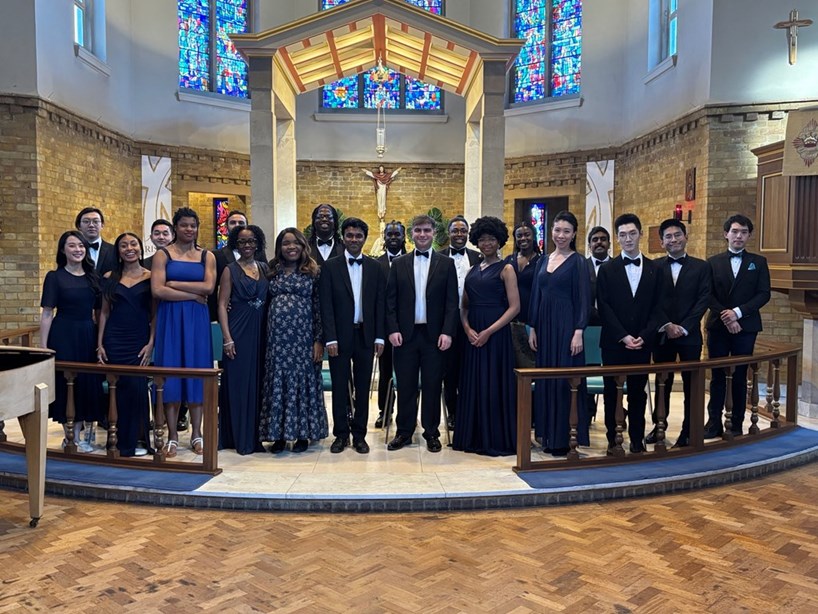 The BBCF Voice of Black Opera competition
The work of the foundation is “to develop young black and South Asian opera singers from around the Commonwealth”, he explains. “Apart from the concerts that we give virtually every other month, and the work we do in schools, in prisons, and in senior citizens’ homes, we have an international competition every two years, called the Voice of Black Opera [VOBO].”
They encourage singers around the Commonwealth to send in audition tapes. “The 20 best tapes are then given to professional ears — to professionals such as casting directors and artistic directors of opera companies around Great Britain. They whittle them down to the best five. Those five then are invited to perform in front of a panel of people from the industry; each one sings for 20 minutes, with a full orchestra.
“There are two prizes: the main winner receives the Sir Willard White Award and £10,000. The other prize is the Samuel Coleridge-Taylor Award, which is for the person who sings the best rendition of a composition by a black or South Asian composer. When it’s all done, I go into a dark room for a year to recover.”
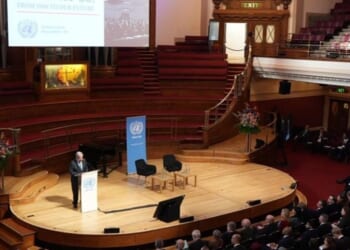
THE next “Voice of Black Opera” takes place in 2026; the gala finals will be held at the Fairfield Halls, Croydon, on 23 March. “It will be a stunning evening, with fantastic singers,” Mr Osborne says. Later in the year, the BBCF intends to start a long-dreamt-of project, the Black Proms. “Eventually, we’d like it to be one or two weeks long, but, to start with, we’re doing three days. Friday night will be jazz, Saturday will be opera, and Sunday will be spirituals and sacred music. We’re currently trying to find a sponsor.”
Negro spirituals also feature prominently in the BBCF’s work. “I think that as a Black organisation, it would be remiss of us if we didn’t look at the roots of who we are as a people, and what we’ve been through,” Mr Osborne says. He notes a tendency to cast spirituals aside, “even though they are fabulous, absolutely brilliant songs”. He says: “When they’re sung properly and with integrity, they can be the most moving, poignant pieces of music; music with a message.
“During my air force days, when I was based in Scotland, I used to go to a Baptist church called the Charlotte Chapel. They had this one thing they always used to say, and that was ‘The message in song’. To me, that’s what Negro spirituals are: the message in song.”
At the moment, the day-to-day work of running the BBCF is carried out in Mr Osborne’s home, in south London, but he hopes to be able to move into a dedicated office. He also dreams of setting up a boys’ choir. “Young boys are the hardest group to reach and to keep interested,” he says. “I’d like for them to experience music outside of their normal genre. There’s nothing wrong with rap and all those things: it’s about giving them something else. You don’t want chicken every day. A little bit of beef or fish is good, too.”
ALTHOUGH the BBCF was not founded as a faith-based organisation, faith does play a key part in Mr Osborne’s work it. “I wouldn’t be able to continue to do this but for faith,” he says. “Personally, as the leader, I’d say faith is the core of my being, and that’s what keeps me going. You need it just to withstand the obstacles that are put in your way for one reason or another: prejudices, preconceptions, and so forth.
“The other side is trying to get members of the public to support us, to attend our concerts and spread the word. That is very hard, especially when you’re a charity living hand-to-mouth. What we need is a budget to market, and we just haven’t got that. . . That’s what the charity desperately needs.”
He describes it as “an ongoing battle, fund-raising, trying to increase awareness of who we are, what we are, and what do we do. And, also, trying to break down stigmas amongst our own community, and to stop people thinking that opera is only for white people. We’re constantly trying to reach new audiences from the under-served and underrepresented communities.
“The payback is seeing the talents that we find going on to perform at the English National Opera, or the Royal Opera House, or some other big classical stage somewhere else in the world. You just sit back, knowing that you’ve done a little bit to help in that process of getting them there.”