IN AN East Sussex village, the church and parochial church council are providing what the Department for Education says that every school should be delivering. Its Programme of Study for Music says that “Music is a universal language that embodies one of the highest forms of creativity.”
Regarding Key Stage 2 (children aged seven to 11), it continues: “Pupils should be taught to sing and play musically . . . play and perform solo and in ensemble contexts using their voices and playing musical instruments.” But a question hangs in the air: is this an ambition or an obligation?
Education budgets are stretched taut. Tighten a violin string without care and it will snap and, silenced, be capable of delivering neither note nor melody. Only in larger primary schools may staff recruitment include a music teacher. In smaller primaries, the presence of someone who has some training and qualification in music teaching is most probably due to just good fortune. The focus will generally be on numeracy and literacy (and, of course, good teaching).
But this is not to deny the desire or the need. Most head teachers would feel blessed to have in their team someone with musical training, capable of filling the classrooms and corridors with joyous singing.
ST DUNSTAN’s lies in the parish of Mayfield and Five Ashes, East Sussex. Both villages have primary schools. St Dunstan’s itself has a strong musical and choral tradition, and hosting many of the biennial Mayfield Festival concerts.
In an innovative project, “Mission Through Music”, still in its infancy, the PCC has funded the director of music at St Dunstan’s to go into the two primaries with the aim of encouraging these young people to join the choral life of the church. While the Church of England needs young people, the broader aim is to introduce children to the joys of choral singing and the power of collaboration: to sing in four-part harmony, learning the rich history of music — largely, but not exclusively, that of the Church.
Additional funding through a trust has now been made available for choral bursaries. Just one has been granted, to date. A small fee, as an incentive, is paid to the lucky recipient, who has to show commitment and endeavour, attending all rehearsals, singing with the church choir for two services a month, and learning and practising the music. The choir rehearses in the church after school on Mondays, which, one girl says, is now her favourite day of the week. Special moments for all were receiving their cassocks — and, even more, their surplices (through donations). RSCM medallions are yet to come.
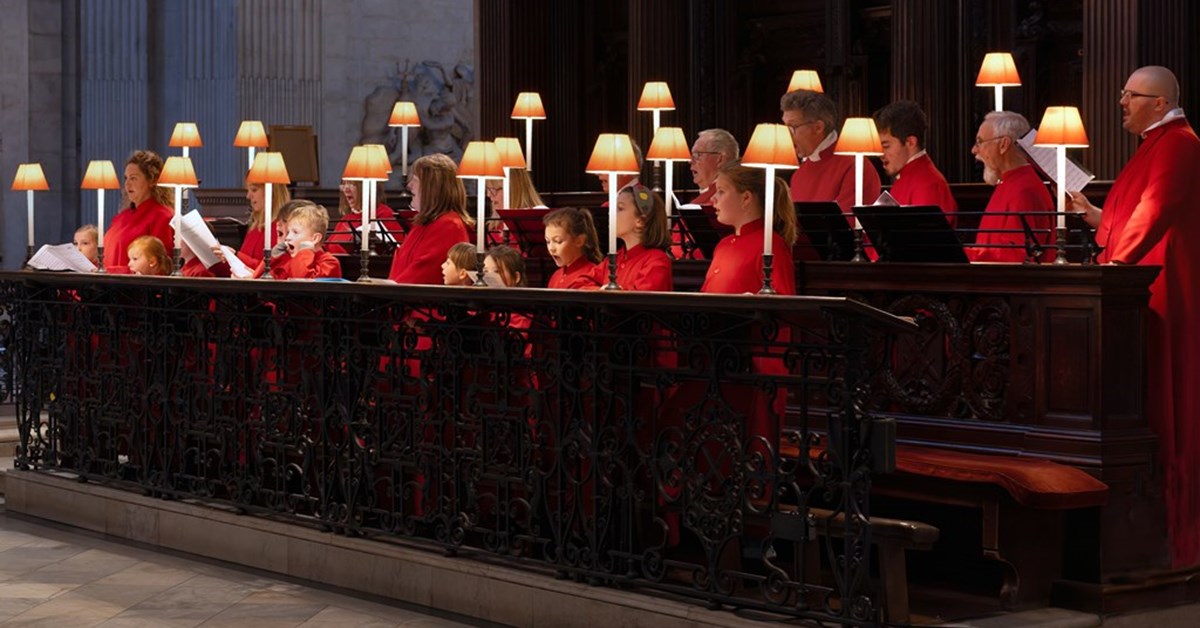
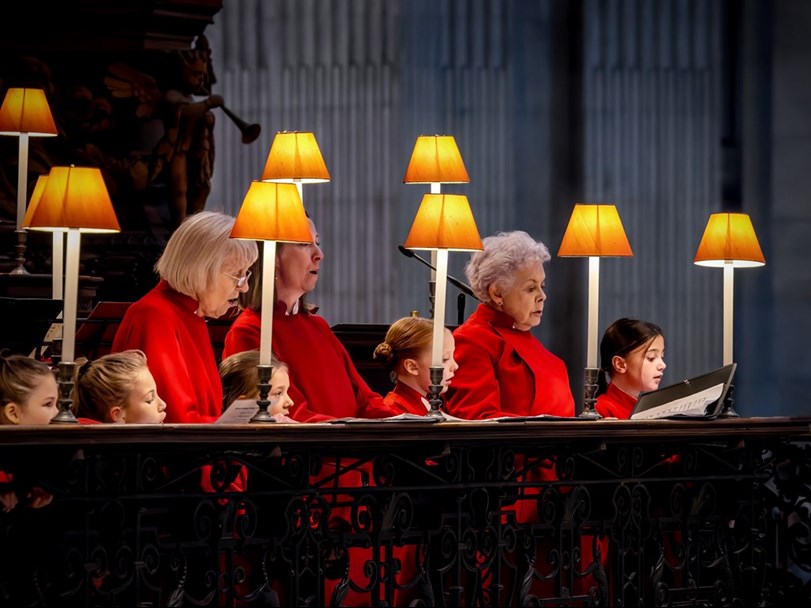
THE young people’s first public performance was in 2025 in St Dunstan’s. They joined the adult choir in a performance of Joanna Forbes l’Estrange’s choral reimagining of Vivaldi’s The Four Seasons (the recording of which is now available on all good streaming platforms). They have since made a recording for CBeebies. In October, they joined the church choir for choral evensong in St Paul’s Cathedral. Throughout, they have attended hours of rehearsals, developing discipline and cultivating concentration — attributes that will feed their wider learning and growth.
 Julie SalweyJulie Salwey
This work has rapidly extended beyond the parish itself. Three other primaries near by have got wind of the project. The director of music is invited to lead harvest festivals and to work with whole and multiple year groups. The children greet her with hugs and smiles. The head teachers and staff see the value of musical education. They would love to offer more — hence the enthusiasm to become involved in this initiative. But they are constrained by budget.
JUST one year in, the lucky children and their parents remain supportive and grateful. Children are busy with after-school clubs and activities, and, for some, there will inevitably be a clash. It has been gratifying to see a few choose choir over a desirable alternative. That said, the director of music has to be firm: to be a member of the junior choir is not a temporary option, to be discarded when something a little shinier comes along.
Three big events in one short year have undoubtedly been a draw, but, importantly, the support has remained, week in week out, as participants have attended rehearsals and learnt new music. This year, the young choristers will participate in a performance of the cantata Ahoy! in the Mayfield Festival. They sang with the church choir at Remembrance and again at Christmas.
Music education is a hot topic in the media. We have, architecturally, aesthetically, and acoustically, some of the finest cathedrals and churches in the world. Regardless of religious belief (or the lack of it), the PCC of Mayfield and Five Ashes has struck a chord addressing a fundamental human need: music.
Top tips:
- A strong choral tradition is helpful — or the motivation to initiate a “new tradition”.
- A supportive vicar and PCC, and enthusiasm from local primary schools and their head teachers, are both essential.
- Required: an innovative, determined music teacher with a passion for choral singing.
- Volunteers from the church choir are needed to help with rehearsals, and to build a sense of shared mission.
- Diocesan support is important (the Bishop of Chichester is an advocate of outreach to primary schools).
- Enthusiasm and commitment are more important than ability.
- Cakes or biscuits go down well at a rehearsal after a long school day.
- Frequent communication with chorister parents is important — as is patience when they don’t reply.
- Crucially, funding (that old chestnut): from the PCC; fund-raising activities (£1250 raised from a quiz night in the church); local music groups; independent schools; philanthropy; applying to various trusts, etc.
Stamina, resilience, time, and commitment are required from all involved. To see the children’s faces after a concert, service, or evensong in St Paul’s is just reward.
Mike Piercy is a retired head teacher, and the author of Careering, published by Troubadour (978-1-80514-480-9).