THE Church Commissioners have reiterated their commitment to supporting nature and enhancing biodiversity. In their report, Spotlight on Nature, they acknowledge nature loss as “a core responsible investment priority and a systemic risk, alongside climate change and social inequality”.
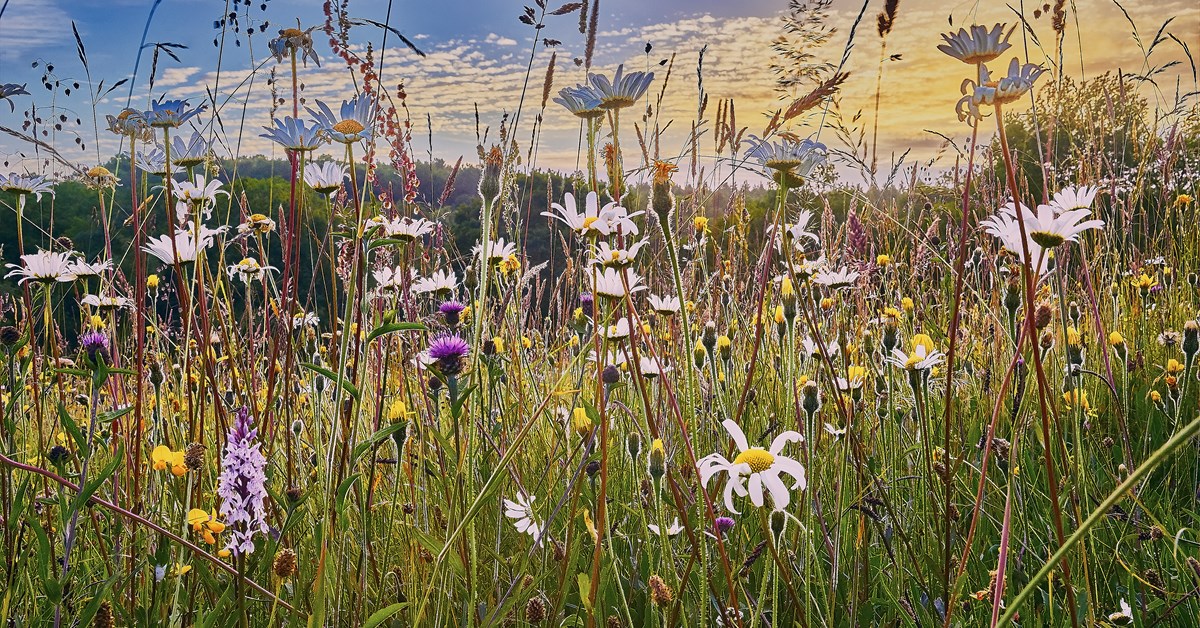
The General Synod, in February 2024 (News, 1 March 2024), backed the encouragement of greater biodiversity and sustainable land use, highlighting the sharp decline in the natural environment over past decades: 26 per cent of mammals now facing extinction; 97 per cent of wildflower meadows lost since the 1930s; and a species decline of 41 per cent since 1970.
The Commissioners’ report describes biodiversity loss as “one of the major crises of our time, threatening the diversity of God’s creation and impacting all our lives as food security declines, the climate becomes less stable, ecosystems services reduce, and economies suffer. The Church Commissioners is deeply committed to supporting nature. We seek to play our part in enhancing biodiversity across our portfolio.
“As long term investors, we recognise that nature loss can lead to material financial outcomes for the fund; therefore, understanding and managing these risks and opportunities is crucial to safeguarding the long term value of our investments.”
The report outlines a three-pillared approach. The first — “Aligning our processes to integrate nature” — includes measures on farmland and forestry, “embedding environmental priorities into new farm lease structures and tenant selection, where compatible with future uses and within our fiduciary duty to promote nature-friendly farming practices, support biodiversity, and encourage resilient income streams.”
The second approach — “Engagement” — seeks to “encourage real world change. . . We aim to influence behaviour, share knowledge, and create an enabling environment for change.” It includes systematic engagement with publicly listed companies, “engaging companies across the food value chain to encourage the transition to sustainable farming practices, focusing also on deforestation-free supply chains and on just energy transition”.
The third approach is “Investment in solutions that support nature recovery”. The report contains very little in the way of case studies or examples, but does detail the Hoo Peninsula Historic Landscape Project: two farms on the Rochester estate are part of a major wetland restoration project which works collaboratively with surrounding landowners, farmers, and charities, to create and restore habitats for breeding waders such as curfew and lapwing, while maintaining food production through conservation grazing with sheep and cattle.
“We’ve been working on reversing biodiversity loss and supporting natural recovery for many years across different parts of the fund,” the Commissioners’ planet lead on responsible investment, Laura Moss-Bromage, said. “This publication brings all this work together, outlining how we are harnessing our available levers of influence to contribute to a nature-positive future.”
One of the country’s biggest landowners, they manage more than 100,000 acres and an endowment fund of £11.1 billion.
The former Archbishop of Canterbury Lord Williams was one of the signatories to an open letter calling on his designated successor, the Bishop of London, the Rt Revd Sarah Mullally, to make environmental stewardship a defining message of mission of her archiepiscopate (News, 31 October).
The letter, from prominent figures and campaigning organisations, described much of the Commissioners’ estate as in “poor ecological condition. . . The Church of England has a unique opportunity to take action to combat the devastating decline of our natural world, not just as a moral voice but as one of the country’s top ten largest landowners.”
The letter acknowledged move to disinvest from fossil fuels, and the Synod initiative, but argued: “These efforts lack concrete and measurable targets for the Church’s single largest landholding: the Commissioners’ estate.”