IRANIAN asylum-seekers and refugees who have been baptised in the Church of England have told clergy of their hopes and fears for their homeland and their loved ones still living there.
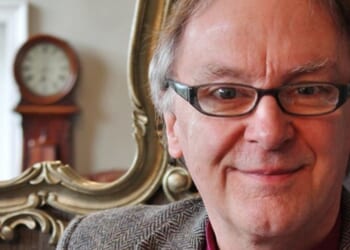
Canon Tony MacPherson, who pioneered a ministry to Iranian asylum-seekers and refugees at Wakefield Cathedral, said that, among the Iranians he was in contact with, there were deeply conflicted emotions about the assassination of Ayatollah Ali Khamenei and the escalating fighting that had followed.
 Tony MacPhersonCanon Tony MacPherson, who pioneered a ministry to Iranian asylum-seekers and refugees at Wakefield Cathedral
Asked for their reactions, one told him: “I am both happy and sad: happy because the leader of the world’s dictators and a real terrorist has been killed. On the other hand, I am sad because I have not heard from my parents for six days because the internet was cut off by the government.”
Another said: “My greatest concern is for my family and for the people of Iran. War brings nothing but destruction, poverty, ruin, and displacement. I only wish it were possible for only the leaders responsible to face the consequences, without innocent people being harmed.”
Now a parish priest in Northumberland, Canon McPherson has remained in touch with scores of Iranian Anglicans in a Whatsapp group on which he shares bilingual daily prayer content. He said that they had lived in a “heightened state of anxiety for a number of months” on account of the protests in which many thousands were killed by the country’s security forces.
One, however, expressed a more optimistic view: “I hope everything is getting better. We don’t want war, but this regime killed a lot of younger people. That’s why we just wanted to leave our country.”
Another expressed the hope that Iran would one day be a free and democratic country and said: “I believe the best leader at the moment is Reza Pahlavi,” referring to the son of the Shah ousted in 1979.
THE Revd Emma Lowth, who has particular responsibility for the Farsi Ministry at Christ Church, Gypsy Hill, in south London (Features, 6 June 2025), visited four Anglican churches with significant and growing Iranian populations across the south of England at the weekend. She had, she said, found widespread relief at the assassination.
She had found a shared, long-held desire among Iranian Anglicans for regime change, “but a variety of views on the way forward”. Iranian Kurds and other minority-ethnic groups in the churches “feel an extra level of concern for a hopeful and fair future for all the people of Iran, having experienced greater challenges”, she said.
“At the moment, there is still a patience, even a gratitude, for the action by US/Israel, and it is felt that indiscriminate aggressive action by the IRGC [Islamic Revolutionary Guard Corps] on the streets is having the effect of losing them any remaining support among the Iranian people.”
Ms Lowth continued: “Beyond prayers of protection and concern for all the innocent caught up in this war, the community is praying that Christians in Iran will manage to hold out the love of Christ to friends and neighbours in the increasingly volatile environment. Every conversation has ended with longing to be able to one day return home to Iran, and to worship in churches freely — but no one knows if that is now nearer or further.”
Precise figures are not known, but the growing number of Iranians seeking baptism and becoming part of a congregation prompted the House of Bishops, in 2019, to authorise a eucharistic liturgy in Persian.