A BILL to establish a West Bank Heritage Authority and transfer direct responsibility to Israel for the care of antiquities, heritage, and archaeological sites in the West Bank was approved by the Education, Culture and Sports Committee of the Knesset this month.
The new body’s mandate includes “sweeping powers of expropriation for both artefacts and the land they occupy, specifically for ‘protection, conservation, research, and development’,” Israel Today reports. It will be governed by a nine-member council appointed directly by the Minister of Heritage, removing archaeological oversight from the Defense Ministry. The article refers to a “long-standing issue of Palestinian cultural vandalism”.
“By establishing this civilian framework, the government has created a permanent administrative apparatus designed to bypass Oslo-era restrictions and assert direct Israeli responsibility for the historical sites of Judaea and Samaria.”
“These new decisions are the beginning of Israel waking up to this horrible heritage destruction, which we have allowed to happen under our very noses,” Yishai Fleisher, the international spokesperson for the Jewish Community of Hebron, said. “The reason that the Palestinian Authority targets the sites is that they want to erase the Jewish connection to the land.”
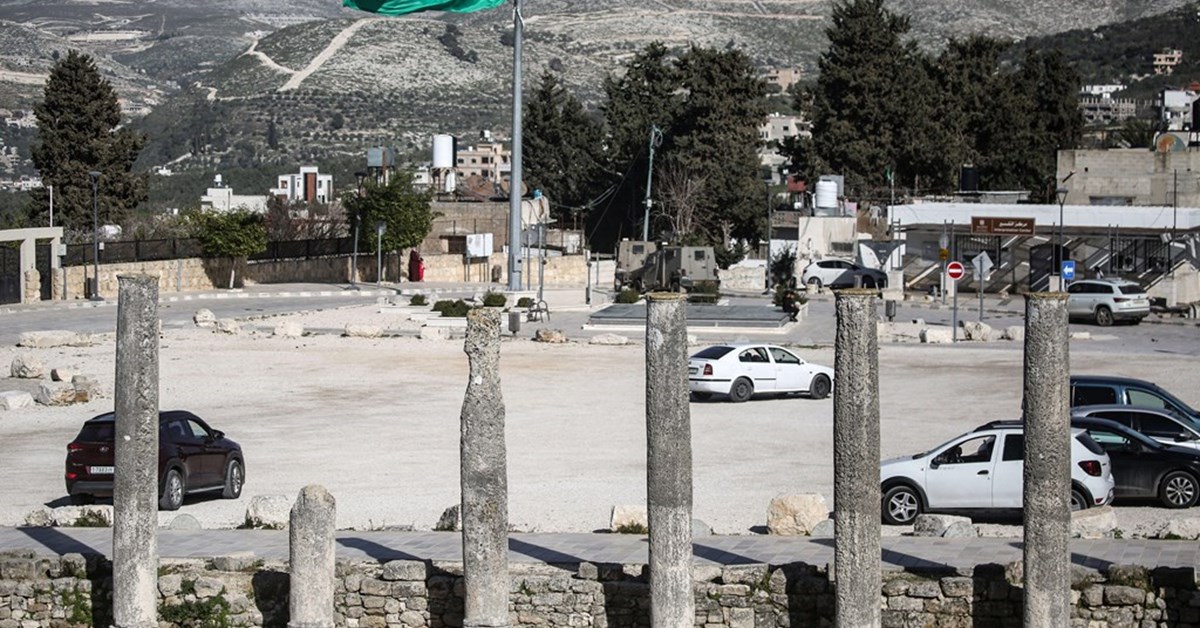
Last November, the Israeli authorities announced that they were expropriating a 450-acre archaeological site next to Sebastia, a town in the Nablus Governorate of the West Bank, which is surrounded by olive groves. The area contains ruins from the biblical, Roman, Byzantine, Muslim, and Ottoman eras, including what is traditionally recognised as the tomb of St John the Baptist.
The Mayor of Sebastia, Mahmud Azem, told The Guardian this month that Sebastia had “gone into a dark tunnel. It is an aggression against Palestinian landowners, against olive trees, against tourist sites and it is a violation of the history and the heritage of Palestine.”
A new dig at the site began last May, the Times of Israel reports. It is thought to have been the capital of the northern Israelite kingdom in the eighth and ninth centuries BC. Currently, Israel controls the site under Area C, while the town itself is in Area B, under joint Israeli and Palestinian Authority control.
The Environmental Protection Minister, Idit Silman, has said: “There is no Palestinian people and therefore there can be no Palestinian site.” The Heritage Minister, Amihai Eliyahu — a resident of a West Bank settlement who supports full annexation of the West Bank — has spoken of plans to “breathe new life into the site and make it an attraction for hundreds of thousands of visitors a year, which will strengthen the connection between the people, their heritage, and their country”. There are plans for a visitor centre and a new access road that bypasses Sebastia itself. Tourism is a significant income stream for the town.
Writing for the magazine +972 in December, Alon Arad, an archaeologist and the executive director of Emek Shaveh, an Israeli NGO working to defend cultural-heritage rights and to protect ancient sites as public assets, wrote: “Large segments of Israel’s archaeological community have abandoned core professional principles and ethical standards meant to uphold international law and protect cultural heritage. Many have collaborated openly with settlement leaders and Israeli enforcement authorities, providing both ideological cover and physical infrastructure for settlement expansion.”
In November, Fr David Neuhaus, an Israeli citizen and a former Patriarchal Vicar for Hebrew-speaking Catholics in the Latin Patriarchate of Jerusalem, wrote for Independent Catholic News: “The seizure of Sebastia is a direct assault on Palestinian religious heritage and on the practice of religious freedom. It is a strategic attempt to erase the ties that Christian and Muslim Palestinians have to the lands that they have lived in for centuries and to erode the bonds to their heritage that have given them pride and resilience.”