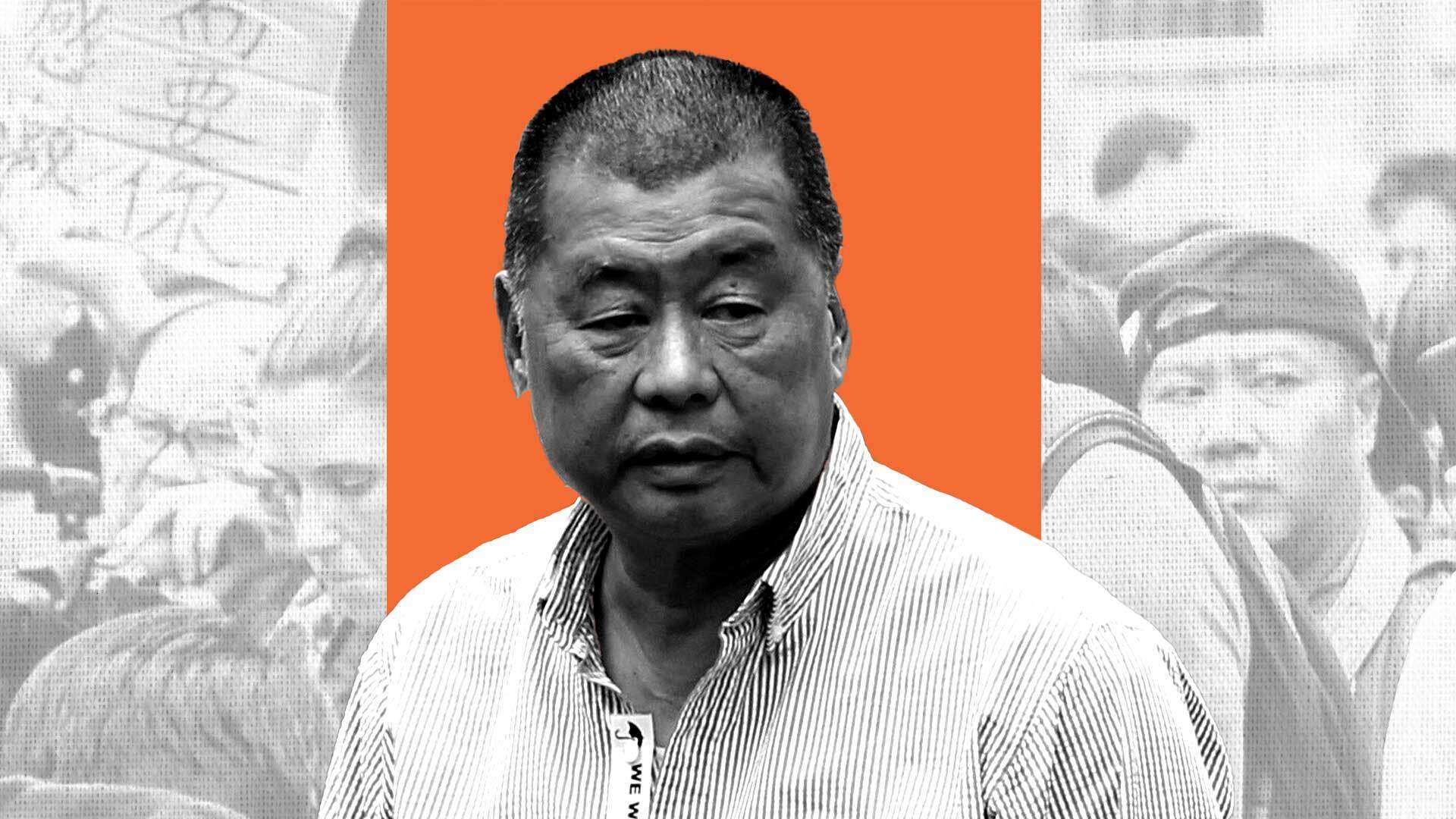
There are many interesting tidbits about the life of the political prisoner Jimmy Lai. He hid in the bottom of a fishing boat to escape mainland Communist China for Hong Kong at the ripe age of 12. He built a garment empire after spending his adolescence working, and sleeping, in garment factories. Without media experience, he started several successful news ventures—most notably the plucky and irreverent Apple Daily—which forcefully advocated for democracy and free speech. And he may be sentenced to die in prison in connection with his efforts promoting liberty in China.
But the most interesting fact, by far, is that Lai is a citizen of the United Kingdom (U.K.).
The dissident was convicted in Hong Kong earlier this week of two counts of conspiring to collude with foreign forces and one count of publishing seditious material in connection with his crusade against illiberalism, a fight he has been devoted to for decades. Lai finding himself in trouble was not a surprise. That’s especially true amid the backdrop of Hong Kong’s “national security” law, which sought to cripple dissent, that took effect in 2020. He was arrested in August of that year and released on bail; authorities revoked it four months later. Lai has been in custody since.
That he would probably end up in prison, however, was never really in doubt. Which brings me back to his U.K. citizenship.
Lai did not have to stay in Hong Kong as the walls closed in on him. The self-made business tycoon—once a billionaire before the government froze his assets—could have fled to a residence abroad. His friend Mark Clifford, formerly the editor in chief of the South China Morning Post, told me in an interview earlier this year that many people in Lai’s circle urged him to do just that.
He declined. “Everything I have was given to me by Hong Kong. I won’t be leaving,” Lai told Radio Free Asia in June 2020. “I’m going to stay here and fight to the bitter end.”
Lawmakers would go on to formally approve the national security law, essentially a foregone conclusion, about three weeks later. The legislation broadly criminalized political dissent and hamstrung the civil liberties that had come to distinguish Hong Kong from China—though those freedoms had been under increasing attack—and that had come to define Lai’s legacy. He had not only unapologetically promoted democracy and freedom of speech, but he had also met with former Vice President Mike Pence and Secretary of State Mike Pompeo, whom Lai asked, he testified, to voice their support for Hong Kong. Lai knew the law was coming, and he knew what it meant for him.
But some things, he decided, are more important than personal freedom. In this case, the absence of it was more important—in part to show the world what happens when an authoritarian government severely curtails basic liberties.
In some sense, there was no better person than Lai to send this message. His Cinderella story came from Hong Kong. There, he was able to find refuge from Communist China, where the government had imprisoned his mother, deemed a “class enemy,” in a labor camp. But he was also able to make something from nothing: from living in factories, while rats scampered across his body, to running them. His story came full circle. It demands people ask: Do you prefer Hong Kong’s past? Or its future?