

When news broke in 2018 that 26-year-old missionary John Allen Chau had been killed on North Sentinel Island, one of the most isolated places on Earth, the reaction was swift and polarized. Some hailed him as a martyr obeying the Great Commission to the ends of the Earth, while others dismissed him as reckless, even delusional.
Director Justin Lin, best known for resurrecting “The Fast and the Furious” franchise and helming “Star Trek Beyond,” was among the many who saw the story unfold in real time.
“I was at an airport lounge when it came on the news,” Lin recalled. “I had a very strong reaction. Then they showed John’s face, an Asian American face, and I immediately started putting all my own issues onto it. Then I heard his name: John Allen Chau, 26 years old. And something struck me. That’s somebody’s son. That’s somebody’s brother. Who am I to judge or dismiss him in 20 seconds?”
Lin’s fascination with Chau’s story evolved into a three-year creative journey and the director’s return to independent filmmaking with “Last Days.” The film dramatizes the events leading up to Chau’s ultimate demise on North Sentinel Island, from his time at Oral Roberts University to his work with the mission group All Nations, where he prepared for years to reach the Sentinelese, “Satan’s last stronghold,” with the Gospel.
But it also examines the deeply human side of Chau, including his complex experience as the son of a Chinese father and an American-born mother (Claire Price), along with the friends who informed his zeal for mission work.
The film stars Sky Yang as John, Ken Leung as his father, Patrick, and Radhika Apte as Meera, an Indian official racing to uncover the truth behind the young missionary’s final hours.
“John Chau was someone who was born into a very warm Christian family and part of a warm and supportive Christian community,” Lin said, emphasizing he sought to highlight Chau as a man of faith, son, friend and seeker. “He had aspirations and ambition, and I think delving into his humanity, I can connect with him. He was trying to search for purpose.”
“Last Days” is based on Alex Perry’s Outside Magazine article “The Last Days of John Allen Chau.” According to Lin, it was Perry’s article that provided a rare window into the grief and guilt of John’s father, a devout Christian psychiatrist who wrestled with his son’s radical faith and fatal mission, ultimately blaming “extreme Christianity” for his son’s death.
“I have a teenage son,” Lin said. “Reading Patrick’s story, I felt that sense of love and frustration of trying so hard to connect and somehow missing each other. As a parent, that hit me hard. It wasn’t just about faith; it was about family, generational gaps, and what it means to really see each other.”
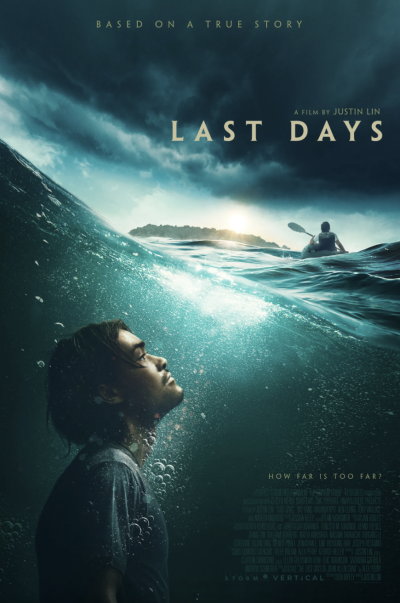
That empathy became the film’s starting point, according to the director. When screenwriter Ben Ripley approached Lin with a script that reframed John’s story through multiple worldviews, including the Indian officials investigating his death, Lin said he saw the entry point he’d been searching for.
“It starts off almost like a procedural,” Lin said, “but then it opens up into something bigger. If we can populate this world with characters who all have legitimate, lived-in perspectives, then it becomes a story worth telling not to judge, but to connect.”
In “Last Days,” Lin explores the contradictions of a young man raised in a loving Christian home, educated and adventurous, yet driven by an unshakable belief that God had called him to reach the last uncontacted tribe on Earth.
“This film isn’t about finding answers,” Lin said. “John was a storyteller. He chose what he wanted to share in his journals, his pictures, his posts. I didn’t want to question whether every detail was factual; I wanted to ask why. Why did he see himself this way? What was he searching for?”
Some, like those behind the National Geographic documentary “The Mission,” say Chau’s mission epitomized the dangers of modern evangelism, exposing an isolated people to disease and ignoring cultural boundaries.
Supporters, like Jaime Saint, the grandson of missionary Nate Saint, contend that a secular world cannot comprehend the gravity of eternity and the requirement of every Christian to participate in the Great Commission and thus will never understand Chau’s mission.
“The measure of success for us, as Christians, is obedience,” Saint previously told CP.
But Lin said that after delving into Chau’s life, he resists easy categorizations.
“I talked to so many people, missionaries, journalists, anthropologists, and everyone had strong opinions. But if you step back, you realize this is really a story about human longing. About wanting to connect, to find purpose, to break out of the box people put you in. I think that’s something universal,” he said.
As Lin dove into Chau’s writings, he noticed something unexpected: the way John’s journal entries echoed adventure novels and Hollywood narratives.
“He was influenced by Robinson Crusoe, Tintin and missionary stories like ‘End of the Spear,’” Lin explained. “You can feel how those shaped his self-image. So I thought, what if the film honored that? What if we used the same cinematic language that inspired him to fill in the gaps?”
The result, the director said, blends genres — part adventure and part spiritual odyss — to mirror the stories Chau admired.
“I didn’t want to use the word ‘trope,’” Lin said, “but we leaned on familiar storytelling devices to help the audience feel what John might have felt. By doing that, I think we get closer to his humanity.”
Though Lin himself isn’t Christian, he handles Christianity reverently in the film, something he said was inspired by his upbringing.
“I grew up in Orange County in the ’80s,” he said. “Christianity was always around me. I wasn’t religious, but I was in Boy Scouts at a church. I had Christian coaches, Christian friends. What I took from that wasn’t theology, it was decency, respect, kindness. Like anything in life, you take the good and the bad and hope it makes you a better person.”
“I can relate to this as a non-Christian,” he added. “How do you deal with failure? Do you get back up and go? Or do you blame somebody? These are all things, I think, in working on the film, I feel much closer to his humanity, because he is someone who is of Christian faith, and he had very strong opinions, but he’s also a human being with many, many layers.”
Lin said he hopes “Last Days” sparks conversations between those with opposing viewpoints and challenges viewers to build bridges where judgment once stood.
“Because of the subject matter, because of John’s humanity, I hope people are inspired to find someone who maybe has very different opinions and have a dialogue,” he said.
“I feel like that’s something that’s needed in our world today more than ever,” Lin added. “It’s what led me down this journey of wanting to be a filmmaker. I want to be able to connect people from very different backgrounds.”
“Last Days” will release exclusively in theaters on Oct. 24.
Leah M. Klett is a reporter for The Christian Post. She can be reached at: leah.klett@christianpost.com