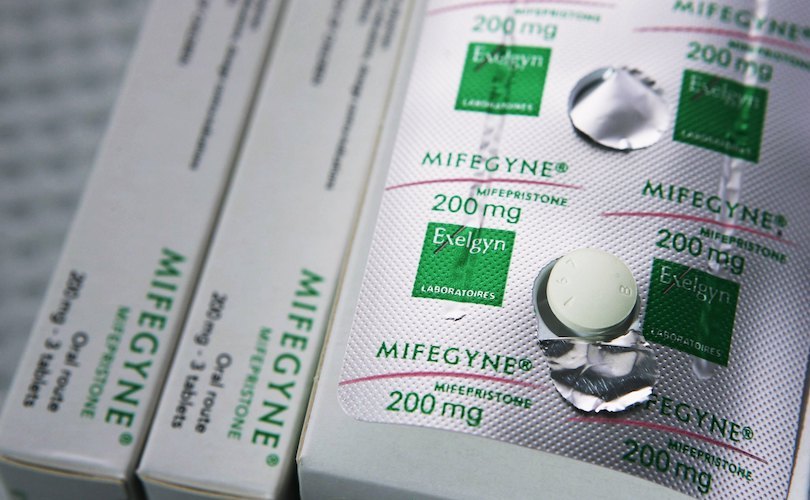
(LifeSiteNews) – The office of Kentucky Attorney General Russell Coleman is investigating a scheme to promote illegal mail-order abortion pills advertised through six gas stations across the state.
According to a press release from Coleman’s office, it has given gas stations in Christian, Logan, and Simpson counties 20 days to provide information on advertisements they display reading, “Pregnant? Don’t want to be? Learn more at Mayday Health.”
Last year, the New York-based Mayday Health launched an ad campaign promoting abortion pills at 104 rural gas stations in Kentucky and West Virginia. Even though abortion is broadly illegal in both states, executive director Liv Reisner said at the time the group does not fear legal repercussions “because we don’t sell, distribute or package abortion pills. We’re merely spreading First Amendment-protected free speech. So if anyone wants to come after us, what they’re coming after is the First Amendment.”
The AG’s office disagrees, noting that Kentucky’s Consumer Protection Act forbids “deceptive or misleading communications with Kentuckians.” The information sought from the gas stations is meant to shed light on whether the advertisements qualify. Live Action highlighted Mayday Health’s presentation of the abortion pill as safe, and failure to inform website visitors of its documented risks, which would presumably qualify as deceptive advertising.
“Out of state activist groups who are targeting the vulnerable here should be on notice: Keep your illegal pills out of our Commonwealth or face the full weight of the Attorney General’s Office,” Coleman said. “These deadly and unlawful pills cannot be allowed to continue flooding into Kentucky through the mail, and we will thoroughly pursue every lead to hold bad actors accountable.”
Planned Parenthood Federation of America’s most recent annual report revealed that, almost two years (as of April 2024) after the U.S. Supreme Court overturned Roe v. Wade and allowed direct abortion bans to be enforced for the first time in half a century, the nation’s largest abortion chain still operated almost 600 facilities nationwide, through which it committed 392,715 in the most recent reporting period. According to the Lozier Institute’s professor Michael New, that is a “record number of abortions for the organization and represents approximately 40 percent of the abortions performed in the United States.”
Questions are currently swirling over when and how the Trump administration will handle the problem. Since returning to office, President Donald Trump has taken a number of pro-life actions primarily in the area of taxpayer funding, but concern has brewed among pro-lifers ever since he declared (amid a broader effort to moderate the Republican Party’s pro-life plank) that Trump would not enforce a federal law banning abortion pills from being dispensed by mail, continuing a Biden administration policy that undermines state pro-life laws.
Pro-lifers were given hope in May that the White House’s position might change when U.S. Health & Human Services Secretary Robert F. Kennedy Jr. (another formerly pro-abortion figure who moderated during his own presidential bid) promised in May a “complete review” of the medical risks of abortion pills, though no conclusions or timetable have since been announced. But some pro-life leaders have recently called for the firing of U.S. Food & Drug Administration Commissioner Marty Makary over reports he is intentionally “slow walking” the review, which Makary denies.