The Takings Clause of the 5th Amendment “was designed to bar Government from forcing some people alone to bear public burdens,” the Supreme Court said in Armstrong v. United States, “which, in all fairness and justice, should be borne by the public as a whole.” That was just over 65 years ago.
It is, unfortunately, not living up to that promise.
For the latest example, we can look to the U.S. Court of Appeals for the 9th Circuit, which ruled last month that an innocent man whose business was destroyed by Los Angeles Police Department (LAPD) officers in pursuit of a fugitive is not entitled to compensation for damages under the Takings Clause. This is despite the law’s pledge that the government provide “just compensation” when it usurps private property for a public use.
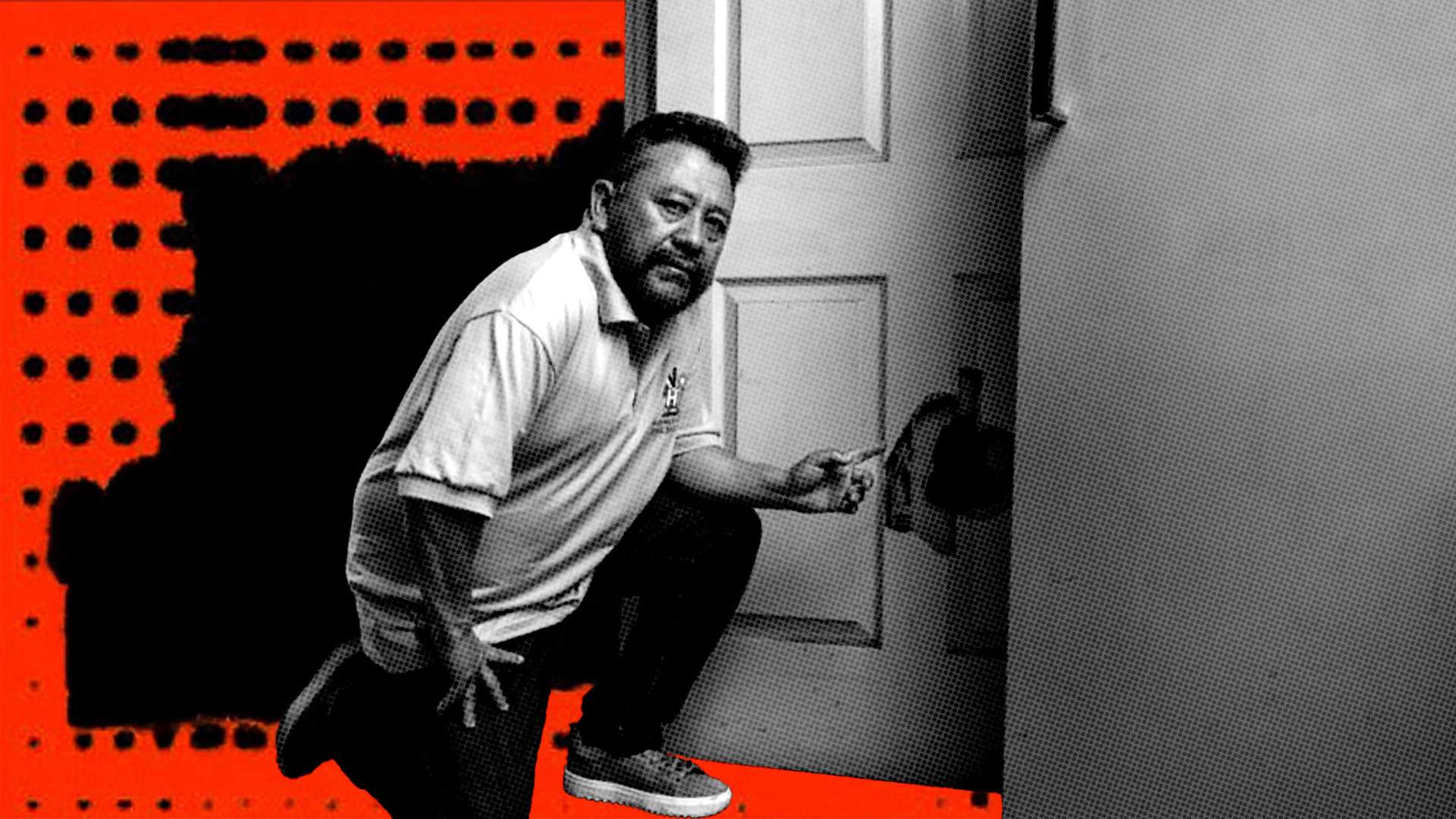
In August of 2022, an armed fugitive threw Carlos Pena out of his North Hollywood printing shop and barricaded himself inside it. Over the course of 13 hours, a SWAT team with the LAPD launched more than 30 rounds of tear gas canisters through the walls, door, roof, and windows. After the standoff, police discovered the suspect had managed to escape. But Pena was left with a husk of what his store once was, the inside ravaged and equipment ruined, saddling him with over $60,000 in damages, according to his lawsuit against the city of Los Angeles.
It’s a suit Pena did not want to file, having repeatedly reached out to the government to recoup his losses before going to court. The city ignored him. Pena, meanwhile, was hemorrhaging income, resigned to working out of his garage at a much-reduced capacity with a single printer he purchased after the raid.
The recent ruling on Pena’s claim joins a burgeoning pile of case law wading through this exact scenario. Each decision ultimately grapples with a version of a core question: Does the Takings Clause cease to apply in some sense when property is destroyed via “police power”?
Different circuits have come to varying conclusions. The 9th Circuit, for its part, declined to answer if a categorical exception exists. But the court did conclude that there is no taking “when law enforcement officers destroy private property while acting reasonably in the necessary defense of public safety” (emphasis mine). The judges said that doomed Pena’s claim.
Their decision references a ruling from the U.S. Court of Appeals for the 5th Circuit, which in 2023 considered a similar case: Police mutilated a woman’s Texas house in pursuit of a fugitive who had locked himself inside her attic. Because law enforcement destroyed Vicki Baker’s home “by necessity during an active emergency,” the court ruled, it did not constitute a taking under the U.S. Constitution.
But the 5th Circuit did throw Baker a small bone. Writing for the majority, Judge Stephen A. Higginson concluded by citing Armstrong, that 1960s Supreme Court Takings Clause case whose spirit would seem to apply directly to this sort of situation. Baker “is faultless but must ‘alone’ bear the burdens of a misfortune that might have befallen anyone,” Higginson conceded. “As a lower court, however, it is not for us to decide that fairness and justice trump historical precedent….Such a decision would be for the Supreme Court alone.”
The Supreme Court declined to hear Baker’s case late last year. “Whether any such exception exists (and how the Takings Clause applies when the government destroys property pursuant to its police power),” wrote Justice Sonia Sotomayor in a statement, joined by Justice Neil Gorsuch, “is an important and complex question that would benefit from further percolation in the lower courts prior to this Court’s intervention.”
The percolating has continued apace. About a month before the November decision in Pena’s case, the U.S. Court of Appeals for the 7th Circuit ruled that Indiana woman Amy Hadley was not entitled to compensation under the Takings Clause after police wrecked her home looking for a suspect as a result of a faulty investigation. Why? “The Fifth Amendment does not require the state to compensate for property damage resulting from police executing a lawful search warrant,” wrote Judge Joshua Kolar. In other words, the court found that a categorical police power exception does exist, departing from the narrower conclusions of the 5th and 9th Circuits.
As Higginson noted, only the Supreme Court can resolve these disputes within the lower courts. The high court is also the only body that can resolve the tension between these rulings and Armstrong, if the justices wish to ensure that individuals are not left alone to shoulder public burdens “which, in all fairness and justice, should be borne by the public as a whole.”