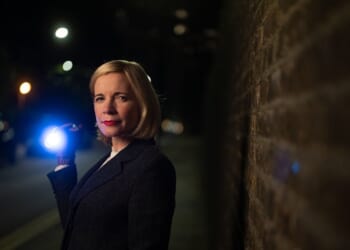
“DO YOU want people to trust you?” “Was it a lie. . .?” “You misled people. . .” Laura Kuenssberg’s questions in a BBC interview on Sunday were as much about the Chancellor’s character as about the details of the Budget. Rachel Reeves sought to talk about the details, but her interviewer kept returning to the subject of the Chancellor’s integrity. Had she misled people in the run-up to the Budget by saying that she would have to put up taxes to fill a hole in the public finances? Had she created the perception before the Election that taxes would not be raised? Ms Reeves denied lying or misleading the public. Judging by reactions to the interview, however, the damage was done. “The career-ending thing isn’t saying ‘I broke that promise and I’m sorry, but here’s why I really think it’s the right thing to do. . . ,’” the Times Radio presenter Kate McCann wrote on social media. “It is repeatedly saying you did it without holding up your hands; in the process treating your audience like they’re daft and eroding trust so much that nobody listens to your actual argument.”
It is not for this newspaper to adjudicate on whether Ms Reeves is a liar (she denies that she is). But, in politics, as in much of life, the perception that a leader is being evasive, or hiding behind pre-prepared lines, damages trust. It is why, whatever one thinks of his party’s policies, Nigel Farage is an effective politician. As “Bob” replied to Ms McCann’s post on X: “This is why Reform are a breath of fresh air because they answer as many questions as possible with actual answers . . . how refreshing instead of party trained lines.” Granted, there are many who question the veracity of Mr Farage’s statements; but it is the impression that he is telling it straight and saying what he thinks rather than what party apparatchiks have told him to say which cuts through. At the other end of the political spectrum, the Green Party is enjoying a surge in popularity under Zack Polanksi. The party’s membership has doubled since he became leader, and now stands at more than 150,000, higher than the Conservatives. Support is particularly pronounced among young people. Mr Polanski’s policy positions are poles apart from Mr Farage’s, but the reasons for his appeal are similar: apparent authenticity, harnessed through effective use of social media. Both leaders demonstrate a desire to listen to voters’ concerns and to produce answers that are clear and, crucially, seem to be their sincerely held views.
Furthermore, in their different ways, both leaders offer hope, which Walter Brueggemann described as “the refusal to accept the reading of reality which is the majority opinion”. Both question the political consensus, and voters, it seems, are flocking to their parties (though it should be acknowledged that neither has been tested in government). Christians, who, at Advent, reflect on Christ’s coming, are called to discern whether the hope and trust offered, from the populist Right to the radical Left, reflect the God who “has brought down the powerful from their thrones and lifts up the lowly”.