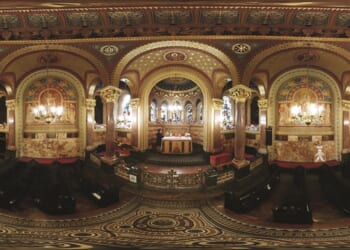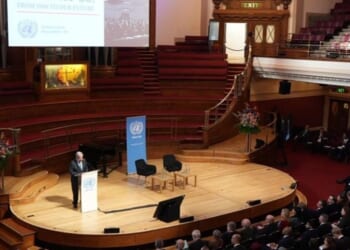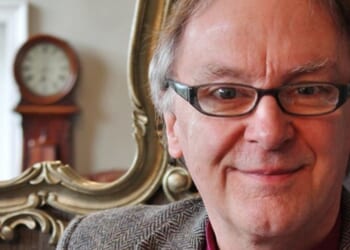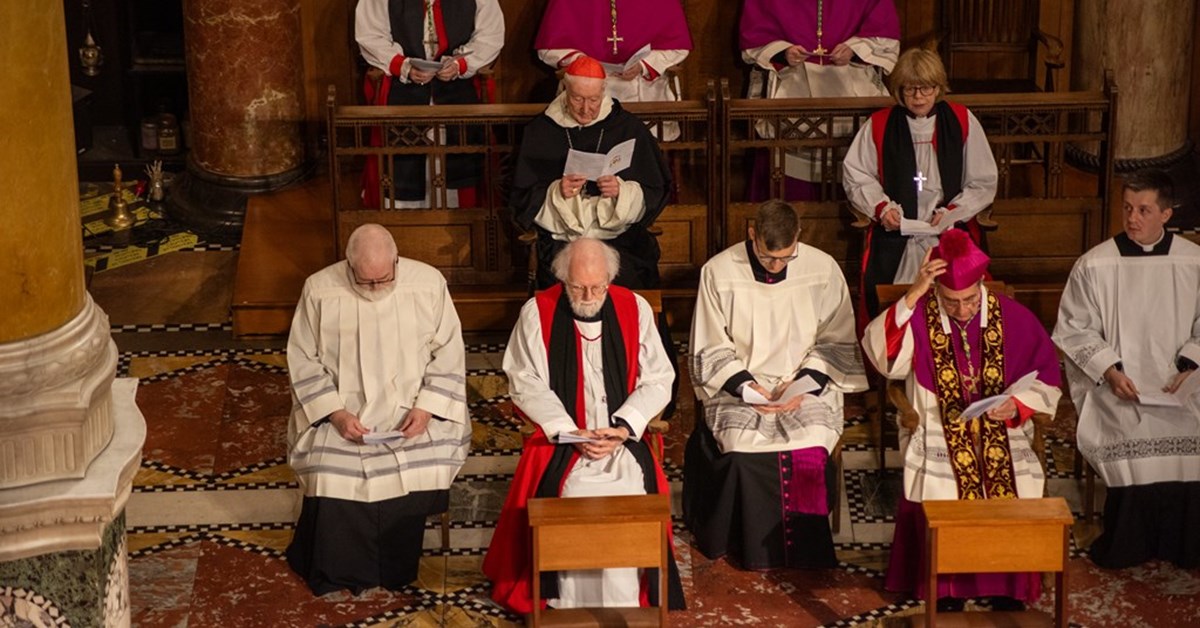
IN A united service for the Week of Prayer for Christian Unity in Westminster Cathedral on Tuesday, the former Archbishop of Canterbury Lord Williams recalled Pope Benedict XVI and his vision of Christian unity.
Cardinal Vincent Nichols presided at the solemn pontifical vespers, attended by the Bishop of London and Archbishop of Canterbury-elect, the Rt Revd Sarah Mullally, the Archbishop of York, and Cardinal Timothy Radcliffe.
“Remember where Pope Benedict’s theological inspiration comes from,” Lord Williams said in the course of his address. “It comes from an era in the life of the Church when ‘reason’ was seen not as a tool of argument, but as a vehicle of vision. It was our capacity to reason that allowed us to behold and wonder at the world together, to see the order of creation and to participate joyfully in it.
“A human family which does not believe in reason is a family terminally and fatally divided — not because some people know how to argue better than others, but because we’ve lost sight of the notion that what God gives us is the capacity to listen to one another and learn from one another in a common world.
“Without that gift of reasoned, ordered language that we share with one another, we shan’t ultimately share the same world. We shall retreat into our corners. We shall battle for our victories.
“Pope Benedict’s approach to those outside the Christian Body and outside the Roman Catholic Church was deeply rooted in that vision of the possibility for human beings to talk to one another, to listen to one another, to wonder at the world together. ‘Come and let us reason together,’ says the Lord to Isaiah in prophecy, and it’s a reasonable conclusion — as you might say — that the Lord doesn’t mean ‘Let us argue together.’
“Let us reason together, let us explore together, let us find together what it is that makes us human, in the firm hope and the confidence that there truly is a humanity we share. As Pope Benedict approached other communities of faith, he did so with this hope and confidence that we could find a way of reasoning together.”
Westminster Cathedral Choir and clergy will sing a joint evensong at St Paul’s Cathedral on Friday.
The theme of Week of Prayer, which began last Sunday, was “One Body One Spirit”, inspired by Ephesians 4.4: “There is one body and one Spirit, just as you were called to the one hope of your calling.”
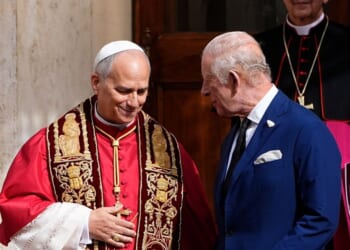
In a statement last week, the Bishop in Europe, Dr Robert Innes, said: “In a world which is polarised and divided, the Church’s mission to make known its unity feels ever more urgent and important.” He reflected on the King’s visit to Rome to worship with the Pope in the Sistine Chapel (News, 24 October 2025).
“Their visible togetherness was something everyone could see and understand,” he said. “The enacted togetherness between the Pope and the Supreme Governor of the Church of England helps the world see that what unites us is much more than what divides us. It gives all of us hope and helps all of us believe.”
The World Council of Churches’ (WCC’s) prayers and reflections were prepared by the Armenian Apostolic Church’s department for inter-Church relations, and the Armenian Catholic, and Evangelical Churches. A reading plan, prayers, and reflective questions draw on the traditions of Armenian Christianity.
Resources are available to download from the WCC’s website, or to read on YouVersion’s free Bible App. The translations offered are in English, German, French, Spanish, Italian, and Arabic, but “churches are invited to translate the text in additional languages and contextualize or adapt it for their own use,” the WCC said.
The WCC’s programme executive for spiritual life and faith and order, the Revd Dr Mikie Roberts, said last week: “In many corners of our world, hope is fast fading in the face of unprecedented suffering.
“It is in such times that our collective prayers for Christian unity can serve as a beacon of hope to many. When Christians are united in prayer, we also acknowledge the oneness in our calling to bear witness to the gospel of Christ.”
Resources can be found at: oikoumene.org