Thoughts on Primate’s installation
From the Dean of Lichfield
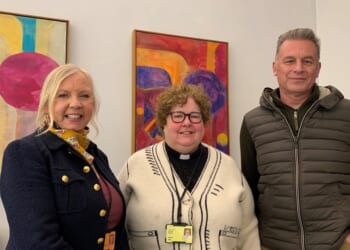
Madam, — I sat in Canterbury Cathedral on the Feast of the Annunciation, reflecting on the 36 years since I began my ordination training and did not know whether women would ever be able to be priests. If you had said to me then, that just over 30 years later, I would be sitting as a bishop and dean, witnessing the installation of the first female Archbishop of Canterbury, I would, like a Sarah long before us, have laughed with disbelief.
I stepped away from the institutional Church (temporarily, as it happened) when it was made very clear to me that a bishop who believed that they were called first and foremost to be chief shepherd — and who disagreed with the powerful executive brought in to “train us”, when the latter said that churches grew by shedding the dead wood (and so Jesus, if he had left the 99 in search of the one, must have been a poor shepherd) — and a bishop believed that growth should come from the bottom up, and not the top down, and that being a parish priest was the most important ministry in the Church, while the rest of us were a supporting role, was “off message” and out of touch in the modern church.
Archbishop Mullally’s installation felt like the opening of a new chapter — one in which we will return to the aspiration of the Ordinal, and find a new confidence in our ministry, be it diaconal, priestly, or episcopal.
No wonder I was nearly swept off my feet by the gusts of wind sweeping around Canterbury Cathedral. The Holy Spirit is alive and well.
JAN McFARLANE
Lichfield
From the Revd Richard Inglesby
Madam, — The Archbishop’s installation service modelled wonderfully the unity and harmony for which we pray, both for the Church and for the world — not least in the omission of the filioque from the Nicene Creed: a significant gesture towards healing the thousand-year rift between the Eastern and Western Churches.
RICHARD INGLESBY
Churchdown, Gloucester
Leavened or unleavened bread in the eucharist
From the Revd Richard Greatrex
Madam, — Thank you for Dr Josephine Gabelman’s reflection concerning leavened and unleavened bread (Theology Matters, 27 March). In my previous parishes, unleavened bread for communion was made by members of the worshipping community, passing around recipes and responsibility, so that each Sunday’s bread was fresh, relatively crumbless, and, eventually, gluten-free. The coming together of ingredients from many sources reminded us of words attributed to Meister Eckhart: “There is no such thing as ‘my’ bread. All bread is ours and is given to me, to others through me, and to me through others.”
A standard bloomer loaf provided the focus for a deeply memorable silent communion. With no words at all, focus was on symbol and action. For the offertory, the presiding minister swaddled the loaf in linen, as you would a new-born, parading it around the congregational circle, like a proud but protective parent. At the moment when there would normally be words of consecration, the minister raised the bread high before tearing it, with difficulty, in two — a visceral act that resonated significantly throughout the rest of the service (and still does).
Unleavened or leavened bread — both have their place in our communions today, and yet, perhaps, whichever substance we offer is still exclusivist while we continue to withhold the gracious gift of the Body of Christ from those who come to our altars but have not passed certain tests of faithfulness.
RICHARD GREATREX
Chew Magna, Bristol
From Mr Keith Denerley
Madam, — Wafers or bread buns? Dr Josephine Gabelman’s fine article on holy communion at Ridley Hall set me reminiscing about the many times that I have had the privilege of consecrating both — whether stamped discs of 2, 5, or 10cm diameter, or teacakes made of a special non-crumbly dough. With the former, I would think of Jesus at the Passover; with the latter, I would think of the risen Lord enjoying a fish supper with the astonished disciples in St Luke (24.43).
Luke, with the other Synoptics, is certain that the bread of the Last Supper was a loaf — artos; and yet, a few verses earlier (22.7), we are told specifically that “the day of the unleavened — twn azumwn” was nigh. The loaf then must have been without yeast. Now, I have attended several Passover reconstructions, which have all used matzos, obtained from the supermarket, which are a sort of yeast-free Ryvita. How could that be described as a loaf?
It was Google that came to the rescue: enter “Sephardic matzos” and, before long, you will have a lovely picture of a sort of pancake, plate-sized, round, and quite thick, but easily broken. I remembered that in the Near East, yeast bread is often baked in such a shape, namely, round and flat. So, leavened or not, artos can mean both.
Whatever (as they say), we should “do this” in remembrance of him.
KEITH DENERLEY
Cheltenham, Gloucestershire
Orgreave Inquiry and Dr Wilcox’s schedule
From the Revd Julian Mann
Madam, — You report that the Orgreave Inquiry, chaired by the Bishop of Sheffield, Dr Pete Wilcox, is due to take two years to produce its findings (News, 27 March). What is the time commitment likely to be for this serving bishop, with an enormous missional challenge in his own diocesan backyard?
Dr Wilcox became Bishop of Sheffield in 2017, when I was an incumbent in the diocese. Then, the all-age average weekly attendance was 15,700 out of a South Yorkshire population of about 1.3 million. By 2024, the weekly attendance had fallen to 12,600.
The question whether the Orgreave Inquiry should be taking place at all is surely a debatable political one. But, given the current state of the Church of England, with many congregations in barely double figures and tanking frontline-clergy morale, is not the question whether the senior pastor of a diocese has the time to chair a complex civic inquiry a pressing missional and pastoral one?
JULIAN MANN
(Address supplied)
Iftar reactions highlight question of public space
From Kim Samuel
Madam, — There was something familiar and depressing about the “row” over Muslim prayer in Trafalgar Square (Comment, 27 March).
Yes, there are legitimate questions about the visibility of women at the event and the wider questions of community cohesion in Britain. But what was most perplexing of all, I believe, is why we are starting to lose faith in the part played by public ritual in public life.
What was once fundamental — essential, you might say — to public life has become controversial.
At a time when more and more of life is pulled into our own homes, and on to our phones and feeds, according to our personalised algorithms, it is rare to find moments when people — of any faith — come together in public, en masse, to celebrate something meaningful. Amid a crisis of social isolation and a lost sense of common purpose, we should consider that peaceful public prayer is one example of what is often missing in our culture these days.
Public rituals and expressions of faith have long been woven into the national story. During the Second World War, Trafalgar Square hosted large public prayer gatherings. Royal events still feature prayer. Few of us see Christian processions, parish rituals, carol-singing, or church bells as intrusions into British public space; nor should we. They are part of how we imbue public life with meaning and purpose.
As Britain has evolved, so, too, have the rituals that appear in public. Trafalgar Square has hosted Diwali, Christmas, Vaisakhi, and Hanukkah, as well as Iftar. That isn’t evidence of national erosion. These rituals make our social fabric stronger.
Think of the occasions that still give the year its shape: counting down together on New Year’s Eve; watching football in a crowded pub or stadium; school gatherings and harvest festivals; an Easter-egg hunt with the kids; singing carols at Christmas; sharing sweets with neighbours at Eid. Some of these rituals are religious. Some are national. Some are local. Some are barely “rituals” in any formal sense. But all of them bring people into the same place, at the same time, around something larger than our own individual preferences. That is to say: they cultivate shared belonging.
Of course, not all rituals will feel equally familiar to everyone. But the fierce reaction to the iftar tells ordinary Muslims that even when they gather peacefully, lawfully, and in a spirit of openness, their presence will still be cast as suspect. That kind of message corrodes national belonging.
Yet, the deeper issue here lies beyond Islam. The real question is what sort of public life Britain wants to have.
Public rituals are part of what makes common life possible and meaningful. They gather people into shared attention. They help to cultivate the sense that we belong not only to private households and digital cliques, but to a wider world that we hold in common. Without these kinds of rituals, public life weakens, and isolation grows.
Trafalgar Square was built to commemorate a national struggle, and it was always intended to be a public space for gatherings, ceremonies, and civic life in central London.
We should celebrate the fact that Muslim and members of other faiths want to be part of its history and bring their rituals into this very British space. This week’s iftar was a sign of integration, and sharing, not “domination”.
KIM SAMUEL
Belonging Forum Founder
London SW3
Scheme end implies a ‘dominant’ C of E
From Mr Andrew Graystone
Madam, — The announcement that the Church of England’s Interim Support Scheme for victims and survivors of abuse (ISS) is closing (News, 27 March) came out of the blue. There was no consultation. It wasn’t even flagged when the Director of Safeguarding reported to the General Synod just four weeks ago.
It is particularly strange that no explanation has been given. I can’t imagine who took this decision or why, given that the scheme is fully funded, and the first payments from the long-overdue Redress Scheme are still probably a year or more away. Survivors may feel that it is a performative act of cruelty designed to assert the dominance of the Church over victims, like an abusive partner cutting off the funds on which their other half depends.
The day after survivors were told that their lifeline was being cut, the National Safeguarding Team rushed out a statement saying that a new scheme would be devised, so that survivors would not be left unsupported. Once again, there is no detail, and no consultation about the promised support. The rapid shift backwards and forwards between giving and withdrawing support is a recognisable pattern that abusers use to exert control over victims. It has been noted in the lessons-learned reviews of John Smyth, Mike Pilavachi, and several others. Once again, the Church says to survivors: “Why can’t you trust us? We love you really.”
But why should survivors of church abuse trust the Church in which they have been abused, when it keeps them in the dark, repeatedly lets them down, then begs for patience, and then treats them with disdain? If the Church wants to rebuild trust, it must prove itself trustworthy over the long term. The sudden closure of the ISS is yet another inexplicable step in the wrong direction.
ANDREW GRAYSTONE
Manchester
Bus’s risen passengers
From the Revd Claire Wilson
Madam, — The bus I staggered on to last week (in my fragility) was enormously crowded. The doors closed, but then the driver announced: “This bus won’t be moving until someone gives up their seat for the poor old lady with her stick.” At least half a dozen people leapt to their feet.
Well, nothing about public transport is predictable, but I was reminded that the Easter message keeps us positive and hopeful, whatever our circumstances.
CLAIRE WILSON
London NW3
Mother Magdalen of the Poor Servants of the Mother of God
From Mr Paul Shaw
Madam, — More than ten years ago, your newspaper reported on Frances Margaret Taylor (1832-1900), a former Anglican, who was honoured in that year by Pope Francis in being declared “Venerable” — the first stage in the Roman Catholic Church to canonisation (News, 20 June 2014). As Mother Magdalen Taylor, she was founder of a religious order of Catholic Sisters, the Congregation of the Poor Servants of the Mother of God.
Your readers may be interested to know that Mother Magdalen has been honoured by the London Borough of Wandsworth by being granted a Green Commemorative Plaque as part of their scheme to draw attention to significant individuals and events in the history of the locality. Last year, the Mayor of Wandsworth, Cllr Jeremy Ambache, along with Sister Mary Whelan SMG, postulator of the Cause for Mother Magdalen’s canonisation, ceremonially unveiled the plaque, which has been mounted on St Mary’s Convent, Roehampton.
Mother Magdalen’s achievements included service as a volunteer nurse during the Crimean War, for a period serving with Florence Nightingale. There is also an interesting link with another notable former Anglican, as Mother Magdalen was the first to publish St John Henry Newman’s famous poem The Dream of Gerontius, in a journal of which she was then the editor.
The order of Sisters which she founded has served almost continually in the Borough of Wandsworth since its founding in 1872, carrying out a variety of educational and social works, and today running the popular Kairos Retreat and Conference Centre in Roehampton.
As part of the same tranche of commemorative plaques, the distinguished educationists Sisters Janet Erskine Stuart and Mabel Digby were likewise honoured by Wandsworth Council. This development is even more striking when one takes account of the fact that nuns and religious Sisters are notably underrepresented in organised public commemorative plaque schemes.
As far as I am aware, the only plaque honouring Anglican women religious in the UK is that mounted on the former Park Village Convent in Regent’s Park, London, which appears to have been placed as a one-off private initiative. An application for an English Heritage Blue Plaque for Mother Magdalen in 2012 was unfortunately not successful, but a fresh application, with the support of many interested scholars, has been made on her behalf.
We hope that her former co-religionists in the Church of England will support the further honouring of Mother Magdalen, and will perhaps consider the claims of the many notable Anglican nuns and religious Sisters who surely deserve to be similarly recognised.
PAUL SHAW
SMG Central Congregational Archivist
Brentford, Middlesex
‘Easter Eve’ or ‘Holy Saturday’? A missed opportunity
From the Revd John Puxty
Madam, — I feel a certain sadness that the day after Good Friday is referred to in Common Worship as Easter Eve rather than as Holy Saturday. For many of us, that day when we remember the absence of the crucified Jesus can be so powerful as we struggle with how that relates powerfully to our faith and has so much to offer to us if we are prepared to enter into and contemplate.
JOHN PUXTY
Ilkeston, Derbyshire