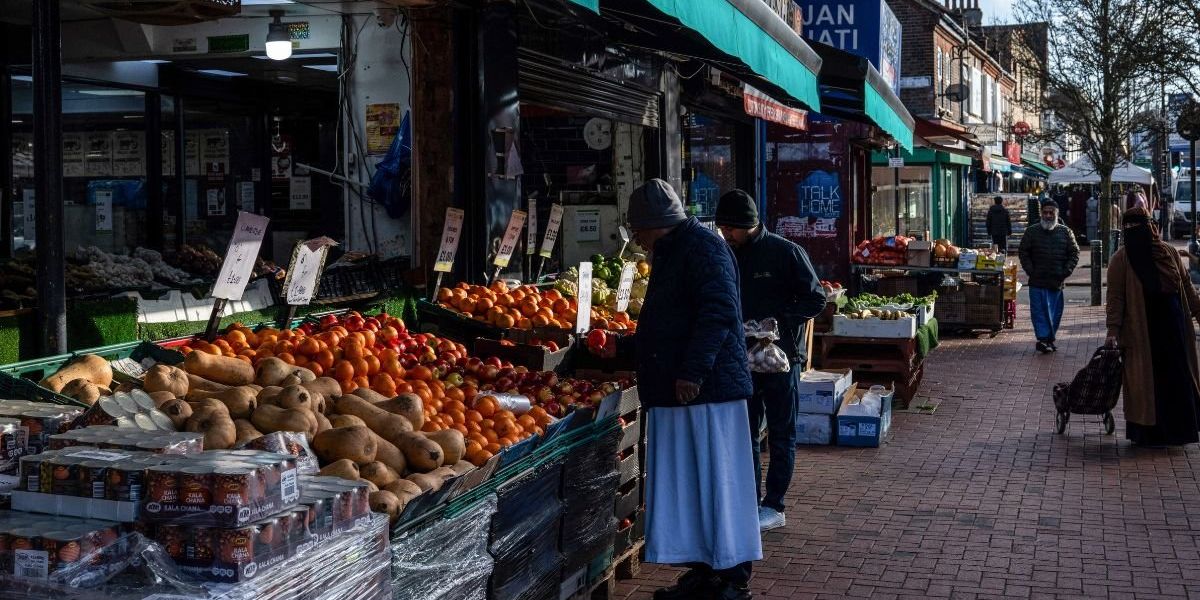
Luton has emerged as the English town with the greatest density of hairdressing and beauty establishments relative to its population, according to figures from the Office for National Statistics.
The Bedfordshire town boasts 145 such businesses serving approximately 225,300 residents, which translates to roughly one salon or barbershop for every 1,500 people.
ONS data reveals these establishments collectively employ 362 workers and generate a combined turnover of £12,252.
Across England as a whole, some 50,400 hairdressers and beauty salons were operating as of October, with significant concentrations found in outer London (4,975), Greater Manchester (2,375) and the West Midlands (2,095).
The proliferation of barbers across British high streets has become a notable trend in recent years, with many residents viewing the phenomenon as symptomatic of waning prosperity in their local town centres.
Observers frequently point to the growing number of such establishments as evidence that retail diversity is diminishing.
The perception that an abundance of hairdressers signals economic decline has become a common refrain among communities watching their shopping areas transform.
Other areas with substantial numbers of hair and beauty businesses include Kent with 1,050 establishments, Essex with 1,140, Hertfordshire with 1,035, West Yorkshire with 1,660, Merseyside with 1,220 and Tyne and Wear with 1,005.

The Bedfordshire town boasts 145 such businesses serving approximately 225,300 residents
|
GETTY
However, the rise in Turkish barbers has also raised concerns about criminality, following a number of stings for illegal workers.
Luton’s non-white population stood at 54.8 per cent in 2021, with the largest minority ethnic group being Asian.
The Bedfordshire town’s high concentration of salons comes against a backdrop of persistent negative perceptions about the town.
An online poll conducted by community review website ilivehere.co.uk in 2023 ranked it as England’s worst place to live, with one respondent commenting: “The town itself is not easy on the eye.”

House prices in the Bedfordshire town stand at £307,400, according to Zoopla
|
GETTY
Another reviewer suggested: “It makes Slough comparable to the playboy tax exile haven of Monaco.”
The town subsequently featured at number 11 on a 2024 list of most depressing places, where it was labelled “England’s toilet” according to The Mirror.
Residents have expressed fears about knife crime, telling The Express that people carry blades through the streets and they worry about being stabbed.
Local people have also reported having their doors kicked in and feeling threatened on the high street by groups drinking alcohol and behaving aggressively with shouting and swearing.

An uptick in barber shops has sparked fears of the death of the high street
|
GETTY
The local authority maintains that Luton is on an upward trajectory and that similar challenges exist in towns across the country.
James Taylor, Luton Borough Council’s Portfolio Holder for Regeneration and Inclusive Growth, attributed some of the town’s poor image to Channel 4’s “24 Hours in Police Custody” being filmed there.
He suggested “snobbery” plays a role, given Luton’s working-class and multi-ethnic character amid wealthier surrounding areas.
“We’ve always been resilient,” he added. “We’re a working class town and we’re proud of who we are.”

The rise in Luton contributes to the longer-term trend in the area, which has seen property prices in the area grow by 4.2 per cent over the last year
|
GETTY
Despite its reputation, house prices in Luton have outpaced the rest of East of England for much of 2025.
The Office for National Statistics found a 1.9 per cent increase, compared to just 0.8 per cent across the region.
The rise in Luton contributes to the longer-term trend in the area, which has seen property prices in the area grow by 4.2 per cent over the last year.
However, the highest annual growth in the East of England was in Maldon, where property prices increased on average by 13.3 per cent.