WHEN asked about the possibility of divorce, Jesus says that husband and wife are no longer two, but one flesh. It is a striking image, which then comes with a warning: “What therefore God hath joined together, let not man put asunder.”
When it comes to “putting things asunder”, things are changing. In Western heterosexual relationships, it is now more likely to be the woman who ends it. Statistically, they now initiate about 70 per cent of divorces. This suggests that men, the remaining 30 per cent, are generally more satisfied in marriages and better served by them.
But underneath the divorce statistics sits a less measurable but still unsettling story for the marriage brand: “quiet quitting”. The phrase is used often in relation to the workplace, describing unhappy employees who do not actually leave a job, but simply withdraw unnecessary effort. They are still on the payroll, but the energy of good will has left the building.
The phrase is now used about marriage, with particular regard to women. There are many versions of the story, and they are not exclusively female. But “quiet quitting” is presently a predominantly female narrative, which the psychotherapist Christine Scott-Hudson sees as “often a biological freeze response. When things in the marriage feel hopeless for a long time, such as when nothing the spouse says or does seems to have any effect on the state of a marriage, the nervous system might feel trapped and begin to go into a freeze response.”
And this occurs without fuss. This “quiet quitting” is without histrionics or obvious battles. Instead, there is a slow shutting down, an absence of true communication and emotional disengagement, which is all so quiet that the partner may not even notice. Men often speak of being “blindsided” by their wife’s unhappiness. They just didn’t see it — after all, they were getting what they wanted.
IN REALITY, of course, women have lived this way throughout the centuries. Some marriages have been happy, some tolerable, others bad or insufferable. So there is nothing new here. It isn’t that marriages are any worse than they were before. What id new is the label for the disillusionment. “Quiet quitting” is what happens when a relationship comes to an end, and yet a couple stays married — married, but not one flesh.
And how do we feel about this? Do we applaud their “stickability”? “If you cannot play together, at least stay together!” Or, as someone once said to me, “Anything to keep the divorce figures down.” They did not care too much about what things looked like behind the front door. It really was a case of “keeping up appearances”.
So, where are we with the label “quiet quitting”? There is rarely virtue in labels — generally the refuge of the stupid or the scoundrel. But to name a trend, however clumsily, does at least allow us to ponder it with kindness, clarity . . . and, maybe, hope.
Many women feel that they have spent years being “the glue, the organiser, the caretaker, the solver”. They have been told that stability is more important than happiness, that marriage is a badge of honour and something that “good women” do. But, as the journalist Sagarika Choudhary writes, “as they enter their 40s — often the most clarifying decade — something shifts. After years of carrying the mental load and emotional responsibility, the burnout is no longer something they can push past. What begins as exhaustion turns into a quiet re-evaluation: ‘What would my life look like if I chose myself?’”
This quiet divorce is not an impulsive decision. There is no midnight flit, no emotional outburst, no showdown in the hall, with raised voices and insults thrown. There are no lawyers, either. “Rather, it is the final stage of long-term burnout.”
MARRIAGE has always been a story of two forces: one societal, the other, qualitative. The moral force of the institution is the stability that it offers society, traditionally built on the family unit. But beneath the moral force of stability is the energetic force of quality, spoken of by Jesus. It is this that he chooses to emphasise: the startling idea of two people becoming one. Here is a unity — rooted in sacrifice, solidarity, and joy — that gives life to each and lights up the world around them. Here is the fullest vision of marriage.
But, when these forces are diminished, the institution needs help. When there are 100,000 divorces per annum, social stability must find different clothes. We can speak of its virtues, but we should not ask marriage to bear a load that it cannot bear. The traditional family unit exists — but so do many others.
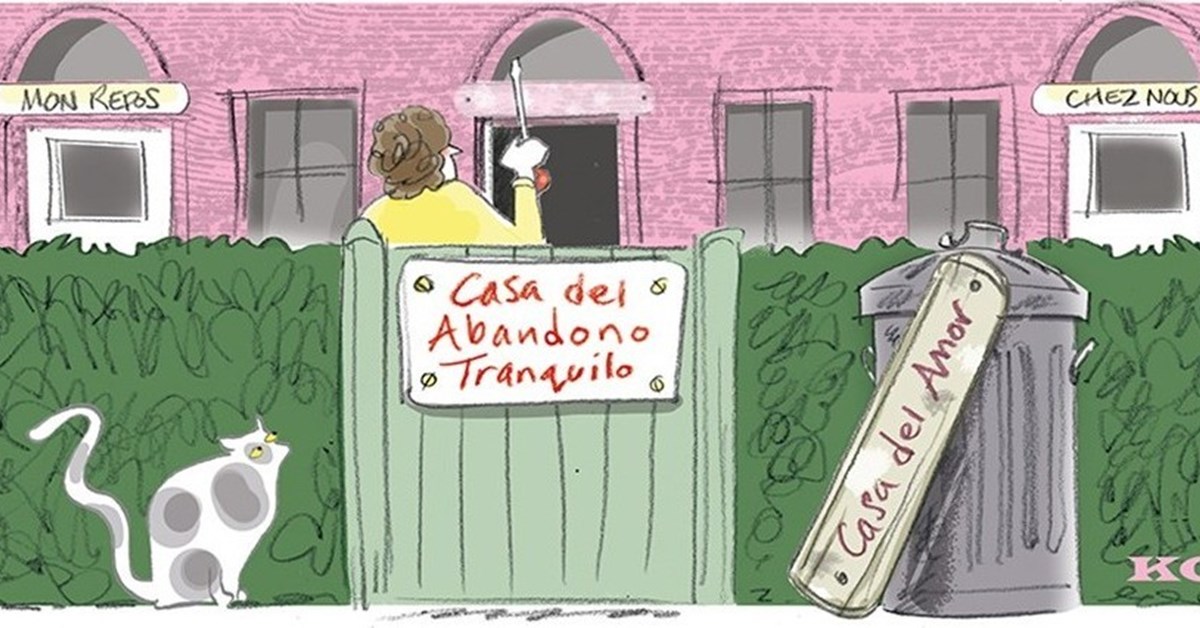
“Quiet quitting” labels a long-known truth: that many marriages opt for a low bar of aspiration, when couples are still married on paper, but more out of convenience than connection. Here is managed decline from the honeymoon days, each now more intent on self-preservation than union. The energetic force of two-become-one is diminished.
Perhaps marriage is best lived as an enduring symbol of human unity, not merely between two people but between all people. Two-become-one is a miracle; yet, when all become one, the miracle is greater still. Maybe marriage is an old, battered, and yet beautiful signpost to a yet more wonderful land. All become one.
Simon Parke is a counsellor and writer.