The Government has invested millions of taxpayer cash in a French company to build a massive insect farm in Tunisia.
Following the announcement, campaigners have issued an urgent plea for ministers to step in and halt the “gambling” of Britain’s funds on such a “high-risk sector”.
Last month, a Government-owned quango, British International Investment (BII), unveiled its major new investment in nextProtein, a French insect producer.
The titanic North African project will be designed to produce 12,000 tons of insect-based ingredients annually, including 2,500 tons of protein powder from billions of insects grown every year.
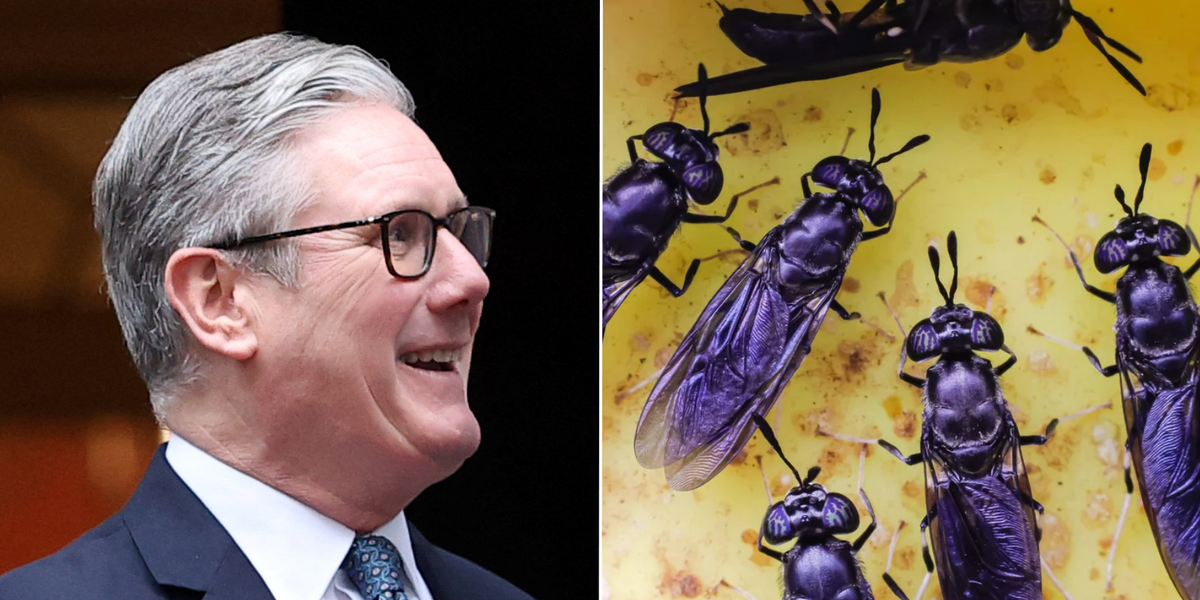
The French company uses Black Soldier Flies to make protein powder, oil, and fertiliser, which are primarily sold to the aquaculture, livestock and pet food industries.
It received £15.8million as part of a funding round, in which the BII was a participant.
The Government has not yet disclosed exactly how much taxpayers’ money was invested, but as “co-lead” of the round, it is likely to be a significant sum.
Announcing the news, the BII wrote: “By turning agricultural and food waste into scalable, low-carbon animal feeds, nextProtein demonstrates how agri-tech can reshape food systems and reduce environmental impact.

The Government has invested millions of taxpayer cash in a French company to build a massive insect farm in Tunisia
|
GETTY“As our first direct investment in Tunisia, nextProtein not only helps to protect the ocean and reduce emissions, but it also paves the way to attract more investments in novel climate startups in support of Africa’s climate innovation,” Sherine Shohdy, the BII’s head of Egypt & Regional Director North Africa said.
However, not all were thrilled by the news and seriously cautioned the Government against pursuing the investment.
“British taxpayers will be outraged to hear that their hard-earned cash is being used to build a giant insect farm in Tunisia,” Dr Chris Bryant, Executive Director of Bryant Research, told GB News.
He warned: “Insect farming companies are going bankrupt, left, right and centre.

The French company produces protein by farming Black Soldier Flies
|
GETTY
“The government shouldn’t be gambling taxpayers’ money on this high-risk sector,” the campaigner declared.
“And research shows that insect farming isn’t even good for the planet.
“Ministers must intervene now to block this deal and ensure that taxpayers’ money isn’t wasted on economically questionable and environmentally unsound projects,” Mr Bryant stressed.
The campaigner’s concerns about the economic viability of insect protein companies are grounded in reality.
Just this year, two other French insect producers entered financial difficulty, with Ynsect going bankrupt in 2025 despite having received millions of Euros in government subsidies.
Agronutris filed a safeguard procedure earlier in 2025, citing economic peril.
Outside of Europe, Aspire Food Group sold its Ontario, Canada-based cricket farm to a new owner this year after buckling under the pressure of debt.
South Africa’s Inseco ceased operations and sold its assets to industry partners, and Danish firm ENORM was declared bankrupt this year.

Campaigners have warned that the insect protein industry is not financially viable
|
GETTY
The environmental benefits of insect protein have also been called into question after a Defra-commissioned report found that insect protein could be 13.5 times worse for the climate than soy.
Even more damning, a long-hoped-for transition to insect protein as a human food source appears to be dead in the water, with people across the Western world rejecting the idea.
Research published in the journal Sustainable Agriculture found that only 20 per cent would consider eating insects across the US and Europe.
This was compared to the 91 per cent of respondents who would be willing to try plant-based “alternative meats”.