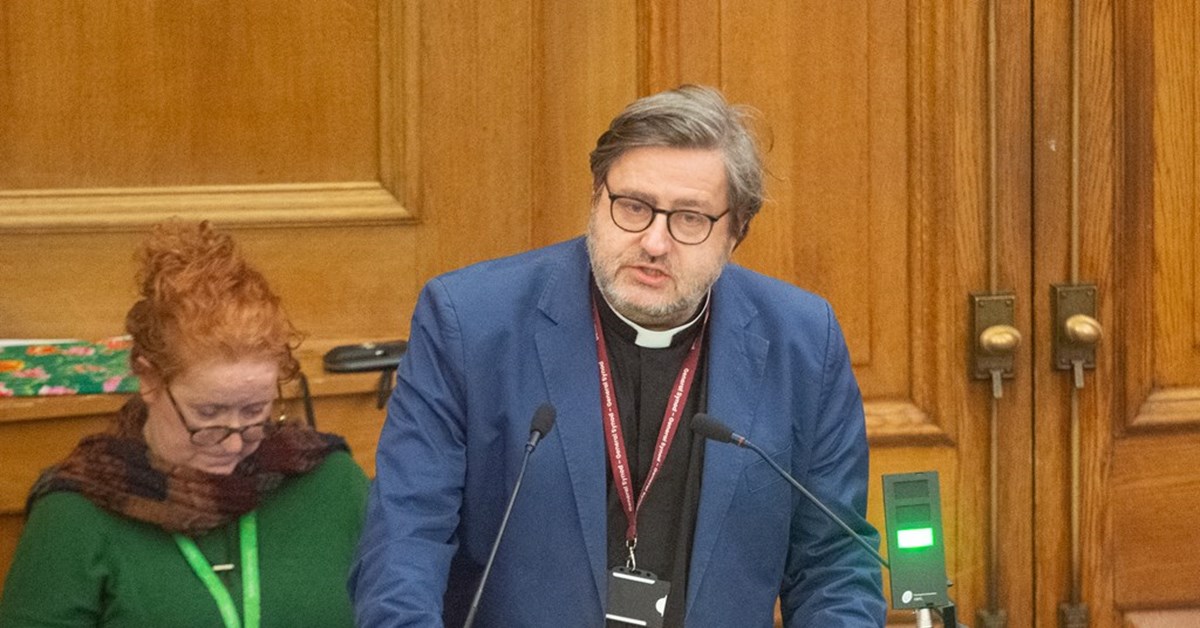
NOBODY should have to leave behind who they truly are to serve the Church of England, the General Synod heard during a debate on encouraging more working-class vocations to ministry.
The debate on Friday was developed from a private member’s motion from the Revd Alex Frost (Blackburn), which was carried overwhelmingly last year (News, 28 February 2025). The new motion called on the Ministry Development Board to develop a national strategy for working-class vocations.
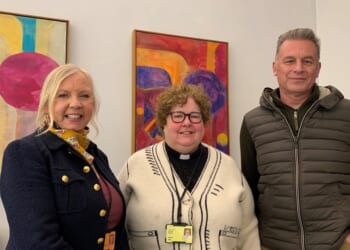
The debate began with a presentation from the Bishop of Barking, the Rt Revd Lynne Cullens, who gave numerous examples of the prejudice and barriers faced by working-class people as they explored a calling to ministry.
Work to raise up leaders who looked like the communities they served was both a “Kingdom and a missional imperative”, she told the Synod.
In an emotional end to her address, Bishop Cullens told the story of a single mother-of-three who had struggled for years to get through discernment, ordination, and curacy, battling numerous obstacles, poverty, and ignorance — but who was eventually called to be the Bishop of Barking. The Synod stood to applaud.
Bishop Cullens concluded that the national strategy being drawn up was centred on enabling working-class leaders to thrive at every level of the Church without having to first “leave behind who they are”.
The Bishop of Chester, the Rt Revd Mark Tanner, also from a working-class background, told members that a consultation had been held last year to hear what barriers still existed for people from families like his. “We heard those frustrations around discernment, vocations, housing, leadership progression — around a cultural disconnect where you never fully feel you belong.”
He said that there were signs of hope in improved data collection and a new advisory group; but the fundamental need was for more working-class representation in leadership, because “like attracts like.” Ultimately, no one should have to trade their accent or their community to flourish in the Church and be a witness to Christ, a carpenter from Nazareth.
Bishop Tanner closed with a plea to members not to let this work become enmeshed in culture wars or “playing off one group against another”. The motion, he said, was about working-class people of every culture and ethnicity.
In a coded reference to the recent debates over Christian nationalism and the far Right, Bishop Tanner said that the Church must “not allow our faith to be recruited as an agent for division”.
During the subsequent debate there was broad support for the motion and strategy. Many members told their own stories of an uphill struggle in a middle-class- dominated culture.
Fr Frost, whose motion last year had launched this project, told other members to return to their dioceses and demand that they take part in the consultation and national strategy, so that all voices could be heard: “Working-class Christians outside of this chamber, go and tell your story,” he said.
Several speakers noted the high financial cost of training, especially for a candidate who was a parent or working part-time. The Archbishop of Canterbury said that more than one quarter of UK workers regularly worked shifts in the evenings or overnight, and many of theme would be, by default, excluded from theological colleges and courses.
The Revd Chantal Noppen (Durham) spoke of cultural concerns: “embedded snobbery and Orwellian elitism” was rife, pressuring working-class people to try and change themselves to conform to outmoded expectations of what a priest should be, she said.
A similar point was raised by the Archdeacon of Bolton and Salford, the Ven. Dr Rachel Mann (Manchester), who said that the middle-class members of the Church should be educated in how not to be “freaked out by people like me” — that is, working-class people who offered a “disruptive” perspective.
Working-class ministers had been told off for wearing hooded jumpers or trainers, or told to undergo elocution lessons to shed their regional accents, the Revd Claire McArthur (Coventry) said. “I know that I am a good priest. We are not a problem to be solved: we are a gift.”
The motion welcomed last year’s consultation, called on the House of Bishops to address “structural and cultural barriers to the flourishing of working-class ministers”, urged all dioceses and colleges to track socio-economic data and monitor class representation, and endorsed the work under way to establish a working-class vocations strategy and advisory group.
The motion was carried overwhelmingly on a show of hands. It said:
That this Synod:
a) note the unanimous support given by this Synod in February 2025 to the Private Member’s Motion brought by the Revd Alex Frost calling for a national strategy for working-class vocations and ministry, and recognise that Synod has already agreed to “Commit itself to taking the necessary steps to raise up a new generation of lay and ordained leaders from estates and working-class backgrounds at all levels in the church” when agreeing to GS 2345 (point 5 in the motion);
b) welcome the consultation work that heard from working-class ministers, both lay and ordained, across the Church of England, acknowledging their voice and that the Church can and must do better to receive their ministry, both now and in the future;
c) call on the House of Bishops to address structural and cultural barriers to the flourishing of working-class ministers and their ministry at all levels, acknowledging the intersections with other underrepresented groups;
d) encourage the national church, dioceses and training institutions to fully adopt the use of the of the recognised socio-economic background (SEB) data questions as an aid to monitoring progress on class representation;
e) endorse ongoing engagement with working-class ministers and other stakeholders for continuing the strategy development and the creation of a new advisory group to oversee this, reporting to the Ministry Development Board (MDB).