
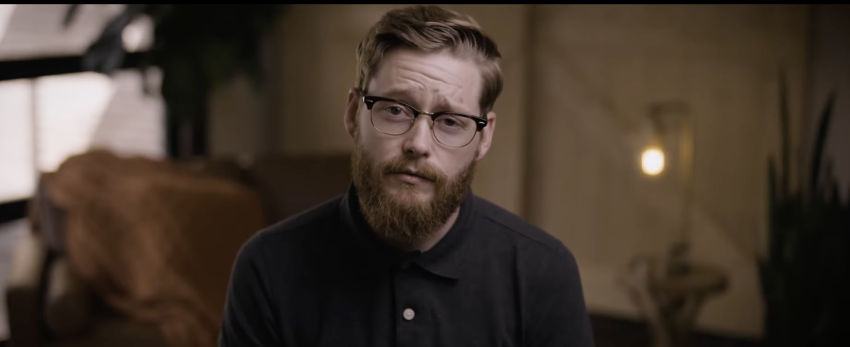
As Christmas approaches, a former atheist-turned-Christian has released a new documentary for both believers and skeptics, emphasizing that science and reason do not undermine belief in God but instead point toward Him.
“Universe Designed,” releasing Dec. 13 across all major digital platforms including Apple, Amazon, Google and Fandango via Collide Media Group, explores the relationship between science, philosophy and Christian faith, arguing that the universe itself bears the marks of intentional design.
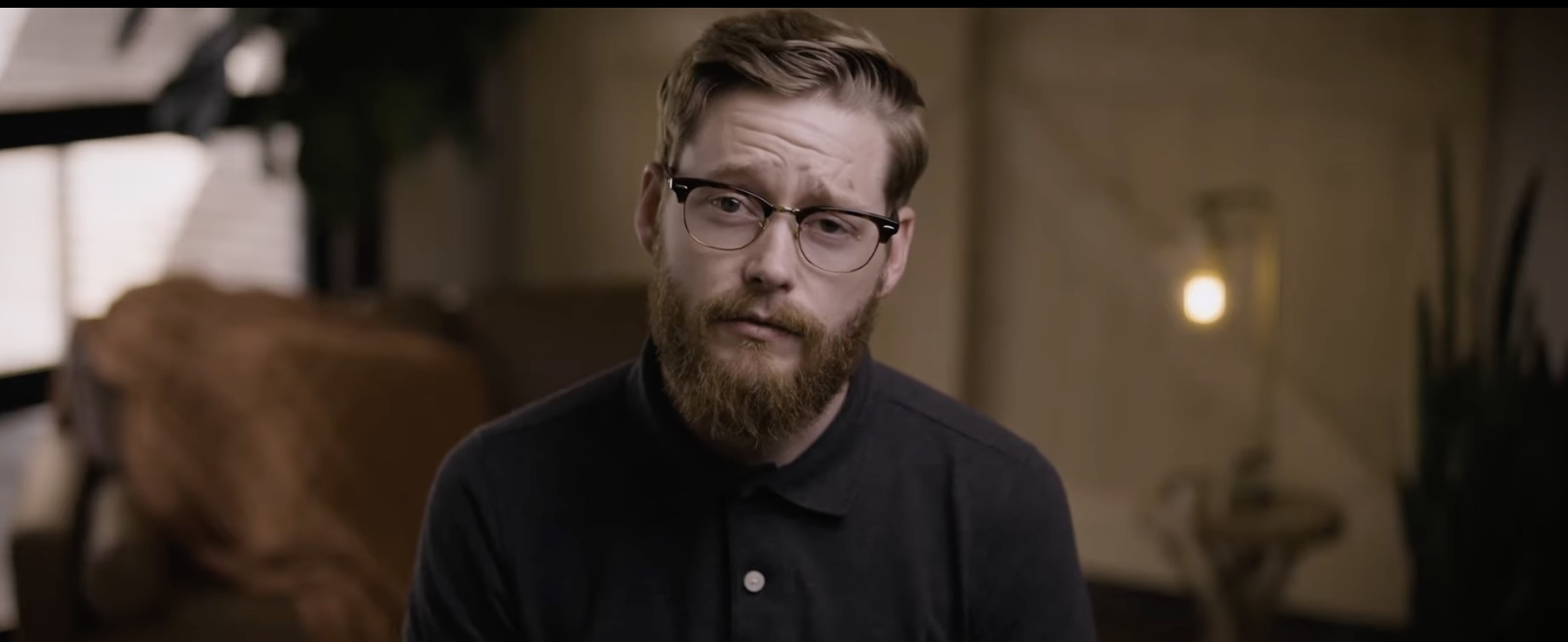
The film is directed by Michael Ray Lewis, a former atheist whose personal search for evidence became the foundation of the project, and features appearances from leading Christian thinkers, including Frank Turek, Sean McDowell, Alisa Childers, Stephen Meyer, Hugh Ross and Allen Parr.
“As an atheist, one of my biggest frustrations with Christians was that they often asserted their beliefs were true without ever explaining why they believed that,” Lewis, head of Turtle Moon Films, told The Christian Post. “It felt like being preached at rather than reasoned with.”
“So when making the film, I wanted a slow, methodical approach, something that would not feel confrontational or preachy to skeptics,” he added. “I wanted viewers to feel like they were being guided on a thoughtful journey that begins with life’s biggest questions and then explores why the Christian worldview actually holds up.”
The documentary is produced with the mission of equipping believers to defend truth with grace and inviting seekers to explore a relationship with the Creator.
“Many Christians have never encountered the powerful evidence that supports belief in God. This documentary summarizes those arguments while encouraging viewers to explore the foundations of their faith. Our mission is to glorify God through cinematic storytelling that equips believers to defend truth with grace and invites seekers to discover a relationship with the Creator of the universe,” reads the film description.
According to Lewis, his own journey toward faith began not in a lecture hall or laboratory, but in his own living room. Out of love for his wife, he agreed to attend church with her, though his skepticism remained firm.
“For me, everything changed the day my wife came home and said, ‘I feel like Jesus is calling me back,’” he said. “I remember thinking, Oh no … here we go. I didn’t believe in God, and my interactions with Christians on street corners had shaped a very negative view,” he said.
“I remember looking around and thinking, ‘Well, these Christians aren’t as bad as I thought.’ I understood why people found hope in it, but I didn’t believe any of it was actually true,” he continued.
“Eventually, I grew tired of attending, and I decided the quickest way out was to prove to my wife that Christianity wasn’t true. I started throwing difficult questions at her, questions she couldn’t answer, yet no matter how many objections I raised, she remained absolutely convinced of her faith.”
A pivotal turning point came unexpectedly when Lewis encountered an online lecture, and that discovery sparked years of careful study across scientific and historical disciplines.
“One day, a video appeared in my YouTube feed: a talk by an astrophysicist named Hugh Ross explaining the creation days in Genesis from a scientific perspective,” he said. “For the first time, I saw that the biblical creation account actually aligns with what we observe in science. That got my attention.”
“It sparked a three-year journey of intense research into cosmology, biology, philosophy, and history,” Lewis said. “That journey ultimately led me to realize that Christianity offers the best explanation for the reality we live in.”
Before embracing Christianity, Lewis built a career in independent filmmaking, primarily producing low-budget horror films. But after finding Jesus, he said his entire outlook and filmmaking trajectory changed.
“Once I gave my life to Jesus, I knew that wasn’t where I needed to be anymore,” he said. “I wanted to create something that mattered, something for the Kingdom.”
Though experienced in filmmaking, he had never directed a film himself and struggled to envision his next step. Most faith-based films, at the time, lacked both the quality and depth he wanted to infuse into his next project.
“Even though I had worked in film, I had never directed a project myself,” he said. “I wasn’t sure what story I could tell now that my worldview had changed. I had watched a few Christian films and honestly thought, these aren’t very good.”
“I was talking with my wife about it, and it was actually her idea: ‘Why don’t you make a documentary showing others the evidence that convinced you?’ That was the spark that eventually became ‘Universe Designed.’”
According to Lewis, his background as a skeptic influenced the film’s approach toward viewers who harbor doubts or objections about faith. The director said he repeatedly evaluated the film from the perspective he once held.
“Throughout production, I constantly asked myself: If I were still an atheist, how would I react to this film? “That perspective shaped everything.”
Though the film answers “Is God real?” with certainty, Lewis emphasized that the term “prove” requires careful understanding, adding: “The word ‘proof’ can be easily misunderstood. In a strict philosophical sense, you can’t ‘prove’ anything absolutely.”
“Instead, in the film, I make a more modest and accurate claim: God is the best explanation for the reality we find ourselves in,” he added. “No worldview explains the origin, structure, fine-tuning, meaning, and moral dimension of reality as coherently as the Christian worldview does.”
Now, as a Christian apologist, Lewis said he’s convinced that modern scientific discovery increasingly supports, rather than disproves, belief.
“When people say science makes Christianity irrelevant or incompatible, it’s usually because they haven’t looked deeply enough,” he said. “Many of the most significant scientific discoveries — especially in the last century — point strongly toward a Creator.”
“From the universe having a beginning, to the fine-tuning of physical laws, to the information-rich design of DNA, the evidence suggests intentionality, purpose, and mind behind the universe,” Lewis said. “Universe Designed highlights some of those discoveries in a clear, accessible way.”
Of all the arguments, cosmic fine-tuning made the most profound impact on his thinking, Lewis said, citing the “fundamental constants, quantities, and parameters that must be set to extraordinarily precise values for life to exist.”
“The odds of all of them being correct by chance are astronomically low,” he said. “To put it into perspective: It would be more likely for you to pick out one single proton from all the protons in the universe while blindfolded. Whenever we encounter something that is finely tuned for a purpose, we know it requires intelligence. The fine-tuning argument became impossible for me to ignore.”
“Several aspects stand out,” he continued. “The universe had a beginning. The cosmos is finely tuned for intelligent life. Cells contain incredibly intricate mechanisms. DNA contains the equivalent of thousands of volumes of encoded information.”
“All of these point to one conclusion: There must be a mind behind the universe.”
Lewis said he once wrestled deeply with moral and philosophical objections to belief, topics he tackles in the documentary to help others who, like him, struggled with reconciling a fallen world with a good God.
“My biggest objections were: the problem of evil and suffering, the belief that evolution eliminates the need for God, and the idea that God would punish me eternally just for struggling to believe,” he said. “All of these objections are addressed in the film. These were genuine stumbling blocks for me, and I wanted to confront them honestly.”
The film’s lineup, including scholars, theologians and apologists, reflects Lewis’ desire to deliver sound theology and informed scientific beliefs while remaining engaging for general audiences.
“I wanted both scholars and communicators,” he said. “The scholars bring depth, expertise, and rigorous argumentation. The communicators help present those ideas in ways viewers can easily understand and stay engaged with.”
“Bringing together some of the world’s top Christian thinkers allowed the film to deliver compelling evidence while remaining accessible and enjoyable to watch. It was incredible to sit across from the very scholars whose books had challenged my atheism, and ask them my toughest objections directly,” he added. “Their answers only strengthened my confidence in Christianity and deepened my relationship with Jesus.”
Originally envisioned as a one-year project, the documentary ultimately took four years to complete. But Lewis now believes the Christmas release is purposeful.
“I continually prayed for God’s timing, not mine,” Lewis said. “Now it releases at Christmas, a season celebrating the moment God stepped into his creation as a human being. It’s also a cultural moment when people are asking deeper questions again: Why are we here? What is our purpose? What does all this mean?”
“I can’t imagine a better time for a film that speaks directly to those questions.”
Lewis hopes the film spurs genuine dialogue during holiday gatherings and points viewers to Jesus and the truth of the Gospel. “Universe Designed,” he emphasized, was made for skeptics, doubters and Christians alike.
“What better opportunity than a movie designed to spark thoughtful conversation about God?” he said. “My hope is that Universe Designed becomes a catalyst for meaningful dialogue, encouraging people to ask big questions and pursue truth together.”
“For skeptics and doubters, I hope the film challenges their assumptions and shows that Christianity is absolutely worth serious consideration,” he said. “For believers, I hope it strengthens their confidence and equips them to have better conversations about their faith. Ultimately, this is a film for anyone genuinely seeking truth.”
“My hope is that the film stays with them,” Lewis added. “That it causes them to reconsider what they believe about reality, purpose, and truth. My challenge to viewers is simple: Seek truth. Ask the big questions. Follow the evidence honestly. I’m confident that if someone genuinely pursues truth, they will ultimately find their way to Jesus.”
Leah M. Klett is a reporter for The Christian Post. She can be reached at: leah.klett@christianpost.com