THIS study offers an interesting and well-documented window into the world of non-religion among primary-school students in England. It is grounded in ethnographic fieldwork and interviews with 115 students at Key Stage 2, 55 parents (including one guardian), and 12 teachers located in three schools selected to represent different levels of religious affiliation as documented by the 2011 UK Census.
The notion of “non-religion” is itself a complex field. One marker within this field is anchored in self-reported religious affiliation, as captured in the national census. In 2021, in Wales, the largest religious category was “no religion” (46.5 per cent compared with 43.6 per cent Christian), while, in England, “no religion” was not that far behind (36.7 per cent compared with 46.3 per cent Christian). The census data also showed that the proportions reporting “no religion” increased as age decreased.
Anna Strhan and Rachael Shillitoe are correct in identifying non-religion as an important field of research with a specific focus on the formation and transmission of non-religious identities. They argue that “more people are self-identifying as ‘non-religious’ not because adults are losing their religion, but because each new generation is less religious than the previous one.” They are also correct in exploring the twin tracks of non-religion and non-belief. The key identifier for selection of student interviewees was their response to the question “Do you believe in God?” rated on a three-point scale: “Yes,” “No,” and “I’m not sure.” Their interest in non-belief embraces both rejection and uncertainty.
In five well-differentiated chapters, Strhan and Shillitoe discuss: what it means to children to grow up godless; raising godless children, and raising humanists within the home; handling non-belief and humanism at school; the aesthetics of godlessness, understood as “an Aristotelian notion of aesthesis — a means of organising our sensory experience of the world”; and the ethics of non-religion. This final core chapter summarises how the children’s values draw on notions of authenticity, respect, individual autonomy, concern for human flourishing, respect for differences (including ethnic and religious diversity), and freedom over religious choices.
A key conclusion from this study is summed up in the heading, “from religious decline to humanist becoming”. They argue that non-believing children “are atheists because they are becoming humanist, and humanism is being formed in both home and school”. The humanism of which Strhan and Shillitoe write is styled “lower-case humanism”, that emerges in fragments and accounts of everyday encounters.
This is an important conclusion to be taken seriously by those of us who continue to believe that religion has a viable future alongside non-religion. It reminds us of the core alliance between home and school and invites the Christian community to reconsider the emphasis (and investment) that it places on equipping Christian parents and shaping Christian (church) schools.
The strength of this study resides in the way in which it generated rich qualitative data through interview and ethnographic field work. As someone committed to the complementarity of qualitative and quantitative approaches, this reviewer simply now longs for a quantitative study to build on the foundations so clearly put in place.
The Revd Dr Leslie J. Francis is Professor Emeritus of Religions and Psychology at the University of Warwick, in the Centre for Research in Intellectual and Developmental Disabilities, and is co-director of the World Religions and Education Research Unit at Lincoln Bishop University. He is Canon Theologian of Liverpool Cathedral.
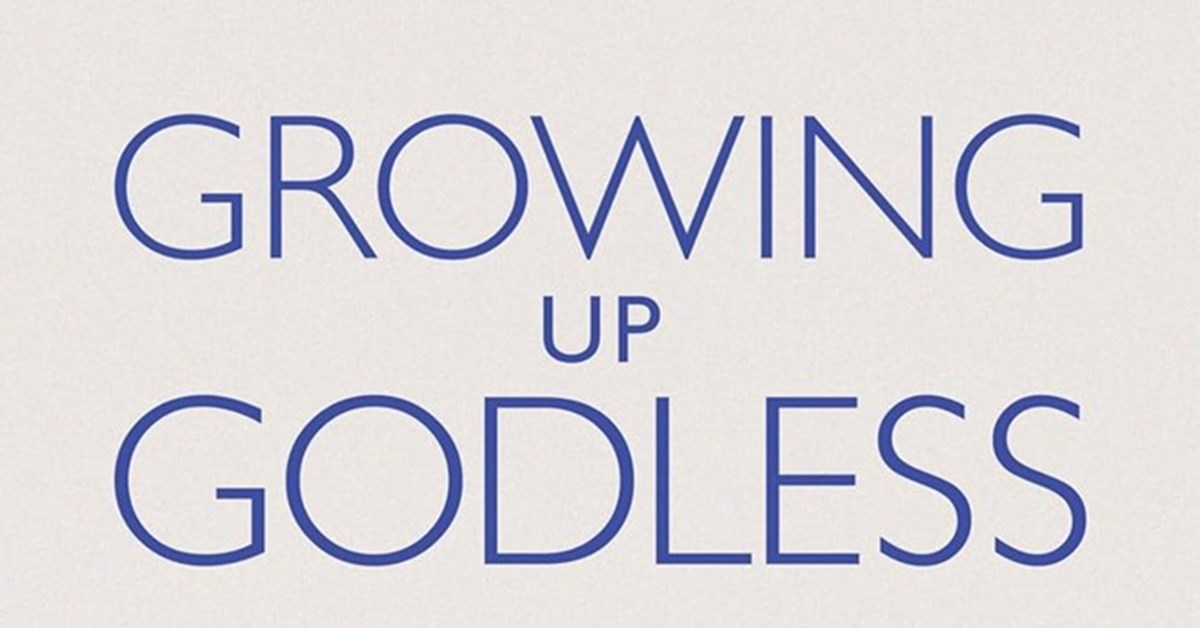
Growing up Godless: Non-religious childhoods in contemporary England
Anna Strhan and Rachael Shillitoe
Princeton University Press £22
(978-0-691-24725-0)
Church Times Bookshop £19.80