Vicarious representative
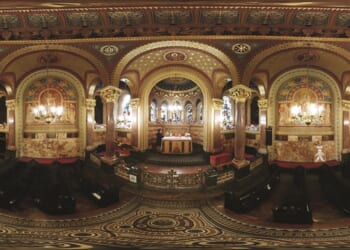
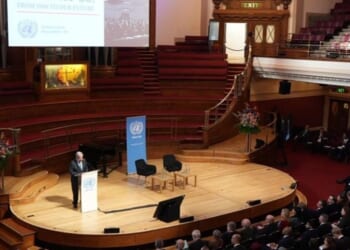
AS A mere musician, I never expected to find myself asked to stand in for a former Archbishop of Canterbury; but, so it was in Southwark Cathedral, on the eve of Remembrance Sunday, when I replaced a temporarily unwell (but now happily recovered) Dr Rowan Williams for a pre-concert panel discussion of Benjamin Britten’s towering War Requiem.
My fellow panellists were the deeply impressive the Revd Lucy Winkett, and the eminent music historian Dr Joanna Bullivant; and we explored why this musical statement of Christian pacifism is still so powerful today.
I was in the original 1963 recording, as a member of the boys’ choir, conducted by the composer, and it made a lasting impact on me. Sadly, the reason the War Requiem still resonates — apart from the genius manifest in the music — is that war seems to be for ever with us. Are there any theologians able to explain why? Maybe it’s a job for an anthropologist. The performance, by the young Outcry Ensemble, conducted by their founder-director James Henshaw, was stunning; watch out for them.
Sea fever
TWO days later, I stood on the rain-lashed and windswept Lowestoft seafront to unveil a new statue of Benjamin Britten, who was born and grew up there. The weather perfectly matched my mental picture, formed largely by Peter Grimes, of what it is supposed to be like on the North Sea coast; but the statue by Ian Rank-Broadley is splendid and highly evocative, depicting the 14-year-old composer gazing out to the sea that haunted his imagination all through his life. Well worth a trip to Lowestoft to see it; not sure where I should send the dry-cleaning bill for my ruined suit, though.
Brief notes
EVERY two years, in the month of November, I conduct the Royal Philharmonic Orchestra and the Bach Choir in St Paul’s Cathedral: an event that the musicians and I always look forward to as an opportunity to make music in the magnificent surroundings of Christopher Wren’s masterpiece, with its majestic acoustics — you have to adjust to the fact that a sound takes fully nine seconds to die away.
There is often a Remembrance theme to these biennial concerts, but, this year, I have been celebrating a round-number birthday, and I decided to build a programme around the idea of birth and renewal.
It was in St Paul’s Cathedral, on his 1795 visit to London, that Joseph Haydn heard a performance of Handel’s Israel in Egypt, and was inspired to write The Creation; so, maybe it was more than coincidence that I wrote a new work specially for this year’s concert: I’ll Make Me a World, to a text by the African-American poet James Weldon Johnson, retelling the Genesis creation story.
For a composer, nothing quite matches the thrill of hearing your latest work come to life for the first time . . . and, if it’s in the setting of St Paul’s, you float on air. Sometimes, the reviews bring you back to earth, but I chuckled when I read in the next day’s Guardian that my music is “as unfashionably essential as a five-pack of M&S briefs” — not the most obvious of comparisons, but I think it was kindly meant.
Carpe diem
DOWN in the crypt, I always like to pause for a moment and contemplate the life-sized marble monument to Admiral George Rodney. This gallant admiral, who played a part in the relief of Gibraltar in 1780 — a bit of a rogue, by all accounts — is flanked by two curvaceous ladies in wispy robes. The robe worn by the winged one on his right has evidently slipped from her shoulders, and her womanly attributes are fully displayed.
I like to think that this is how the old sea dog wished to be remembered; but, as an eight-year-old visiting the cathedral with my school party, I was hurried past it and directed to admire Nelson’s massive tomb near by.
That was Britain in the 1950s. I remember asking Dr John Moses, a former Dean of St Paul’s, whether he would prefer to return to those more placid days (we were discussing all the challenges of today’s Church). “Ooh, no,” he replied. “Much more fun now.”
Nuns on the run
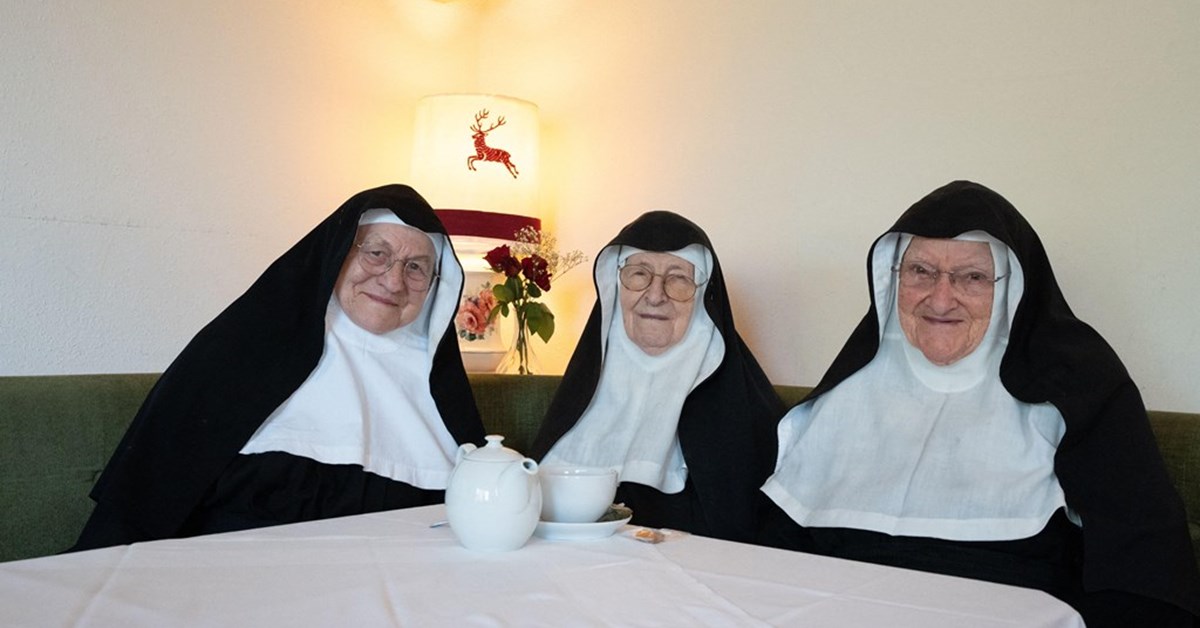
NOT much in the news lately to raise a smile, but I have been enjoying the unfolding saga of the three elderly Austrian nuns who recently escaped from a care home. They had been consigned there so that the abbey where they had lived all their adult lives could be closed down; and they were not happy.
Under cover of darkness, they crept out into a waiting car driven by an accomplice, returned to their abandoned abbey, and broke in, aided and abetted by a friendly locksmith who enlisted colleagues to reconnect the water and electricity. Safely back in their beloved abbey, the intrepid Sisters issued a defiant statement declaring that they would rather die under the stars than go back to the care home.
News quickly spread of their daring escapade, and sympathetic villagers began to bring gifts of food, seedlings to replant the kitchen garden, and maybe a few chickens for their breakfast eggs. Wider fame was soon to come, and television cameras have been following them as they go about their daily round of prayer and upkeep of the abbey. Merchandising is the latest development: you can buy their hand-made rosaries online.
Good on you, Sisters. I hope you can sell the film rights to your story for a nice tidy sum.
The Christmas round
SO, TO Christmas, and the round of seasonal concerts I am invited to conduct — this year in venues including the Royal Albert Hall, Bath Abbey, and Guildford Cathedral.
Do I sincerely enjoy Christmas, I am sometimes asked. Yes, I really do. I wrote a few carols in my extreme youth; and hardly a year has gone by since then without writing a new one. Carols are a form of folk art. Composers and poets, known or anonymous, have been writing them since the Middle Ages, and I’m happy to have added a few little tiles to a mosaic of celebration and devotion spanning the centuries.
The music of Christmas is important in pastoral terms. I remind myself that, for many people, Christmas is the only time of year when they get to hear the singing of a choir, or to step inside a church; and we should offer them the best experience we can, so that they will want to come back. In the words of the medieval monk, set to such joyous music by Benjamin Britten, Wolcum Yole.
Sir John Rutter is a composer and conductor.