The Rt Revd Lord Chartres writes:
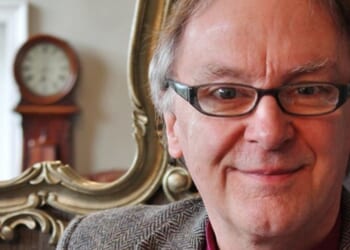
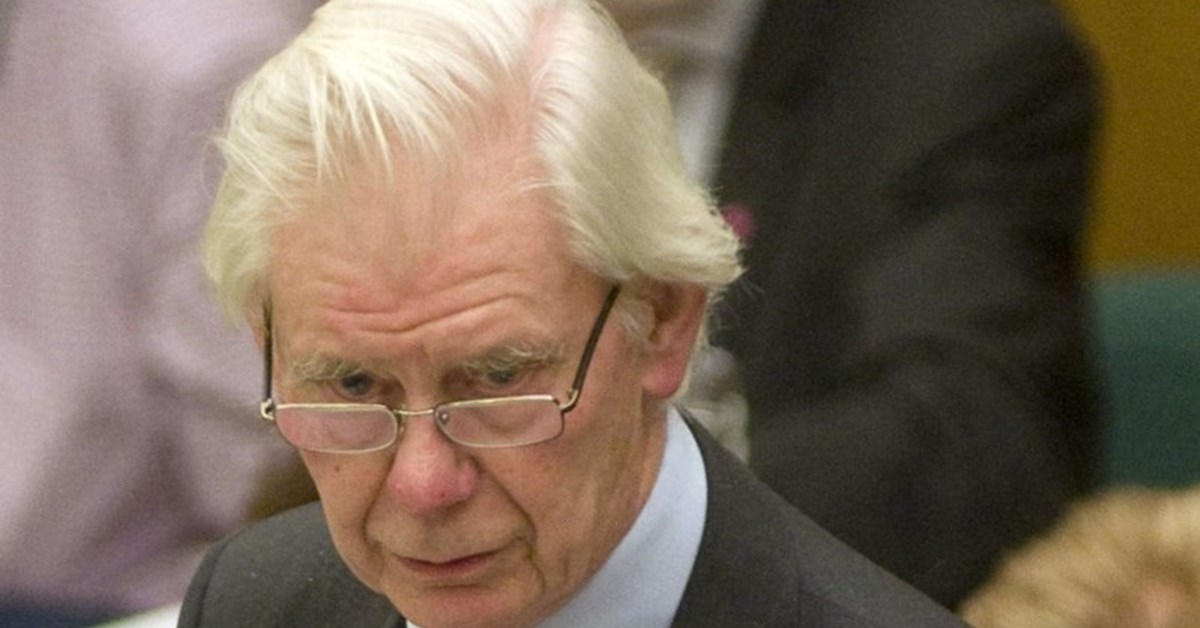
SIR Andreas Whittam Smith, who died on 29 November, aged 88, was a courageous and high-principled man, as well as a loyal son and servant of the Church of England.
He was born in a vicarage, and, aged three, moved with his parents to a parish in Birkenhead. It was just before the Luftwaffe raided the ports and shipyards near by. He remembered “sheltering in the cellar, and my father having to bury huge numbers of people when a whole street was wiped out”.
The entire family was involved in the ministry; Andreas sang in the choir, rang the bell, and put out the hymn books. Faith was an unquestioned assumption. Inevitably, as the vicar’s son, he experienced his share of mockery from his peers, and sometimes wondered whether this contributed to a certain reticence in talking about his faith.
Academically, he did not shine at Birkenhead School, which had a tradition of winning Oxbridge scholarships. The authorities decided early on that Andreas was not Oxbridge material. Typically, this increased his determination to apply independently. He found a book in the local library, The Statutes of Oxford University, and, in it, a reference to Keble College as a Church of England foundation with a Warden who was a clergyman. Andreas took the entrance examination without telling the school and was accepted.
Oxford was a transformative experience, although he “had not realised that it would still be Brideshead Revisited”. The upper-class atmosphere was foreign to him and, as he said, “It might as well have been Mongolia.” He adapted to the environment, however, and so enjoyed the social life that he achieved only a third-class degree. He was so disgusted with himself that he became, and remained, a very hard worker.
Unlike many of his contemporaries at Oxford, Andreas continued to be a regular churchgoer, both after moving to London and later in Paris, where he and his wife, Valerie, bought a flat.
In a 2006 interview, he identified “private prayer” as the bedrock of his spiritual life: “I need physical exercise and spiritual exercise and I do quite a bit of both.” He devised his own complex form of daily prayer.
His mother was a music teacher, and he described himself as fluent in two languages: English and music. Re-applying himself to the piano in his early thirties, he approached a professional standard of performance. He was a lover of church music of all kinds — as he said, “not only Anglican music, but Schubert Masses and the old things that are hardly sung any longer, like Stainer’s Crucifixion”.
In 1986, Andreas co-founded The Independent and became its first editor. It was a courageous attempt to chart a better way of doing journalism. There were to be no freebies and no royal tittle-tattle. The newspaper covered education, health, and architecture in a way that was soon copied by other titles in Fleet Street.
He stepped down from the editor’s chair in 1993, but continued to write for the paper. Five years later, he was appointed President of the British Board of Film Classification, instigating a liberalisation of film and video censorship. He resigned in 2002 on being appointed First Church Estates Commissioner. At the Church Commissioners, he was, in effect, responsible for the management of the historic asset base of the Church of England.
I worked closely with Andreas during his tenure as First Commissioner, while I deputised for the Archbishop of Canterbury as Chairman of the Board of Governors. He drew on his long experience as a financial journalist and was among the first to predict the severe economic crisis of 2008. Against considerable internal opposition, he persuaded the Commissioners to convert their riskier investments into cash. When the crash came, it was clear that he had saved the Church millions, while positioning it to buy assets which, by then, were undervalued.
For many people, it would have been enough to have made the right call, but Andreas also drew another lesson from the crisis. He had detected a governance problem at the Commissioners in the lack of any internal investment professional capable of resisting impetuous decisions on the part of some future First Commissioner. The result was the appointment of Tom Joy as Chief Investment Officer for the Church of England. The proof of Andreas’s wisdom and Tom’s skill is in the Commissioners’ balance sheet since the financial crisis.
Andreas’s legacy extends to the creation of a new library and archive within the curtilage of Lambeth Palace, where the internationally significant collection of manuscripts and historic documents now has a secure home, with better facilities for students. As First Commissioner, he persuaded the Commissioners to back a bold scheme, and presided over a project that was delivered under budget and on time.
Andreas knew the right questions to ask, and his determination to do his best for both the Church he loved and the clergy was inspiring. He memorably said: “I shall never desert Anglicanism, even if I’m the last man left standing on the bridge as the ship goes down. There are three things I might be prepared to die for: I’d die for my Church, I’d die for my country, and I’d die for my family.”