PCCs will have to secure the support of more members before carrying out their business via correspondence, after the rules were tightened up by the General Synod on Tuesday morning.
The item, Clive Scowen (London) explained, had been placed on the agenda because of a concern that the current rules gave excessive discretion to the chair of the PCC to engage in business via correspondence and decide what kind of approval was needed by the rest of the PCC to sign off on this.
A new daft rule requiring at least one third of the members to approve in writing the conduct of business via correspondence, without objection, would tighten this, Mr Scowen said.
The Revd Barnaby Perkins (Guildford) warned: “One opposing voice, potentially vexatious, could thwart a swift and sensible movement for a whole PCC.”
Caroline Herbert (Norwich) said that business via correspondence was generally used for non-controversial, simple formalities. The change would also avoid any appearance of an “abuse of process”.
Dr Andrew Bell (Oxford) said that his PCC regularly used the correspondence rule, but shared the worry that this could be derailed by a single objection. Could this be decided via a majority rather than unanimity, he asked.
Jane Patterson (Sheffield) asked why no time limit would be written into this new rule requiring positive responses to the chair’s request.
Dr Chris Angus (Carlisle), who was on the committee that wrote the original rule, apologised for not realising the potential loophole that was now being filled. One objection would not necessarily derail business via correspondence, but simply force the PCC to discuss it fully.
Dr Brendan Biggs (Bristol) said that there was a parallel with boards of directors in companies, which could also make decisions by means of written resolutions, as long as they were unanimous. Hence, it was appropriate for a single objector to be able to frustrate a proposal to conduct business by correspondence.
Dr Nick Land (York) said that many church bodies had rules on deemed business that could go through automatically as long as nobody objected. He supported the idea that a single objecting voice on a PCC would be able to enforce an in-person discussion at a meeting.
Chris Gill (Lichfield) welcomed the change, which, he said, would ensure that everyone on a PCC at least received the relevant email.
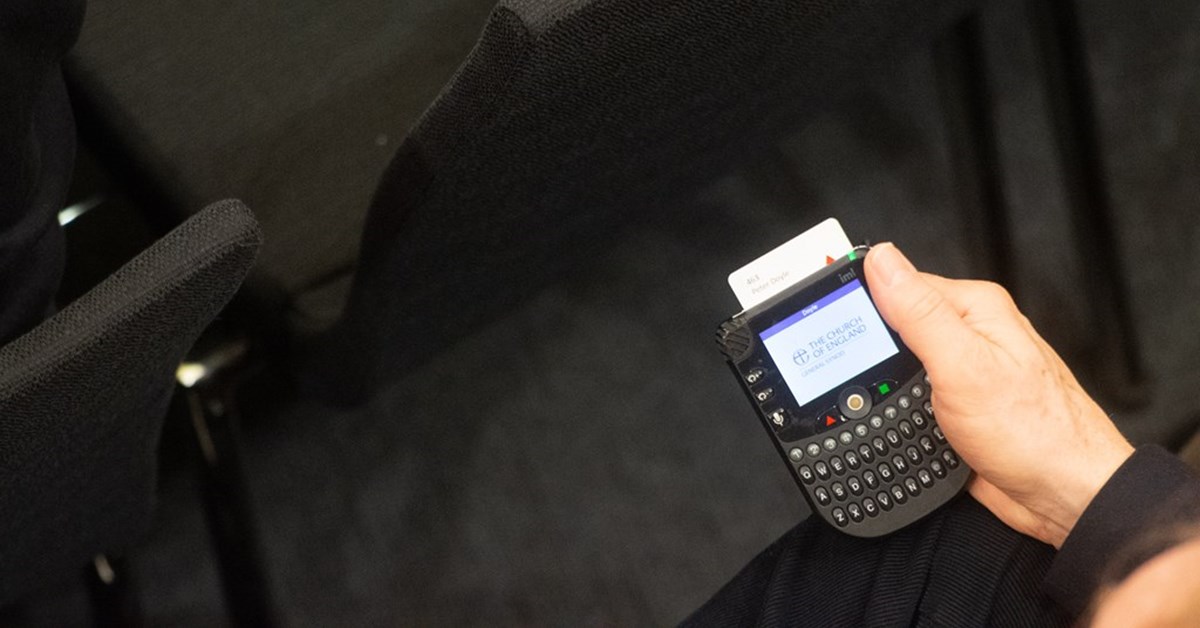
The new rules were carried: Bishops 17-0; Clergy 94-6 with three recorded abstentions; Laity 104-1 with five recorded abstentions.
Read more reports from the General Synod Digest here