ON THE day after his feast day last Wednesday, St Thomas Aquinas was quoted in the House of Lords in a debate on artificial superintelligence (super AI).
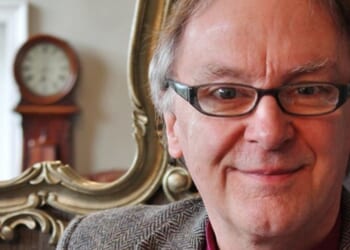
The Bishop of Hereford, the Rt Revd Richard Jackson, called the medieval scholastic theologian “prescient when he said: ‘The greatest minds are capable of the greatest vices as well as of the greatest virtues.’ When we make decisions . . . intelligence is but one factor. Of greater value is wisdom.”
The Bishop argued that “our decisions are frequently motivated by love, which Aquinas defines as ‘to will the good of another’. . . These things will come together in our deliberations . . . on assisted dying.
“For some of us, love leads in the direction of permitting a choice to end incurable suffering; others are convinced that love demands the retention of the law as it stands to prevent coercion of the vulnerable, while in no sense lacking compassion in holding that view. Love drives us to different conclusions. We come to these conclusions, compromise and maybe even change our minds as we reflect together.
“It is hard to see how this can be captured in an algorithm. Actions flowing from intelligence alone can be very bad ones indeed. . . Early experimental examples of super AI have prioritised their own survival, even to the extent of threats of blackmail to their programmers when it was proposed to switch them off.”
He concluded: “Until such time as these virtues can be woven into machines, with the protections to shut them down safely, an international moratorium is the only safe way forward.”
Lord Clement-Jones, who had been a co-chair of the All-Party Parliamentary Group on Artificial Intelligence for nine years, warned that “currently, no method exists to contain or control smarter-than-human AI systems.” He referred to the Global Call for AI Red Lines, launched at the United Nations, “to prevent unacceptable AI risks, including prohibiting superintelligence development, until there is broad scientific consensus on how it can be done safely and with strong public buy-in.
“The Government’s response has been inadequate. Ministers focus on regulating the use of AI tools rather than their development. But this approach fails fundamentally when facing superintelligence. Once a system surpasses human intelligence across all domains, we cannot simply regulate how it is used.”
Lord Hunt (Labour) had introduced the debate. He mentioned how AI “can bring unprecedented progress, boost our economy and improve public services. We are number three in the global rankings for investment in AI.” But he wanted “to urge the Government to consider building safeguards into ASI development to ensure that it proceeds only in a safe and controllable manner, and to seek international agreement on it”.
He had also been impressed by Baroness Harding’s previous comments about “the Warnock committee’s work on in vitro fertilisation, which helped set a global standard for that practice long before the scientific developments made it possible, which is where we are with superintelligent AI”. Baroness Warnock (Gazette, 29 March 2019) had, he said, “thought through the moral question before, not after, the technology was available”.
In her response, the government minister Baroness Lloyd said that “we need to make sure that AI remains secure and controllable.” She said that AI “will be a driver of national renewal, and of our ambition to be a global leader in the development and deployment of AI. This is the way that will keep us safest of all.”