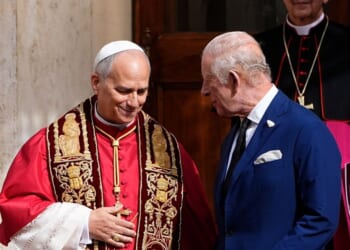
JUST before Christmas, I took up the challenge that Pope Leo laid down when talking to a group of Hollywood stars and directors that he had invited to the Vatican. Cinemas are closing, he noted, screens are going dark, and neighbourhoods are losing places in which stories were once shared together.
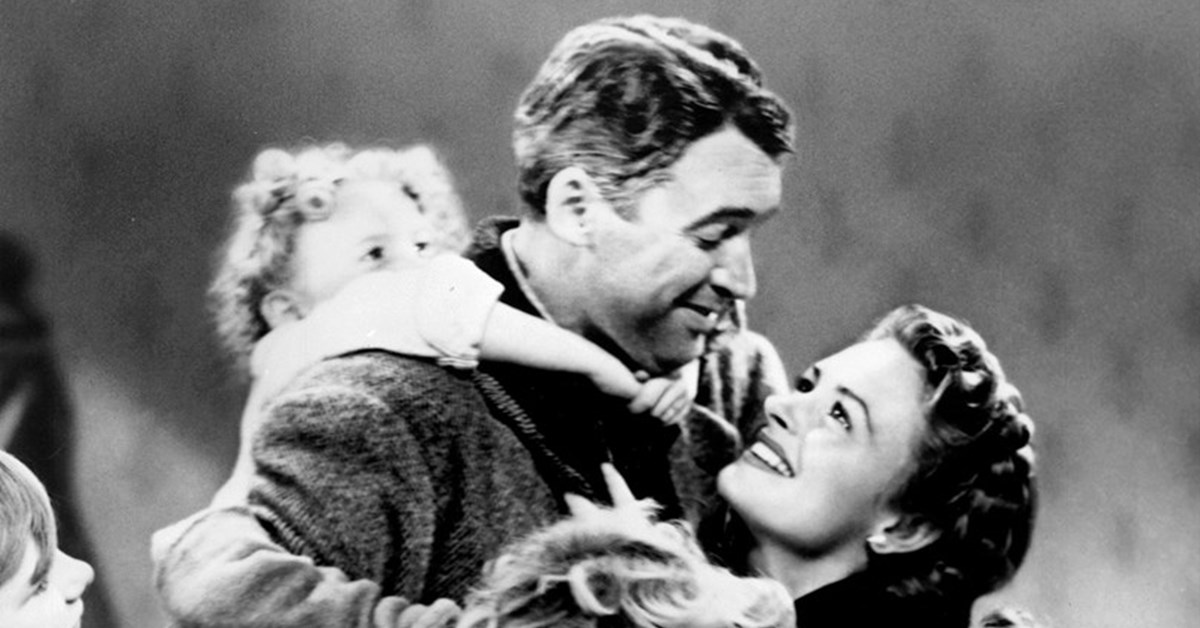
Where I live, in Sale, however, we have recently had a new independent cinema open called Northern Lights. So, I went with family and friends to see a film: Frank Capra’s Christmas classic It’s a Wonderful Life. The movie is eight decades old, but, having watched it on the telly countless times over the years, I was interested to see whether it looked different on the big screen.
Digital screens today dominate our lives with a constant flow of information, demands, and diversions. Facebook algorithms constantly offer us variations on what we have watched before. But social media try to repeat what “works”, the Pope observed, whereas cinema, at its best, opens up new avenues of possibility.
He suggested that good cinema helps audiences to consider their own lives, look at the complexity of their experiences with new eyes, and examine the world “as if for the first time”. Unlike some other art forms, it is not a medium of solitary creativity; rather, it is “a collective endeavour in which no one is self-sufficient”.
It is not just the making of movies which is a communal activity. So was watching them, in the days before the solipsism of streaming reduced the world to something that can be encompassed in our individual living rooms.
Entering a cinema is crossing a threshold, the American Pope suggested. In the darkness and silence, vision becomes sharper, the heart opens up, and the mind becomes receptive to things not yet imagined. Certainly that is true of Capra’s main character, the suicidal George Bailey (James Stewart), who wishes that he had never been born, only to find that an angel (Henry Travers) is sent to earth to make his wish come true.
The job of cinema is to inspire, the Pope said. Certainly Capra does that with immense skill. Good cinema is not afraid to confront the world’s wounds, but it does not exploit pain; rather, it recognises and explores it. The residents of George’s home town struggle to survive, but find salvation in solidarity, not striving individualism. “Each man’s life touches so many other lives,” the angel declares. “And when he isn’t around, he leaves an awful hole, doesn’t he? . . . No man is a failure who has friends. . . You see, George, you really had a wonderful life. Don’t you see what a mistake it would be to throw it away?”
Watched at home, alone, Capra’s emotional rollercoaster still works its magic. The screenplay is as fresh as paint, even 80 years on. But, in the cinema, we shared the laughter of others at the humour with which the director constantly prevents the drama from slipping into sentimentality. We sensed the quiet wiping away of the tears around us. And — in the north of England, at any rate — there was a communal catharsis in the conversations as we left the darkened cinema, before the light outside fractured our communion, leaving us a series of individuals.