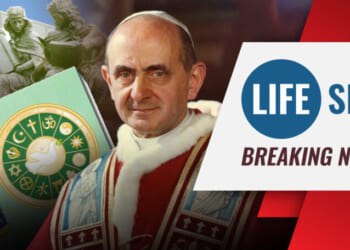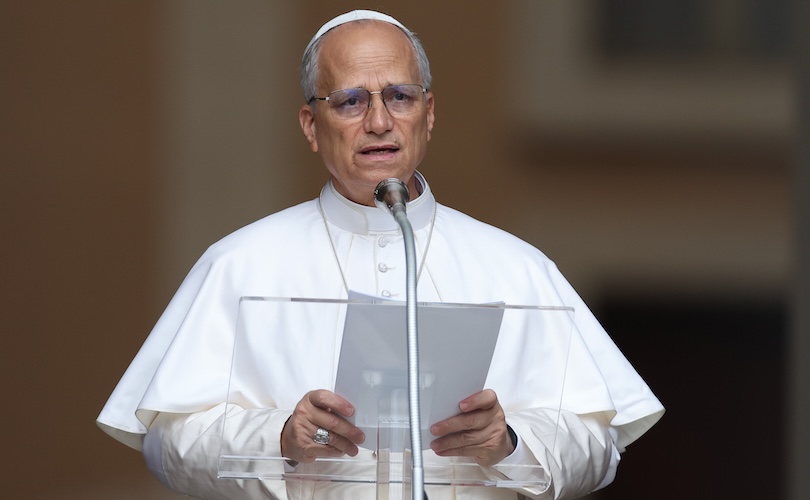
VATICAN CITY (LifeSiteNews) — Pope Leo XIV, during his Sunday Angelus address, responded to the United States government’s successful capture of Venezuela’s dictator Nicolás Maduro a day earlier, advocating for “the good of the beloved Venezuelan people.”
During his January 4 address, the pontiff expressed concern over the situation in Venezuela, emphasizing that the “sovereignty” and constitution of the South American country must be respected. The pontiff also encouraged world leaders to “overcome violence” and pursue peace and urged the faithful to pray for peace.
During the Saturday raid that stunned the world, the U.S. transported Maduro and his wife to New York, where they will face drug and weapons charges.
Leo’s remarks can be viewed below from 12:42-13:59.
“The good of the beloved Venezuelan people must prevail over every other consideration and lead us to overcome violence and to undertake paths of justice and peace, safeguarding the country’s sovereignty, ensuring the rule of law enshrined in the Constitution, respecting the human and civil rights of each person and of all, and working to build together a serene future of collaboration, stability, and concord, with special attention to the poorest who suffer because of the difficult economic situation,” the pontiff said.
The Holy Father urged the faithful to pray for all those who suffer from war and for peace and entrusted the Venezuelan people to Our Lady of Coromoto, the country’s patroness, as well as the recently canonized Venezuelan Saints José Gregorio Hernández and Carmen Rendiles.
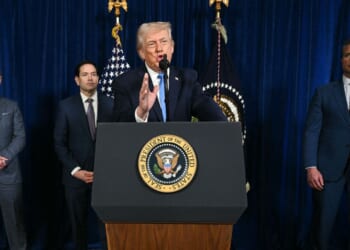
Saturday’s raid that captured Maduro, named “Operation Absolute Resolve” and ordered by Trump, involved more than 150 aircraft and was “the culmination of months of planning and rehearsal,” according to General Dan Caine, the chairman of the Joint Chiefs of Staff. During the raid, Maduro and his wife were dragged by U.S. Army special forces from their bedroom following military strikes on Caracas, the capital of Venezuela, and taken to the USS Iwo Jima warship, President Donald Trump said.
READ: US captures Venezuela’s socialist dictator Maduro after ‘unprecedented’ military strike
Maduro’s charges include “narco-terrorism conspiracy,” “cocaine importation conspiracy,” “possession of machineguns and destructive devices,” and “conspiracy to possess machineguns and destructive devices,” according to an indictment filed by the U.S. Department of Justice in a New York federal court.
The indictment accuses the South American dictator of working to transport “thousands of tons of cocaine to the United States” and says that he “partnered with some of the most violent and prolific drug traffickers and narco-terrorists in the world” to flood the U.S. with the deadly drug. Maduro and his wife pleaded “not guilty” to the charges during their first court appearance on Monday.
Venezuelans quickly took to the streets, rejoicing at the news of Maduro’s capture, with many Christians praising God. Venezuelan migrants across the globe also gathered to celebrate the news in the U.S., Chile, and elsewhere. Videos show Venezuelans rallying in Miami and Doral, Florida.
People in Venezuela celebrate the capture of Maduro.
Despite what the FAKE NEWS is reporting, MILLIONS have poured into the streets celebrating liberation. pic.twitter.com/KUepabplGJ
— LifeSiteNews (@LifeSite) January 5, 2026
The Venezuelan Bishops’ Conference responded to Maduro’s removal by calling for prayers.
“In view of the events that our country is experiencing today, let us ask God to grant all Venezuelans serenity, wisdom, and strength,” the bishops said in a statement. “We stand in solidarity with those who were injured and with the families of those who died. Let us persevere in prayer for the unity of our people.”
Maduro had been notorious for his persecution of the Catholic Church. The dictator has demonized Venezuela’s Catholic bishops, calling them “insects, with the devil in their cassock.”
Maduro’s supporters have violently attacked Catholic churches in the country as well, at times disrupting Holy Mass and desecrating the Blessed Sacrament.
Last fall, during an event at Pontifical Lateran University in Rome, a businessman close to Maduro assaulted a Catholic journalist for asking a Venezuelan archbishop a question critical of the country’s government.
In December, Venezuelan authorities blocked Cardinal Baltazar Porras, the 81-year-old former archbishop of Caracas, from boarding a flight out of the country, detaining him, confiscating his Venezuelan passport, and rejecting his Vatican passport.
Cardinal Porras and Venezuela’s other cardinal, Monsignor Diego Padrón, the former archbishop of Cumaná, strongly criticized Maduro after his disputed 2024 election for committing “obvious fraud” and “usurpation” and attempting a “coup d’etat.” The two prelates urged non-violent resistance against the regime.
They also warned that the country was headed toward a “Nicaraguan style of government,” referring to Nicaragua’s brutal oppression of the Church under communist dictator Daniel Ortega, who has jailed bishops and priests and shut down churches and other Catholic institutions.
Since Maduro’s capture, several American Catholic thinkers have debated the move. Catholic conservative podcaster Matt Walsh, in an X post, echoed Trump’s comments about taking over Venezuela’s oil industry and argued that going to war over vital resources like oil was “totally legitimate.” Catholic philosopher and writer Edward Feser, citing St. Thomas Aquinas, responded that fighting over resources such as oil is not a legitimate reason to go to war.
The Trump administration has emphasized that the U.S. is not at “war” with Venezuela and that the raid on Maduro was primarily the extradition of a fugitive indicted by the United States for crimes against Americans.