SOMEWHERE near the bottom of the list of Oscars sits the award for Best Documentary. It rarely commands the headlines. This year, it was won by a BBC film about everyday life in a provincial school in the Urals. Filmed quietly over two years, it tells the story of how school life was corrupted by the imposition of propaganda about President Putin’s “special military operation” in Ukraine. It offers a chilling insight into what the Russian despot may be planning next.
The film’s power lies precisely in its ordinariness. Mr Nobody Against Putin contains no battle scenes or dramatic political confrontations. Instead, the camera sits inside School No. 1 in the industrial town of Karabash and silently records the slow impact of wartime authoritarianism.
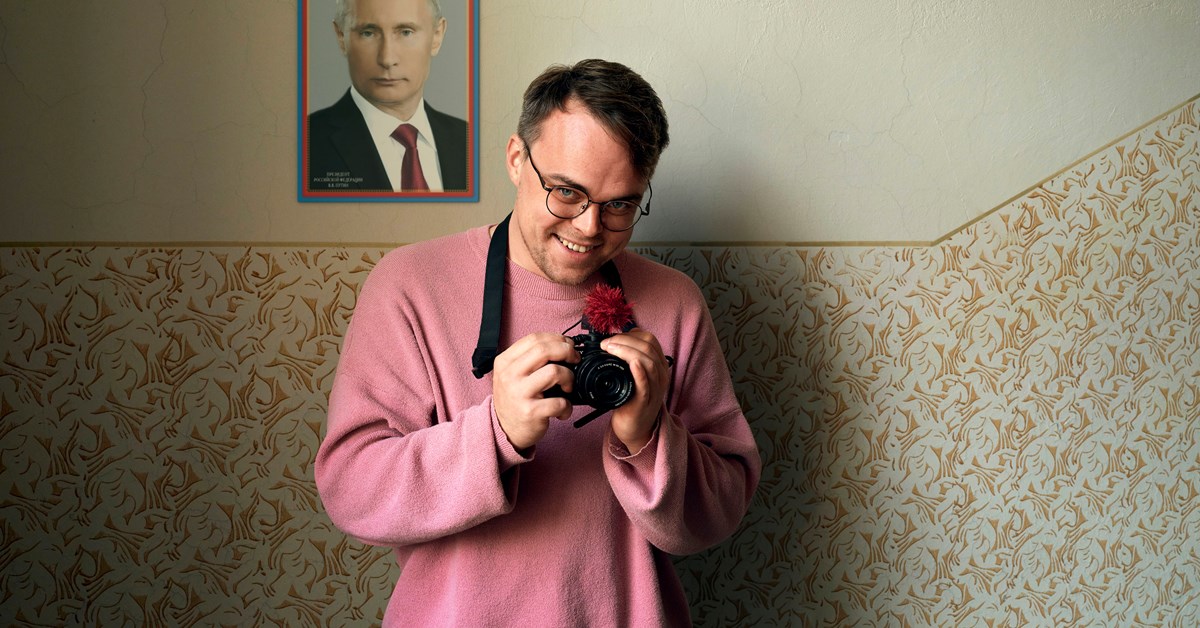
The story is told through the eyes of Pavel Talankin, whose job before the war was filming school concerts, student music videos, and graduation ceremonies. But then, in 2022, Russia invaded Ukraine and life in the school began to change.
Patriotic education programmes were rolled out. Students were taught a revisionist history in which Russia stood alone as the defender of traditional spiritual and moral values against the decadence of Western liberalism. The rhetoric was steeped in the language of destiny: Putin’s messianic vision of a thousand-year Russian civilisation.
Trusted teachers now spoke of the need to “denazify” Ukraine. Pupils were made to parade before the flag and wear military camouflage. Grenade-throwing competitions replaced sports classes. Wagner mercenaries arrived to lecture students on landmines and demonstrate the handling of guns.
Mr Talankin’s job was to film it all and upload the footage to government websites to show that the school was complying with the new requirements of the Ministry of Education, Ministry of Culture, and Communications Oversight Committee. Afterwards, he was supposed to delete his videos. But, instead, he began sending them secretly through encrypted servers to the American director David Borenstein.
The historical echoes of the resulting film are unsettling. Children begin compliant and bored, and are gradually transformed into little zealots, carrying the Russian flag, saluting and marching in formation, with red scarves around their necks like a Putinesque Hitler Youth. “When these children emerge from education, in ten or 15 years’ time, a new generation of pro-Putin loyalists will have been created,” Mr Talankin says.
The war in Ukraine, this film shows, is not simply about territory: it is about shaping the political psychology of the next generation, conditioning it to view militarism and imperial ambition as normal.
But its lessons extend beyond a single country. Mr Borenstein sees the film as a warning to the United States in the time of President Trump. “The film is about how countries lose themselves — not through a single dramatic act, but through countless small moments of compliance, silence, and self-censorship,” he says. In the US today, “Trump is moving a lot quicker than Putin in his early years,” he suggests.
Back in Karabash, the film itself circulates quietly in pirated copies on phones and laptops. When the Federal Security Service learned this, the secret police visited the school and warned staff to pretend that Mr Talankin and his documentary simply did not exist.
That in itself tells you everything about why the film matters.