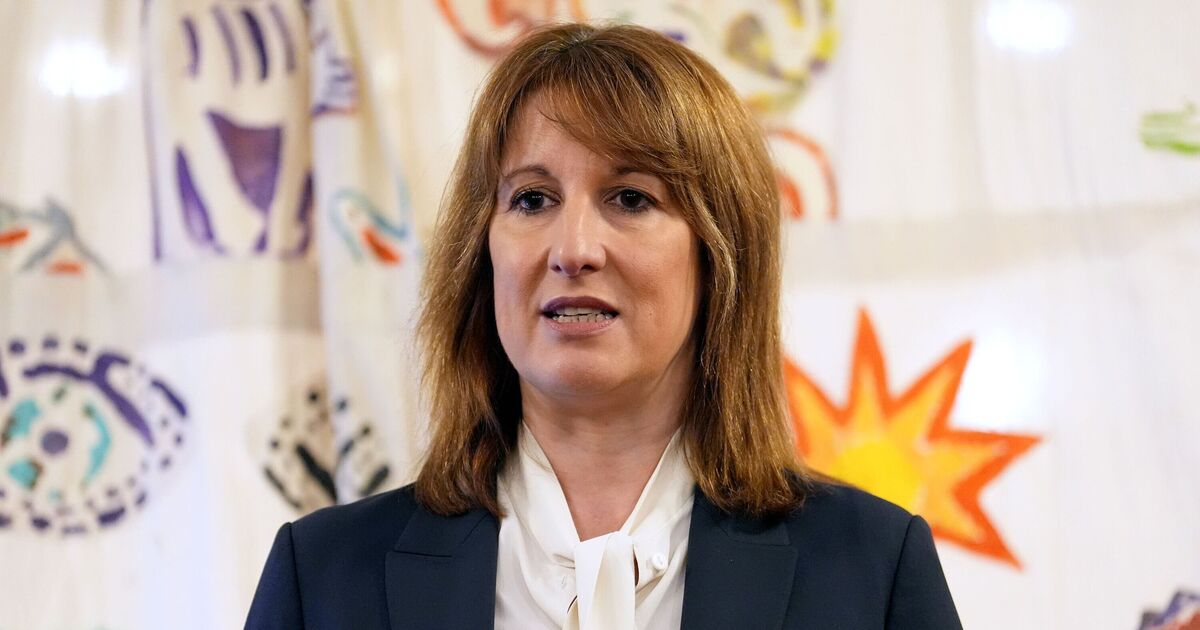
Rachel Reeves’ “annus horribilis” was complete today as a major report blamed her nightmare Budget for Britain’s “subpar” economic performance. The Chancellor’s November tax raid means GDP forecasts during the next five years.
In a further blow, Britain is predicted to plunge below Finland and Belgium in the latest GDP-per-capita global rankings. Our spluttering economy means the UK will slump to 22nd place by 2030, according to the influential Centre for Economics and Business Research.
The findings are particularly embarrassing for Sir Keir Starmer as he has trumpeted the metric as a way of judging his promise that “working people will have more money in their pocket”.
Shadow Chancellor Sir Mel Stride told the Daily Express: “As we say goodbye to 2025 – undoubtedly Rachel Reeves‘ annus horribilis – I urge the Chancellor to change course in 2026. It’s not too late to put the country before your own political survival.”
In a bleak assessment of the past 12 months, the CEBR says Labour has had little success in its first full calendar year in government.
“Having been elected on a platform to boost growth, only very limited success has been achieved,” it says.
“The government’s set of policy announcements at the Autumn 2025 Budget did little to support the near-term growth outlook.
“As such, over the next five years, the annual rate of GDP growth is set to remain subpar, at an annual average of 1.5%.”
It is the latest damning indictment of Ms Reeves’ handling of the economy which has seen her come under intense pressure in 2025 with mounting demands for her to be sacked.
Although the CEBR’s World Economic LeagueTable for 2026 notes the UK has had one of the fastest growth rates in the G7, it says this falls “far short of historical trends”.
The report highlights the UK’s high inflation rate, expected to have averaged 3.4% over 2025, driven by rising energy and food prices.
And it says Ms Reeves’ employers’ National Insurance hike last year has fuelled unemployment.
Despite the gloomy assessment the UK is anticipated to improve its WELT ranking, overtaking Japan to become the world’s fifth largest economy, while closing the gap on Germany.
The Treasury said more work needs to be done but pointed to other forecasts which have been “defied” in the past 12 months.
A spokesperson said: “We defied the forecasts this year with the OBR, Bank of England, IMF and OECD, all upgrading their growth forecasts, inflation is also coming down faster than expected, and since the election, real wages have risen more than the first ten years of the previous government.
“But we know that there is more to do. That is why we are protecting record investment in our infrastructure, and backing major planning reforms, the expansion of Heathrow and Gatwick airports, and the construction of Sizewell C.
The report comes days after official figures show Britons have got poorer this year.
ONS data revealed wealth on a per head basis in 2025 dipped to zero, leaving many households struggling.
Furthermore, Real Household Disposable Income (RHDI) per head fell 0.9% in the first quarter and 0.8% in the third quarter, giving a nearly 1.7% drop overall so far this year.
Reform UK deputy leader Richard Tice also hit out, slamming Labour for “taking the British people on a festive ride of horror”
“Labour are plunging the UK economy lower and lower: jobs collapsing, growth disappearing and confidence plunging,” added.
Nina Skero, Cebr Chief Executive, said Donald Trump’s tariff’s blitz had a major impact on the global economy this year.
“As global growth moderates, wide-ranging differences in economic performance are becoming more pronounced, pointing to a gradual rebalancing of economic power,” he said.
“Europe has been at the forefront of many of these struggles and has seen dwindling growth rates as a result.”
The full effects of the latest massive Budget raid have yet to be felt.
The Bank of England said last week it expected growth to flatline in the final three months of 2025, as it cut interest rates from 4% to 3.75%.
Matt Swannell, chief economic adviser to the EY Item Club, said: “Real household income growth is now slowing sharply, and although the household saving ratio decreased in the third quarter, it remains high compared to historical standards.”
Business leaders have warned that Britain is entering 2026 amid a sharp economic downturn in the private sector, after companies “put the brakes on” investment and hiring before the autumn budget.
In a gloomy snapshot after months of tax speculation, the Confederation of British Industry (CBI) said private sector output was on track to fall in the fourth quarter of 2025.
Suggesting the budget did little to brighten bosses’ moods, the lobby group’s latest growth indicator showed falling activity was reported across all sectors of the economy in the three months to December.
Separate figures from the jobs website Adzuna showed the number of UK job vacancies shrank in November for a fifth month running. Reporting a 6.4% month-on-month slide in new openings, the jobs website said 2025 had been “one of the toughest years for jobseekers since the pandemic”.