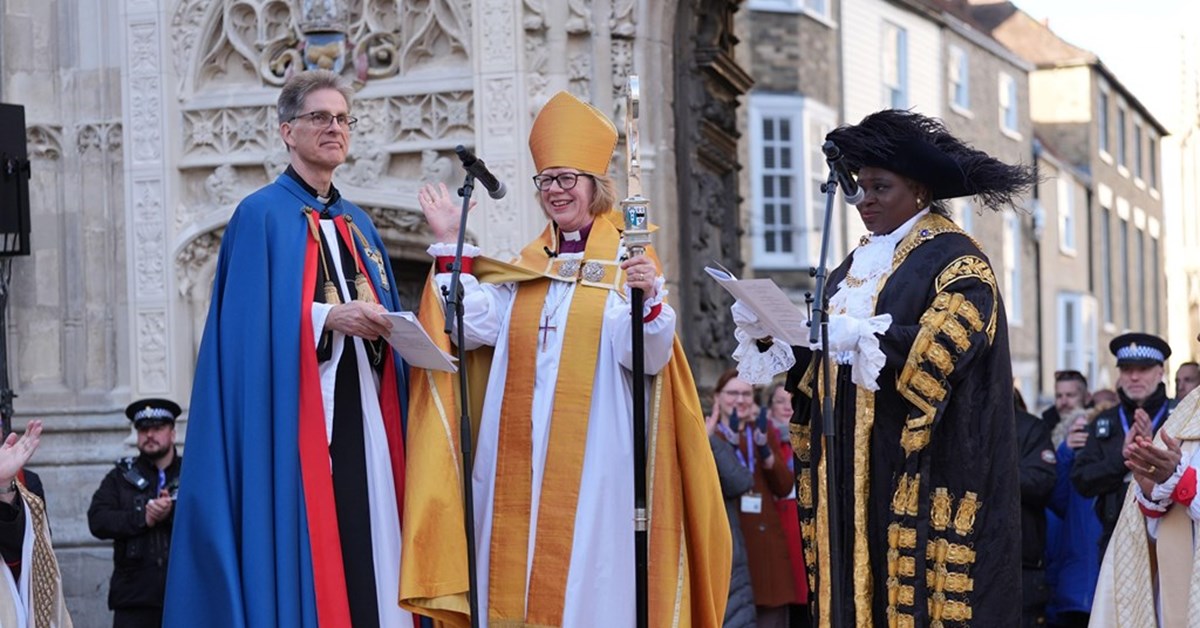
COVERAGE of the new Archbishop of Canterbury’s enthronement (News, 27 March) was perfunctory on most of Wednesday’s BBC news bulletins, and still more so on independent radio; so, credit goes to PM (Radio 4, Wednesday) for making events in Canterbury its lead item.
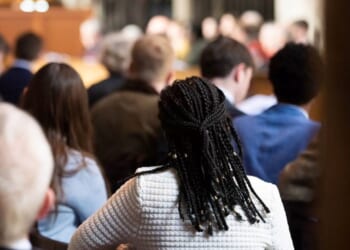
Edward Stourton’s gentle and dignified report from the event was redolent of a more stately era of broadcasting, and was charmingly interlaced, thanks to a quality job by the BBC’s production wizards, with banging doors, questioning children, cheering crowds, and an Urdu Kyrie Eleison.
Mr Stourton’s follow-up interview with Evan Davis was sympathetic but also realistic, acknowledging both the absence of some of the more conservative overseas Primates, and the Church’s safeguarding failures, while also acknowledging that Archbishop Mullally had many admirers as well as detractors.
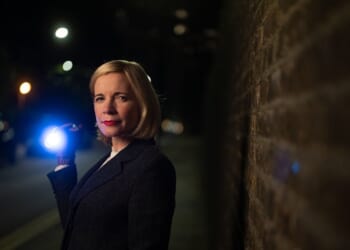
The Rector of St James’s, Piccadilly, the Revd Lucy Winkett, talked briefly about her involvement in the “Leading Women” programme, which seems to have talent-spotted Archbishop Mullally many years ago, and then quite effectively parried Mr Davis’s predictable line of questioning that secularisation had made the Church irrelevant.
It was left to the Moral Maze (Radio 4, Wednesday) to add a little more bite into the day, asking: “Is an Established Church morally defensible?” Three of the four members of its fair and balanced panel were Roman Catholics, and the fourth was a Muslim. The Catholics ran the gamut of opinions on establishment: Professor Carmody Grey was, like Professor Mona Siddiqui, sympathetic to establishment; Tim Stanley was more sceptical; and Anne McElvoy was hostile. Indeed, Professor Siddiqui had just come hotfoot from the enthronement and was abundant in her praise of it.
She was also the most effective interrogator of the chief executive of Humanists UK, Andrew Copson, who was tellingly vague once pressed to put some flesh on the bones of the shared civic values he felt should replace a Christian foundation for society.
The Bishop of Manchester, Dr David Walker, kept his end up well in the face of Ms McElvoy’s assault on the idea of Lords Spiritual, although Tim Stanley pressed him with a more effective line: namely, that establishment had made the Church of England attempt to be all things to all men, and therefore serving nobody.
The Revd Dr Charlie Baczyk-Bell was perhaps the most interesting commentator, arguing from the Left for a reformed, parish-centred form of establishment. Dr Baczyk-Bell advocated “listening to the nation more” on women priests and same-sex marriage, although I wonder if he would be as keen to do so on immigration or criminal justice.
Overall, the programme was entertaining but predictable. The most telling thing about it was the panel’s makeup: not merely that the BBC didn’t think it needed an Anglican, but a few decades ago it would have been difficult to put together a suitably eminent panel without one.