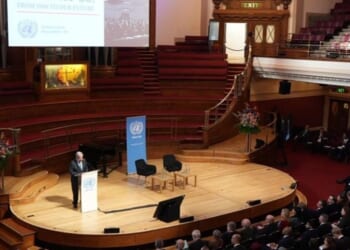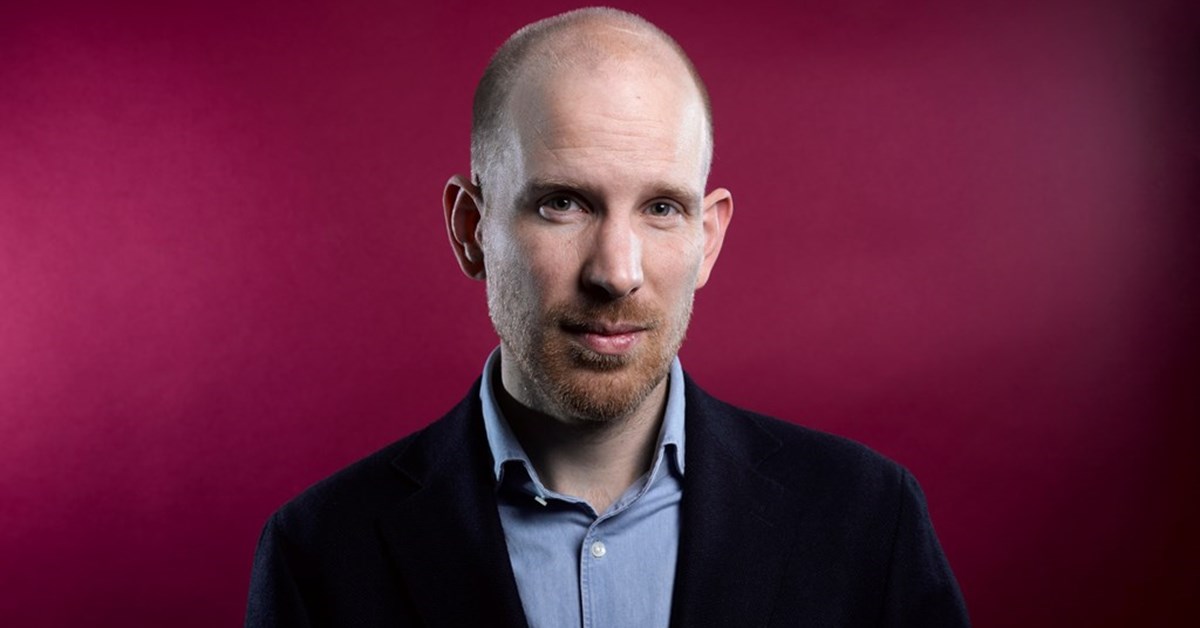
REITHIANISM’s improving mission has its most obvious legacy in the BBC’s annual Reith Lectures. We are now halfway through this year’s quartet of talks (Radio 4, Tuesdays), delivered by the Dutch popular historian Rutger Bregman.
In them, Bregman calls for a “moral revolution”, and the second lecture used a “profoundly British story” as an exemplar: the “paradox” that the same country built up one of the most sophisticated slave-trading systems in history, and then played the pivotal part in the institution’s general abolition.
It was refreshing to hear a moral crusader content to work with the grain of human nature; for Bregman is content for campaigning to be born out of vanity: virtue-signalling is fine as long as it leads to virtuous action. He wants to midwife a new elite resisting laziness and apathy through, in a very Dutch way, seriousness and determination.
He believes that the current mood of cynicism, paralleling the one at the end of the First World War, makes the current era unusually malleable: “The iron of history is softest when the centre is weakest,” he argues, and thus the present moment could lead to either authoritarianism or moral reformism.
Responding to a question about the way in which the abolitionists were all “moved by their gods”, Bregman, the son of a Protestant minister who drifted into atheism, said, “We all have a God-shaped hole in our hearts.” Perhaps that’s why he believes we should aim to create a heaven-like utopia on earth.
The crumbling of Latin America’s Roman Catholic monolith is a story that approaches that of the abolitionist movement in scope and complexity. Sunday (Radio 4) used President Trump’s threats to Venezuela to explore the implications of the surge of the country’s Evangelical population from four per cent to 30 per cent in the past half-century.
Dr Fernando Mora, a Venezuelan academic and pastor, told the presenter, William Crawley, both of Venezuela’s present mood of quiet anxiety and of the “intimate” relationship of President Maduro and his predecessor, Hugo Chávez, with the burgeoning Pentecostal scene. In a continent where Evangelicalism is associated with the Right, this unusual alliance with the radical Left has two sources: a history of persecution by Venezuela’s traditional Establishment, and Evangelicals’ desire to use Mr Maduro as a vehicle for theological transformation.
Shadow World: Anatomy of a cancellation (Radio 4, Wednesday) has been exploring the defenestration of the author and teacher Kate Clanchy by her publisher, Picador, in 2021, after an online campaign denounced her memoir Some Kids I Taught and What They Taught Me as racist. This episode explored how her former students at Oxford Spires Academy and also Sir Philip Pullman proactively set out to defend her in the public sphere — to little effect at the time, although Picador has now apologised for its treatment of her.