
Hello! Welcome to my Hallmark movie casting call.
My vision is as follows. You: a busy careerist or parent or homemaker. The specifics aren’t important, other than your main personality trait, which is “busy.” Setting: the holidays, as I’ve been reliably informed that this is a requirement for Hallmark films. The drama: You are not done shopping for presents, and it is crunch time.
Oh no.
Enter me, your holiday fairy godmother. (Like any good director, I am casting myself as the hero.) While you’re melting down at the prospect of spreading insufficient cheer—your character in ruins, the pressure too much to bear—I appear. Timing is everything. I whisk you away to our supporting cast, a merry band of weirdos, who soothe your sorrows with unorthodox gift suggestions that would have been impossible to find elsewhere. Thanks to the beauties of technology and capitalism, our story need not take place in the quintessential small town. It unfolds instead in the digital sphere, where a massively expanded inventory is available a few clicks away. This isn’t your stereotypical Hallmark film. It’s going to be a banger.
So let us begin.
As your holiday guide, I must recommend what is best for every good little man, woman, and child: the gift of freedom, in the form of Reason magazine. Perhaps you know someone who likes freedom. Perhaps you know someone who hates freedom. Reason is perfect for both, whether to elicit a “yes, queen!” or a conversion. Buy three-, two-, or one-year subscriptions—all for a little over $1 an issue—here, before printing out this cute little graphic we made and wrapping it in a box. They’ll never see it coming.
We also have our swag store with selections for babies, toddlers, and adults. Among other things, we sell a tie dye tee, maybe for those who spend time wistfully remembering 1990s fashion. Who can say? We also offer this neck gaiter, which is slightly reminiscent of the disguises federal immigration officers are donning these days, except it has Reason branding. Please do not get any ideas.
After all, we have all the brilliant ideas you could possibly need to triumph over your shopping anxiety. Scroll on for your happy ending. —Billy Binion, reporter
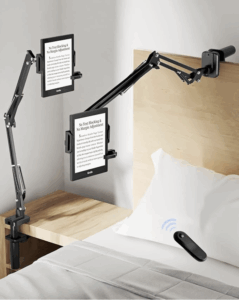
Cursed with being a two-stage sleeper, I try to focus on the upside: I get to do about an hour of nightly interruption-free reading with my Kindle, usually between 4 and 5 a.m. Eventually, my eyes go soft focus and I drift off for round two. I used to drop the device off the side of the bed, snapping awake to a thud.
My Kindle bed mount with a page-turning wireless remote has solved that problem and made being awake in the middle of the night less miserable. I’m a stomach sleeper, so I orient my head sideways on the pillow at my preferred angle, with the screen comfortably in view. The remote goes in my opposite hand off to the side, allowing me to turn the pages with an almost imperceptible finger movement. Because my body stays completely inert, it’s easier to fall back asleep. And your loved ones do not need to suffer from a tortured sleep schedule to enjoy this gift, as it’ll nudge the recipient toward reading great books instead of falling down their nightly social media rabbit hole.
My contraption is currently loaded with Vincent Cannato’s The Ungovernable City, a 720-page recounting of former New York Mayor John Lindsay’s disastrous time in office. The book is newly relevant now that socialist Zohran Mamdani is on the verge of taking office in my poor city. Next, I’ll be rereading Thomas Sowell’s masterpiece Knowledge and Decisions for a libertarian book club I just formed with my libertarian son, libertarian dad, and not-at-all libertarian mother-in-law (though she does read Reason and is very tolerant of what I push on her).
Reading Sowell will be even more delightful than usual with my Kindle bed mount with wireless remote control. The insomniac in your life will treasure it too. —Jim Epstein, executive editor
Buy the Kindle holder with remote page turner for $28.05

My best days (and nights) have been in bed. But as any femme d’un certain âge will tell you, once your hormones go haywire, nothing will knock you out despite mainlining melatonin and desperately doomscrolling through sleep apps at 3 a.m.
Enter the Eight Sleep Pod, a hydropowered bed cover that circulates water of your chosen temperature beneath you, cooling your sweaty self down and sending you into deep dreamland.
Regulation is always a touchy subject for libertarians, but when it comes to sleepytime temperature regulation, I’m all about central planning: My bed must be chilly, my Bavarian goose down comforter calibrated for springtime, and the air conditioner set to a balmy 72 degrees Fahrenheit. If you’re shopping for someone who may live in a house (bed?) divided—maybe your own—take heart: With the Pod’s dual-zone temperature regulation, I can keep my side at an arctic 55 degrees Fahrenheit without worrying that my husband will turn into a meat popsicle.
Deep-pocketed shoppers will find fun add-ons, like a snore reduction platform that jacks up the price to even more appalling levels, and subscription-based ways to track health metrics like heart rate, respiratory rate, and other science-y metrics that help you rest. Yeah, it’s pricey. But consider how much time you waste tossing and turning in hopes of catching some zzzzs! Those sweet dreams will no longer be so elusive. —Melissa Mann, senior director of donor relations
Shop the Eight Sleep Pod starting at $2,449
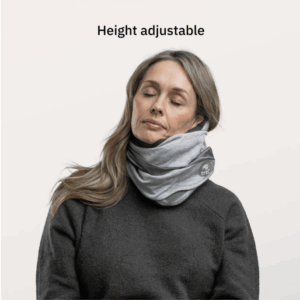
Air travel used to be prohibitively expensive for the vast majority of people. Thanks to a mixture of innovation, deregulation, and the competition that comes with the market, it is now widely available to the masses, meaning there is a solid chance you have a jet-setter in your inner circle.
The Trtl Pillow Plus will save their neck during their sojourns.
But this isn’t just any pillow. The unconventional product is height adjustable, wrappable—as opposed to the nonmalleable U-shaped cushions people are accustomed to seeing—and easy to stuff in a suitcase. I’ve tested it on 20-hour trips and can confirm: If the nomad in your life isn’t sleeping in a first-class bed, you can give them the next-best thing. —Adani Samat, creative art director
Buy the Trtl Pillow Plus for $52.49

I’m a firm believer that every dining surface needs a tablecloth. They’re cheaper than shelling out for a nice table—in our first home together, an inexpensive Amazon tablecloth helped disguise the battered beer-pong table my husband brought from his college apartment—and they instantly add a layer of personality to any kitchen or dining room setup.
My favorite offerings infuse a bit of whimsy into the equation. Misette has a series of utterly gorgeous (albeit pricey) tablecloths and runners printed with delicate watercolor vegetables. The produce-packed table runner is one of my favorite home decor items. It’s a conversation starter that lets me make quips about all the lovely veggies currently threatened by tariffs. Get a second cocktail in me, and I might even pop off about the farm bailouts. (Yes, I host some real ragers.)
For residents of Washington, D.C., Little Tibet Boutique operates a stall in the Eastern Market during the weekends and sells a range of beautiful block-print cotton products. I own several of their tablecloths, which come in an impressive range of colors and pattern styles. I justify my addiction with the knowledge that I’m supporting an immigrant-owned small business. I’m OK with a tablecloth trade deficit (and you should be, too)! —Emma Camp, associate editor
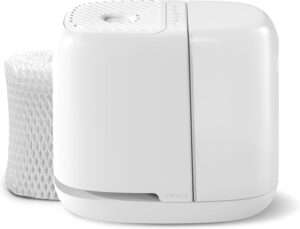
Harnessing technology for indoor climate control has long been a subject of fascination, dating all the way back to the ancient Romans’ and Egyptians’ early air conditioning systems. Heating, ventilation, and AC are now the standard in American households (Europe could never). But in 2025, we have a slew of options to further optimize the air around us.
That’s why a great humidifier is a perfect Christmas gift this season. As temperatures plunge and the air dries out, a humidifier can help lessen the need for constant moisturizing and hydration to keep those crow’s-feet at bay. We have two Canopy Bedside Humidifiers in our home—they’re easy to use, easy to clean in the dishwasher on occasion, and easy to change the filters for (on the rare occasions you need them changed).
Monitoring the air can be helpful too, whether you’re worried about air pollution from a nearby road or just want to know when you can turn off the vent fan in your kitchen after cooking a stovetop meal. I got the Airthings View Plus a year ago to monitor particulate matter, carbon dioxide, radon, and more in my home. There are cheaper versions available from Airthings if you’re not as neurotic about air quality as I am (though only the View Plus measures particulate matter, a.k.a. air pollution, and that’s what I’ve found most problematic in my house).
Capitalism has given us an almost magical ability to control the weather and air inside our homes. The ancient Romans may have had rudimentary AC, but could they beat back pollutants that cause headaches, asthma attacks, and lung cancer? —Jason Russell, managing editor
Buy the Canopy Bedside Humidifier for $159
Buy the Airthings View Plus for $329.99

Know someone who is perpetually too slow with the fly swatter? Have you noticed their sanity slowly eroding as they struggle to expel those aerial buzzers from their home?
Fret no longer.
With the BUG-A-SALT 3.0, they’ll need only a working trigger finger to rid their house of unwanted visitors. The shotgun-like pest control device is delightfully simple to operate.
The user pours some ordinary table salt into the hopper. A pump-action slide compresses some of this salt into a single charge. Once loaded and cocked, one need only aim and fire. The salt plume that’s ejected shreds flies like wrapping paper.
Even substandard marksmen (couldn’t be me) should be able to kill a small insect at ranges of six to ten feet.
I’ll confess that the BUG-A-SALT 3.0 is both effective and cathartic. While not a proper firearm, the device is a helpful reminder of how the spirit of the Second Amendment secures our right to self-defense, whether from human intruders who threaten our lives or insect intruders that threaten our sanity.
It comes in many colors, but I suggest an intimidating black color. Bullseye. —Christian Britschgi, reporter
Buy the Bug-A-Salt 3.0 for $49.95

Libertarians know that all value is subjective, but it can be difficult to reflect that reality in a game. Park Place always costs $350, no matter who owns Boardwalk.
The game Modern Art manages the trick beautifully. Players get to cosplay as art dealers with control over world-renowned collections and the hunger to take them to the next level. During each turn, someone puts a painting up for auction and the others compete to buy it. As in real life, the artworks have no intrinsic value beyond what players are willing to pay—and your goal, of course, is to maximize returns. At the end of each round, the collections containing works by the best-selling artists, as determined by the results of the auctions themselves, are rewarded with an extra payout (presumably from the art-loving public that’s obsessed with your swanky new acquisitions).
Price signals emerge spontaneously, and they become clearer as each new painting is brought to market, particularly when it comes to which artists are hot and which are not. The player controlling the auction is trying to squeeze the biggest payday from the others, while everyone else tries to buy low and sell high. Will Sigrid’s melancholy vibes be the next big thing? Or can you drive the market towards Manuel’s bold street art? Make the most money, and you win.
The game is far from new: Modern Art was designed by Reiner Knizia and first sold in Germany in the early 1990s. But it was the best game I was introduced to this year—and it’s sure to be a blast for anyone who enjoys the creative chaos of the free market. —Eric Boehm, reporter

Over 50 years after its creation, Dungeons & Dragons—affectionately known as D&D—has officially clawed its way into pop culture. Recently the inspiration for a major feature film, the world’s most famous role-playing game appears to be bigger than ever. If you’ve been cautiously considering joining the dice-rolling ranks, the D&D Essentials Kit is the perfect entry point, whether you’re a first-time player or a veteran emerging from retirement.
Inside, you’ll find everything you need to begin your first adventure: dice to roll, character sheets to fill out, a simple rulebook to learn the rules of the road, and a starter quest in the mythical and fantastical Forgotten Realms to take on. Your appointed Dungeon Master—maybe you, should you accept the challenge—carves out the contours of your tale, while the supporting characters flesh it out as the game proceeds. There are monsters to fight and spells to cast, all while a dragon lies somewhere in wait to terrorize your party. Maybe you’ll fight the beast; maybe you’ll attempt to negotiate with it; maybe you’ll ignore it entirely. The choice is entirely up to you, and the possibilities seem endless.
That’s the real magic of D&D: the freedom to explore, experiment, and shape your own story. It’s a good reminder that people thrive when they can ultimately chart their own destinies without inhibition. —Phillip Bader, marketing coordinator
Buy the D&D Essentials Kit for $23.24

Looking to gift a fun group activity that’s quick and easy to learn? The Mind is a minimalist card game where players must place numbered cards—1 to 100—in ascending order. The catch: Everyone must cooperate without speaking or signaling; success depends entirely on coordination, hunches, and trust. If someone lays down a card with a higher number than one held by another player, the group loses a life. Stay alive to keep leveling up.
The game perfectly captures that spontaneous order—and the individual coordination it depends on—can emerge from ambiguity and chaos. (It’s also a surefire way to avoid noise complaints when you have friends over, but I digress.) The way to win is to wait, observe, and trust the invisible hand of intuition. —Justin Zuckerman, producer

This Christmas, you can help Mr. or Mrs. Claus shed the pounds he or she is bound to put on after scarfing down a(n) (un)healthy helping of cookies.
You’ve heard about it; you’ve seen the South Park episode about it; you’ve been stunned when formerly fat celebrities swear by it (and forswear their commitment to body positivity).
I’m talking about Ozempic.
Well, not Ozempic per se. That’s a prescription drug that requires an appointment with your primary care physician, who may frustrate you by requiring that you try an exercise and diet regime first. What’s more, it could run you an eye-popping monthly bill, thanks in part to onerous regulatory hurdles from the Food and Drug Administration. Increased competition will continue bringing that down. But that takes time. And you don’t have the time or—let’s be honest—the will power to do all that.
I’m talking about the active ingredient: Semaglutide.
You most certainly cannot get this for under $16 per month—$190 in total—by purchasing the 10-vial kit of 10mg vials from exaph-Nay (We all remember Pig Latin from grade school, right?), which is definitely not meant for research purposes. This will last your tubby loved one 12 months—more than enough time to become lithe and limber.
Oh, and there’s definitely not a step-by-step guide for how to store, prepare, and inject semaglutide by an X user—who, disclaimer, is not a medical professional—called remieux-Cay. (Oink, oink!)
In case you feel a bit uneasy going under the table, so to speak, there are middle-ground options that have lowered barriers to access as the market adjusts to the demand for what is truly a modern medical miracle. That includes Ro, for example, the telehealth company partnering with Serena Williams to promote use of GLP-1s, like Ozempic and Zepbound. If it’s good enough for the GOAT, it’s good enough for me.
Imagine telling someone from times past that there would one day come a potion that could effectively cure obesity. That day is now. So this Christmas, give your husband, your wife, or yourself the best gift of all: beauty. Keep the change, you filthy—wait—soon-to-be sexy animal! —Jack Nicastro, assistant editor
Buy the 10 mg Semaglutide kit for $190
The best part of the holiday season is arguably the food. But people may be weighing priorities differently this year. Make America Healthy Again (MAHA) leader Robert F. Kennedy Jr.—relatively new as Health and Human Services secretary—has already agreed to phase out some artificial food dyes, and state lawmakers are following suit. With the growing chorus of MAHA moms and politicians, who knows what will be next?
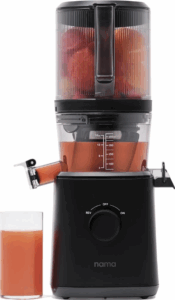
Your loved ones may react in one of two ways. They could use this as an excuse to get seconds, naturally. But on the off chance someone is inspired to develop healthier eating habits before the government mandates them, I would recommend the Nama J2 Cold Press Juicer.
This product takes the grunt work out of clean eating. Roughly chop your favorite combination of fruits and vegetables, throw it in the machine, press a button, and voilà. Through a slow, cold-pressed method, which yields more nutrients—RFK Jr. would be so proud—J2 uses an auger to extract the juice from your produce. With a built-in strainer, it separates the pulp and the liquid into separate containers for a convenient juicing experience. (If you’re really looking to get crunchy, freeze the pulp instead of throwing it away, and add it to smoothies for an extra nutritional boost.) Every J2 comes with a recipe book for novices to kickstart their health journey.
Buyer beware: The juicer is made in South Korea, which, under the protectionist Trump administration, means that it could be subject to tariffs. Nama fortunately includes all import duties in the price tag of its products, so American gift givers need not worry about being hit with one of those surprise tariff bills when the juicer is delivered. —Jeff Luse, deputy managing editor
Buy the Nama J2 Cold Press Juicer for $599

Robert Harris’ page-turning trilogy—Imperium, Conspirata (originally published as Lustrum in the United Kingdom), and Dictator—follows the extraordinary life of the Roman statesman Marcus Tullius Cicero.
Spoiler alert: Cicero was a fierce defender of the Roman Republic against the monarchical pretensions of dictator-for-life Julius Caesar. Styled as the lost biography written by Cicero’s loyal secretary, Tiro, these volumes vividly depict the personalities, the conflicts, and the overweening lust for power that brought down the Roman Republic. The unfortunately-timely trilogy makes clear to readers just what is at stake when it comes to defending freedom, honor, and the rule of law against autocratic ambition. —Ronald Bailey, science correspondent
Buy the Cicero trilogy for $39.99
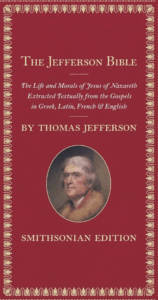
I used to love to give and receive books for Christmas, but dead-tree books have lost some of their allure in the Kindle era. The Jefferson Bible is an exception to that rule.
In retirement, Thomas Jefferson took a razor and glue to multiple New Testaments in English, French, Latin, and Greek. He sliced out the miracles, the resurrection, and the supernatural bits. He then reassembled what was left into a single, chronological account of Jesus as a radically demanding moral teacher rather than a divine figure. It’s a fascinating read for believers, skeptics, and dads who are excited to kick off their America 250th celebrations.
The original 1820 manuscript—an 84-page, hand-bound volume in red leather—is now in the collections of the Smithsonian’s National Museum of American History. But for the price of a pair of expensive socks, you can buy this full-color facsimile with insanely high production values and tons of extra scholarly material. It’s the prettiest, weirdest, most interesting-looking book I own. As someone who still very much relishes turning a physical page, that’s saying something. —Katherine Mangu-Ward, editor in chief
Buy The Jefferson Bible for $26.67

Does anyone buy movies anymore? Because they should, and not just to marinate in the nostalgia that comes with memories of trips to Blockbuster. (RIP.) Thanks to Blu-ray and special 4k Ultra, viewers can get sharper imagery and crisper audio than they would via streaming.
For the movie buff in your life, consider giving them an elevated viewing experience in the form of Eddington. 2025 was the year that Hollywood finally started to reckon with what happened in 2020. And no movie took on that year’s combination of anger, paranoia, and can’t-make-it-up insanity more directly than this film. Directed with winking glee by cult horror auteur Ari Aster, Eddington reimagines the pandemic and the politics around 2020 first as shotgun-blast satire, and then as something more like a nightmare.
When the movie starts, it follows a small-town sheriff in New Mexico who is bothered by the obvious hypocrisy of mask advocates. He’s countered by an obnoxious mayoral candidate who argues that the sheriff is being selfish and unreasonable. All around them, society seems to erupt in Black Lives Matter protests and inscrutable ads for crypto and broad-based social disruption, much of it run through internet culture.
But what starts as a sharp-witted smirk eventually devolves into something more terrifying, as well-funded antifa soldiers descend on the town and the sheriff finds himself in a murderous, all-out rage on its streets. It’s a movie about how, in 2020, everyone went totally crazy. And its manic finale suggests that the only way to really reckon with that year’s impact is to relive it as a fever dream of social upheaval, entirely divorced from common sense or basic reality—because in some deep and still-traumatic sense, that’s what it was. —Peter Suderman, features editor
Buy Eddington on Blu-ray for $29.99
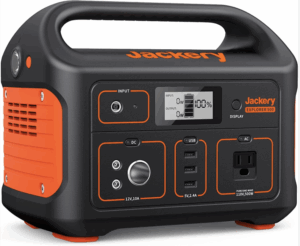
I’m not ashamed of the fact I have a touch of prepper—grow up dodging ice storm blackouts and tornadoes, all in the twilight of the Cold War, and you, too, will plan ahead for when the grid flickers.
The Jackery 500 is a portable battery with 500 watt-hours. For the less paranoid, that’s more than enough to charge a laptop and smartphones multiple times. I take mine camping so I can work on scripts in the woods. I imagine it would be very useful on the lam, which will definitely never apply to me. Also, road trips.
Technically, it’d be cheaper in terms of watt-hours just to get a lithium battery and hook it up yourself, as our ancestors did. But the beauty of living in an era of insane technological innovation is that you do not have to do that. The Jackery has some major advantages: There is a built-in inverter, so that you can run alternating-current devices (like laptops) off of the direct-current power, notably while on the lam. Also it does not need to be grounded. I don’t know how to ground a battery—last time I attempted it, I kept electrocuting my so-called friend Billy. Billy screamed like a girl repeatedly and then criticized my electrical skills and wanted to know how I got another key to his house.
The Jackery 500 would have taken care of all of that. —Andrew Heaton, producer
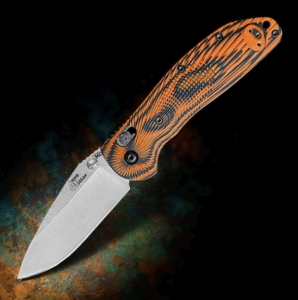
I use pocketknives every day. There’s daily stuff that needs cutting, of course. And I’m not above whipping them out at restaurants as a substitute for their dull instruments. Naturally, I’ve given many as gifts.
If your intended recipient needs a tough folding knife that won’t elicit tears if lost, I like Cold Steel’s Crawford 1. It’s reasonably priced and hand-filling with a 3.6-inch 4034 stainless steel blade, a polymer handle, a flipper for opening, and liner lock with a secondary safety to prevent nasty unintended closures. For an upgrade, consider Doug Ritter’s RSK Mk1-G2, a folder created in partnership with the reliable and high-quality Hogue. Its 3.4-inch blade is composed of justifiably buzzy Magnacut steel, its handle is made of G10 composite fiberglass, and its lock is Hogue’s variant on the out-of-patent and well-regarded Axis crossbar. (If all of that sounds like Chinese to you, that means it’s really good.) As the head of Knife Rights, buying Ritter’s design also helps his efforts against restrictive knife laws.
Some knife fanciers insist folding knives are weakened by the pivot. A connoisseur may prefer a fixed-blade knife sized for everyday carry. I gave my son a budget-friendly Gerber Stowe with a 2.5-inch 440A stainless steel blade and micarta handle scales. It comes with a leather sheath that keeps the overall 6-inch knife relatively discreet on a belt. For an upgrade, consider ESEE’s Sencillo (“simple” in Spanish), a 7.25-inch knife with a 3-inch blade and burlap micarta handle scales. The Magnacut version of the knife appears to be sold out everywhere, but the A2-steel version is plenty sharp and durable. I would know, as I carry it on me. —J.D. Tuccille, contributing editor
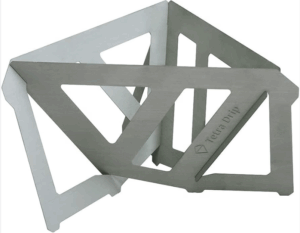
Some people collect postcards when they travel. I collect ways to make decent coffee on the go. (We are not the same.) After one too many watery hotel brews and overpriced chain coffees, I started bringing my own setup—and this small Japanese dripper from MUNIEQ, called the Tetra, has become my absolute favorite travel companion. Sorry, husband!
It’s made of stainless steel, it folds entirely flat, and it somehow feels both delicate and sturdy at the same time. It’s easy to assemble and fits neatly in your bag—or even your wallet, for our coffee kings. It’s technically designed for camping (ahem, glamping), but there’s no reason you shouldn’t take it on your next trip abroad. All you need are filters, ground coffee, and hot water, and you can make a satisfying coffee cup wherever you are.
This is the perfect gift for that friend or family member who is always on the move yet refuses to settle for bad coffee. And thanks to the miracle that is global, interconnected free enterprise, this contraption—designed and manufactured in Japan—can be someone’s globetrotting partner after just a few clicks and (relatively) few dollars. —Katarina Hall, staff editor
Buy the Tetra Portable Coffee Drip for $41.07

For the whiskey, scotch, bourbon, or glassware lover in your life, I recommend gifting them a Glencairn Glass. Designed in Scotland, this item is the standard-bearer for savoring a dram of whiskey and experiencing a taste of Brigadoon from the comfort of your La-Z-Boy.
I’ll admit I was initially skeptical. What would make this meaningfully different from a tumbler? Be serious. But after my first sip of Lagavulin from a Glencairn, I was a convert. The tapered design perfectly delivers the complex taste and aroma of the spirit, and the crystalline glass—mouth cut and hand blown—allows you to marvel at the color of your whiskey. It also just feels really good to hold in your hand. Simple pleasures.
What about the teetotalers in your life? No matter—I’d still recommend this product. Crafted from leaded crystal (though there is a standard lead-free variation too), this glass has a nice weight and a gorgeous shine, making it a great addition to any glassware collection. Pour some lemonade and feel bougie.
And you don’t have to break the bank. The cut leaded crystal version is currently selling for around $33, and the lead-free version is on the market right now for just $8. If you want it to be extra special, you can supplement with an engraving for a small upcharge. Bottoms up. —Cody Huff, post-production supervisor
Buy the Cut Glencairn Glass for $33.33

Got a homeschooling family or an inquisitive preschooler on your Christmas list? Let me introduce you to Wondergarten. What started as an in-home preschool run by Texas couple Lisa and Nathaniel Santa Cruz has become somewhat of an early-childhood empire, featuring a podcast, merchandise, and more. There are seasonally-themed, non-academic books full of songs, stories, and child-friendly art, kitchen, and nature activities—grounded in a curriculum that emphasizes creativity and imagination. There’s an online store selling everything from craft supplies to custom playsilks.
But the real standout, in my opinion, is the Wondergarten music, composed by Nathaniel Santa Cruz and performed by Kathryn Brunner. It makes a great entry point into the whimsical Wondergarten world for kids and families who won’t be doing the whole curriculum. The albums are free to listen to on the Wondergarten website but can also be purchased there in CD format, or as MP3s on iTunes; illustrated songbooks, featuring sheet music and lyrics, are also for sale in physical and digital formats. So it is possible to gift this music from far away, or in an unwrappable form.
My two sons—ages 2 and 4—have loved listening to the Wondergarten albums, which are broken down by season and month and feature a cast of characters that includes Mr. Hamilton Squirrel, Mr. Morrison Mole, and several distinct gnomes and fairies, as well as personifications of the natural world (such as Sister Flame and Grandfather Moon). The songs are cute and creative without being cloying, which is likely a relief to parents who are really, really tired of hearing Cocomelon. Some of the musical accompaniment is genuinely lovely.
After getting hooked on the albums, we started listening to the Wondergarten podcast, which features enchanting and well-produced tales of the gnomes and other familiar inhabitants of Wondergarten. Not only is my 4-year-old transfixed by these, but they’ve also inspired a lot of imaginative play on his own.
With Wondergarten, the Santa Cruz family has created a fun, immersive, and wonder-filled world that feels like a reprieve from the media and activities typically aimed at children these days. It’s engaging without being fast-paced, high-tech, or neon-tinged. It doesn’t assume small boys and girls must have totally different interests. It’s wholesome without being explicitly religious. There are no superheroes or royalty. It’s all about encouraging exploration, imagination, and independence—things that most parents, but perhaps especially libertarian-leaning ones, can appreciate. —Elizabeth Nolan Brown, senior editor

Is your home decor populated heavily with LEGO displays? Relatable. The good news: You can increase the ROI on those pricey sets with a compatible lighting kit.
I’ve purchased several for my teenage son and they turn static exhibitions into dramatic showpieces. While the LEGO brand itself commands premium prices, these add-ons are competitively and affordably priced, thanks to an active aftermarket of independent kit makers. Some builds are surprisingly intricate—as was the Rivendell kit featured here—but when it comes to LEGO, extra complexity tends to be a feature, not a bug. —Jackie Pyke, vice president for advancement
Buy the YEABRICKS LED Light for LEGO for $35.99
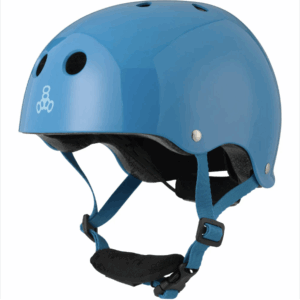
Reason is one of the few places where you can hear a constant drumbeat about the importance of raising “free-range kids,” the idea that children should be allowed to run around outside, walk to school, get boo-boos, and generally be kids without someone calling the cops on them or their parents. I know, I know. Groundbreaking.
Being a free-range parent doesn’t mean disregarding safety; it just means it’s up to you to set reasonable guardrails. So when my toddler got old enough to start riding her tricycle and skateboard around the neighborhood, I got her a Triple 8 helmet to keep that precious noggin in one piece. (You get only one, after all.) The helmets are high-quality and easily adjustable. They also look good, which should minimize futile protestations about the dorkiness of safety accessories. The Lil 8 Kids Helmet starts at $55.99—a bit spendy compared to a department store bike helmet, but it’s dual-certified for bike and skate safety.
Think about it this way: It’s cheaper than a Switch 2 or a trip to the emergency room. —C.J. Ciaramella, reporter
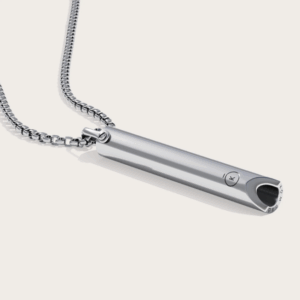
“Just breathe.” It’s a common and simple admonition, but you may have a loved one or three for whom that is much easier said than done in the middle of a stressful moment. That’s where the Shift necklace from Komuso Design comes in.
The Shift is inspired by 17th-century monks who used small flutes to steady their breathing and find inner peace. When anxiety hits, the necklace naturally slows your exhale, helping your body relax almost instantly.
I’ve had mine for a while, and it’s become one of my favorite little grounding rituals. It’s helped me manage stress, fight burnout, sleep more easily, and even ease cravings. As someone who took up vaping to quit smoking cigarettes, I can attest that this thing has calmed my nerves more times than I can count. Who wouldn’t want a fashion-forward antidote to anxiety? —Eddie Marshall, junior designer
Looking for a gift for the chronically online person in your life? Consider getting them what is arguably the foil to a keyboard and warrioring fingers: a set of knitting needles and some yarn. I’ll admit that it might sound uncool. But grandma hobbies are undergoing a serious renaissance, and it’s deeply rewarding to develop the skills necessary to make your own unique accessories and clothing. (Plus, busy hands can’t doomscroll.)
The age-old wisdom is that an aspiring knitter should start by making a scarf. A secret: That’s a surefire way to bore someone out of the hobby. Instead, I recommend a washcloth as a first project. It’s a cheap way to give someone an introduction to knitting, so the risk is low: A few balls of Lily Sugar ‘N Cream 100 percent cotton yarn and a pair of Clover Size 7 bamboo knitting needles won’t run you more than $25 at your local craft store or online. The project can be completed in just a few evenings, there are countless free patterns and tutorials online, and mistakes basically don’t matter. A washcloth with holes or wonky edges still scrubs.
And hey, if you’re lucky, your giftee might be inspired to make you something special next Christmas. After all, your local yarn store—yes, those exist—says a lot about the true miracle that is international trade. I’m currently knitting a striped sweater using merino wool yarn produced in Italy, stainless steel needles made in China, and a pattern written by a Danish designer. It’s incredible that today’s crafters can access materials made in dozens of countries, let alone afford them. Besides, with our current volatile tariff regime, who knows how much these things will cost next Christmas. —Fiona Harrigan, deputy managing editor
Buy Clover knitting needles for $6.29

Last year I recommended LA Police Gear’s tactical jeans—a steal at just 45 bucks—as a tasteful alternative to cargo apparel. Depending on whom you ask, the latter may or may not be a hate crime. But you need not feel limited after setting those old, conspicuously pocketed pants ablaze. There are plenty of options to expand your wardrobe, especially if you’re willing to shell out a bit more cash.
From snowy and certifiably-based Finland, the tactical jeans from Varusteleka were arguably designed for this very purpose: manufactured to have a utility that rivals military field pants but with the subtlety of a pair of denim. There are 10 pockets—beautiful in their discretion—so I can finally give my treasure trove of everyday carry items (toted largely for notional benefit) their own separate pockets. A dream come true.
Whether that’s worth somewhere between double and triple the cost of last year’s pick is entirely subjective. If you lean toward the affirmative, don’t worry: The company’s website is available in English, so you don’t need to speak Snow Elf to snag a pair. Ah, the beauty of cultural exchange. Perkele! —Ian Keyser, audio engineer
Buy Varusteleka tactical jeans for $118
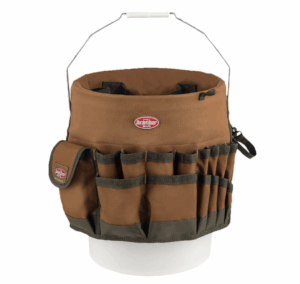
The five-gallon bucket is an underappreciated invention: mass-produced to be cheap, reliable, interchangeable, and ubiquitous. By itself, it might be a disappointing holiday gift (unless you’re getting me a gift; I’d be happy to add another bucket to the stack). But we’re not all me. So let me introduce you to the world of five-gallon bucket accessories—made to maximize the power of the most iconic open container. Seats. Carrying straps. Dividers. The more you know.
My recommendation is the Bucket Boss tool organizer, aptly named The Bucketeer, for the handy one(s) in your life.
It immediately became my go-to receptacle for DIY projects. (Toolbag who?) Old standbys like screwdrivers and wrenches go in the pockets, leaving space inside for project-specific tools like a saw, power drill, or six-pack of beer. Such versatility.
Although it’s marketed for tools, it would also work great for crafts, camping necessities, and grilling supplies. One has to marvel at how consumer capitalism keeps making simple objects more useful. —Adam Sullivan, digital marketing specialist

We all have that loved one who is, practically speaking, impossible to shop for. They have clothes. They have tools. They have blenders.
I can relate. A few Mother’s Days ago, as I was struggling to generate gift ideas for my mother dearest, her love language dawned on me: quality time, especially when it comes to her children. So why not give her a mother-daughter trip? Not only was I confident she would appreciate it more than another blender, but it would give me a chance to log some rest and relaxation time, as well. And this time of year, that’s sorely needed.
Since we’re living in a technological golden age, you have a free travel agent. For the last two years, I used ChatGPT to plan a pair of fabulous trips: a hiking trip to Banff National Park in Canada and a jaunt to Peru to see Machu Picchu. For budget-conscious travelers, you don’t need to gift a flashy, finance-depleting experience. Just ask your favorite artificial intelligence sidekick to get creative with inexpensive options. Let ChatGPT (or Claude, or whoever!) help you explore the world with your loved ones. You won’t regret it.
And remember: As you and yours walk through TSA en route to your next adventure, you aren’t required to allow them to take a picture of you. The government shouldn’t be tracking us more than they already do. —Natalie Dowzicky, managing editor of video and podcasts

Perhaps you have an animal lover on your Christmas list who would murder you for making the classic faux pas of gifting them a pet. (Understandable.) So instead of inviting another critter into their home, harness the power of effective altruism and spark some animal-related joy with FarmKind—a nonprofit that has done its homework to identify the best charities working to end factory farming and reduce animal suffering.
You can split your donation among all the charities FarmKind supports or direct it to a specific organization that you think would resonate most with the recipient. FarmKind-supported nonprofits are creating innovative and cruelty-free food options, working with companies to improve their animal welfare standards, and pioneering new and more humane food systems. And, since FarmKind’s operating costs are covered by philanthropists, every dollar you give goes straight to the organizations that are directly helping animals. They’ll even tell you how many animals your gift helps save.
Don’t have an animal obsessive in your life? Although that may make me question your social circle a bit, you can apply this gift idea to philanthropic ventures of any kind that would resonate with your loved ones’ particular soft spots. Print a one-pager with details on the charity (or charities) you chose, wrap it in a shirt box, and place it under the tree. This gift will go a lot further than whatever Tommy Bahama apparel they were expecting. —Kelvey Vander Hart, communications specialist
Ask ChatGPT about great charities

This year, my holiday gift recommendation is simple, elegant, and fully compliant with even the strictest minimalist-libertarian gifting norms: money.
Cash is the ultimate expression of consumer sovereignty. It requires no assembly, no batteries, and most importantly, no presumption that I know better than you what will maximize your utility. Hayek warned us about the fatal conceit; I’m merely applying his warning to holiday shopping. Why risk gifting someone a sweater that fits like price controls when I can hand them a medium of exchange and let the market work its magic?
But criminally underrated is that money, unlike most presents, doesn’t impose future obligations. It won’t guilt you into wearing it, reading it, watering it, charging it, or finding a place to display it when you haven’t even solved that conundrum with last year’s artisanal coaster set. It’s the only gift fully compatible with the non-aggression principle: no coercion, no nudging, no passive aggressive “I thought this was your style.”
The classic counter: “But cash is so impersonal!” For a rebuttal, we can look to Milton Friedman, who reminded us that “there’s no such thing as a free lunch.” Indeed. Which is why money is the perfect gift. —Veronique de Rugy, contributing editor