THE Consistory Court of the diocese of Worcester has ordered that three petitioners, who had been granted a faculty permitting certain structural remedial work to be undertaken at St Mary’s, Doverdale, and the diocese itself should be penalised in costs for deliberately failing to comply with a condition in the faculty.
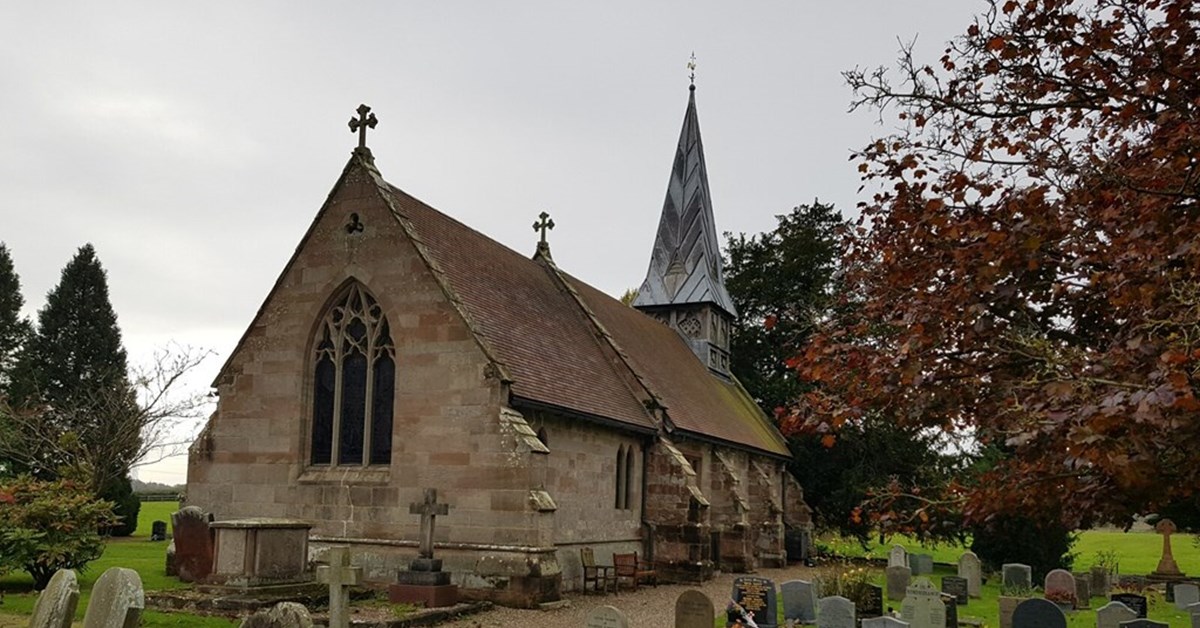
St Mary’s is a Grade II listed church dating back to the 14th century. In December 2016, the quinquennial inspection identified movement in the church’s south-west wall, and the inspector recommended that the wall should be stabilised.
In 2018, further structural movement was noticed. The wall appeared to be leaning outwards at the top along the roof line. Structural engineers were consulted, and, in 2020, bore holes were dug (without faculty permission) to investigate the situation underground. A technical specification was drawn up, and a contractor was retained to carry out the work.
In May 2022, the petitioners, who were the then Rector, the Revd Stephen Winter, Robert Coppini, a churchwarden, and Geoffrey Crow, the secretary of the PCC, sought a faculty for the work to be undertaken.
On 16 August 2022, the Deputy Diocesan Chancellor, the Worshipful John Summers, granted a faculty for the scheduled works to be carried out, but imposed a condition stating that “before any works commence an archaeological watching brief shall be commissioned to the satisfaction of the Diocesan Advisory Committee Archaeology Advisor”.
The remedial work at the church was carried out without compliance with that condition. No archaeological watching brief had been commissioned.
Mr Crow indicated that the PCC was becoming “increasingly alarmed at the worsening state of the west wall”. He apologised for the failure to comply with the condition, but said that he “genuinely believed that he was acting in the best interests of the building and those who used it”. He accepted that, with hindsight, “more time should have been taken to pursue the diocese for details of archaeologists on its panel to comply with the faculty,” but he had not felt that he “had the luxury of that time”.
The Deputy Chancellor emphasised that orders of the Consistory Court, like the orders of any court of law, must be complied with, unless they had been set aside or varied by the court or on appeal. A failure to comply could have serious consequences for those involved. They could be referred to the High Court, which could impose punishments such as fines or imprisonment, as if those were a contempt of the High Court.
Although much of the faculty system was conducted with informality, the Deputy Chancellor said, orders of the court mandated steps designed to protect “the peculiar cultural treasure . . . of places of worship in the Church of England.”
The Consistory Court had been entrusted with the regulation of what was known as the “ecclesiastical exemption”. That afforded particular advantages to places of worship by exempting listed ecclesiastical buildings from the standard system of secular listed-buildings consent.
If the consistory courts were to fail to take breaches of their orders seriously, the Deputy Chancellor said, “there [was] a risk that the ecclesiastical exemption might be removed, given that its existence was predicated on there being an equally rigorous system to regulate the alteration of affected buildings as exists for secular buildings.”
Clergy were subject to the disciplinary system of the Church of England, and there was no reason that that would not encompass ignoring the orders of a Consistory Court, the Deputy Chancellor said.
The failure to comply with the condition was now irremediable, since it was impossible to know if the excavations were of archaeological interest.
The Deputy Chancellor concluded that the non-compliance had deliberate, and not an “oversight”, as Mr Crow had said. The petitioners were ordered to pay 50 per cent of the costs of the judgment, and the diocese of Worcester the other 50 per cent.