THE Centre for Social Justice (CSJ) has urged the Church of England to cover wedding costs for low-income couples, to encourage “a pro-family, pro-marriage nation”.
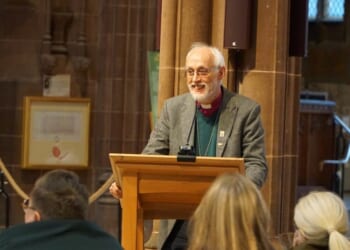
A researcher at the CSJ, Luke Taylor, said in a statement on Monday of last week: “In order to promote marriage as both a private and public good, the Church should go further and faster.” The number of church weddings since records began in 1837 had been at its lowest in 2023, outside of the pandemic, he said.
In its report, Lost Boys: Boyhood, published this year, the CSJ said: “Almost half of children aged 0-5 in the most disadvantaged areas have seen their families break up, compared to only 16 per cent of children in middle-class homes.”
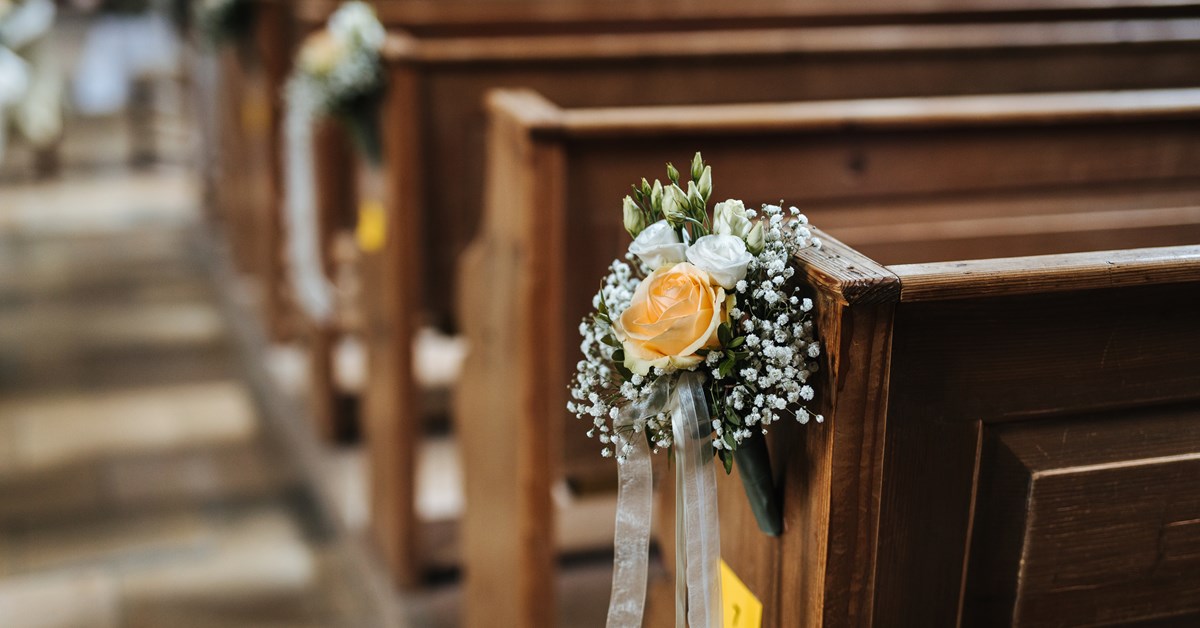
To promote marriage and family stability, the CSJ called on the “established state religion” — the Church of England — to “commit to removing the administrative, legal and booking costs up to £650 to lower-income parishioners who marry in their parish church”.
The report outlined the current fee structure: as of January 2025, couples wishing to marry in a church must pay a fee of £544. Of this, £247 is goes to the diocesan board of finance, and the remaining £297 goes to the PCC.
It suggests that, if the C of E were to cover these fees, the “initiative would have cost the Treasury just £32 million”. The figure, it says, is the “maximum cost”, as “in reality it will be much lower as those on lower incomes are currently less likely to marry.”
Other fees, the report says, include those for the publication of banns, music, heating, bells, and a verger, although “some of this can be waived at the discretion of the local church”.
The report says: “We cannot have marriage and its benefits being the preserve of the middle-classes while simultaneously insisting that it is just as advantageous to pursue unstable and unformalised partnerships.”
The organisation said that it was a “disservice to those who would benefit the most from the stability and protection that marriage confers — particularly those on lower incomes”.
The report draws on research (Families and Inequalities) by Dr Kathleen Kiernan and the Marriage Foundation’s research director, Harry Benson (We Need to Talk about Marriage). Citing these documents, the CSJ writes that, in 1958, “fewer than one in ten children did not live with both biological parents by the time they took their GCSEs” (sic). In 1970, “this had more than doubled to 21 per cent”, and by “the millennium almost half (45 per cent) of children this age lived with just one natural parent”.
It continued: “Incentivising stronger family unions through marriage is simply about acknowledging that two parents are better equipped to provide the love, care, and support that a child needs than one. Given the demonstrable benefits of both a present mother and father, we should investigate how policy can be used to influence behaviour to this effect.”
The report also calls for expanding family hubs across the UK and tackling problematic screen use for young people.
Church House was approached for comment.