CHRISTIAN AID, the World Council of Churches (WCC), and Vatican officials are among those joining the United Nations (UN) in expressing grave concerns over the humanitarian crisis in Lebanon, as conflict across the Middle East continues into its third week.
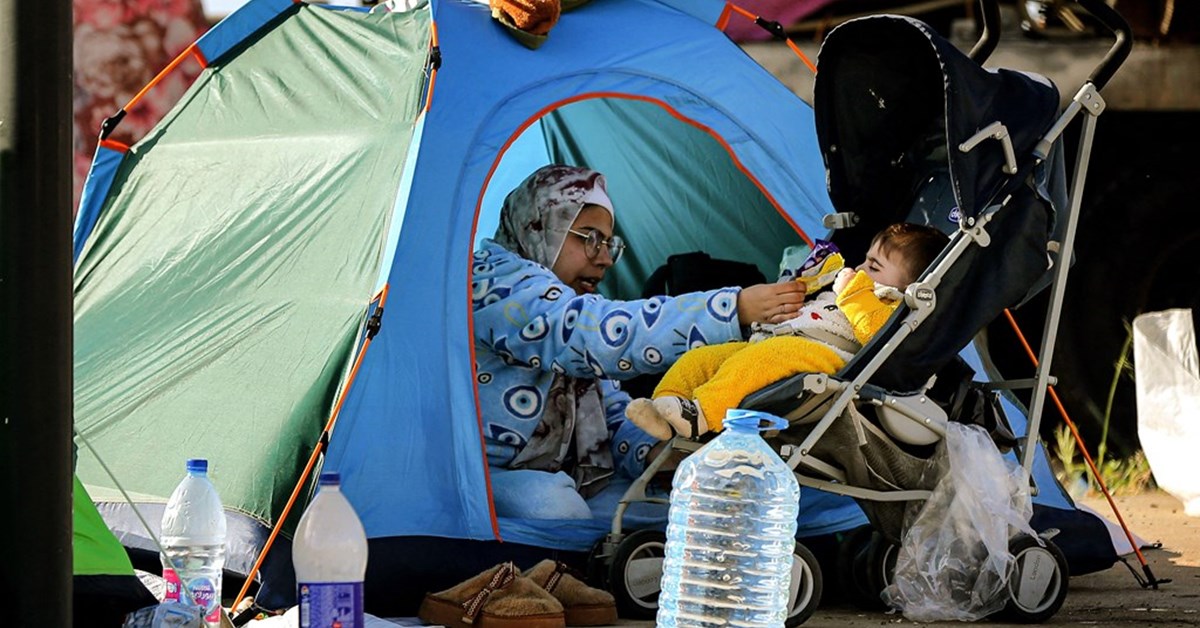
Christian Aid said last Friday that more than 800,000 people had fled their homes since Israeli air strikes began as part of the joint US–Israel military campaign against Iran. On Monday, the UN refugee agency UNHCR reported a sharp rise in arrivals into Syria. UNICEF has warned that children are “bearing the brunt” of escalating violence in Lebanon (News, 4 March).
On Monday, the Foreign Secretary, Yvette Cooper, announced more than £5 million in additional emergency humanitarian funding to help thousands of vulnerable and displaced civilians in Lebanon. The funds will be delivered through UK government partners including the World Food Programme, the Lebanese Red Cross via the British Red Cross, and the UNOCHA’s Lebanon Humanitarian Fund.
Israel last week ordered the evacuation of around nine square miles of the Lebanese capital, Beirut — which is an area, Christian Aid says, comparable in size to the town of Windsor, in Berkshire, or Tower Hamlets in east London.
The head of Middle East policy and advocacy at Christian Aid, William Bell, said: “Imagine an area roughly the size of Windsor being ordered to evacuate because every building is at risk of being hit by an Israeli air strike. That’s the reality facing hundreds of thousands of people living in southern Lebanon right now.”
Mr Bell called for a ceasefire. “I’ve seen for myself the damage in Lebanon caused by the destruction of entire apartment blocks following Israel’s wars in the country in recent years. I saw the toll two months of constant bombing took on people’s mental health, as well as the financial strain of displacement,” he said. “We need an immediate ceasefire to end this violence so that civilians can be kept safe and further loss of life prevented.”
Elsewhere, the Apostolic Nuncio to Lebanon, Archbishop Paolo Borgia, emphasised the urgent need for support after visiting southern villages in the country, to help distribute 15 tonnes of humanitarian aid from L’Œuvre d’Orient, the Paris-based non-profit organisation which helps Christians in the region.
Archbishop Borgia attended the funeral of Fr Pierre El-Rahi, the Maronite priest who was killed while assisting an injured parishioner in Qlayaa, before travelling to several southern villages with a truck carrying humanitarian aid, according to Vatican News.
Vatican News also reported that Lebanon has appealed to the Holy See for help in order to preserve the presence of Christians in the country’s south.
The Lebanese Minister of Foreign Affairs, Youssef Raggi, had spoken to the Vatican Secretary for Relations with States and International Organizations, Archbishop Paul Richard Gallagher, by telephone last week. Mr Raggi said: “I asked the Holy See to intervene and mediate to help preserve the Christian presence in those villages, whose residents have always supported the Lebanese state and its official military institutions, and have never departed from this commitment.”
Last Friday, the general secretary of the WCC, the Revd Dr Jerry Pillay, met the permanent representative of Lebanon to the United Nations Office in Geneva, Ambassador Caroline Ziadeh, to discuss the growing humanitarian crisis in Lebanon.
A statement from the WCC said that Ms Ziadeh had detailed the efforts of the Lebanese government to extend its authority, and highlighted the decision earlier this month to consider all security and military activities of Hezbollah illegal, and to give the armed forces the task of disarming Hezbollah.
Data from Lebanon’s Disaster Risk Management Unit showed last Friday that the escalation had by then resulted in 687 fatalities, 1774 injuries, and more than 822,000 internally displaced persons. An estimated 128,200 people are currently in emergency shelters.
Dr Pillay said: “The protection of civilians must remain paramount in all circumstances. We join the call for an immediate cessation of hostilities and full respect for international humanitarian law. The World Council of Churches also supports the government of Lebanon in its efforts to uphold its authority and ensure the protection and security of its people.”