ON HIS deathbed, the Emperor Constantine was baptised by an Arian bishop, Eusebius of Nicomedia. Yet, last Friday, he was remembered chiefly as the convener of the church Council that rejected Arius’s contention that the Son of God could not be co-eternal with the Father since “there was a time when he was not”. Religion and politics have ever been a heady brew.
Whatever his personal theology, and it may well have shifted throughout his reign, the Emperor recognised that the Arian controversy was not simply a threat to the unity of Christianity: it was a threat to the unity of the Roman Empire. The agreement by the Council of Nicaea that the Son must be consubstantial with the Father was as important politically as it was theologically.
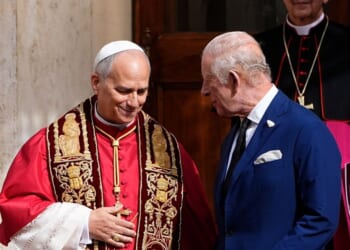
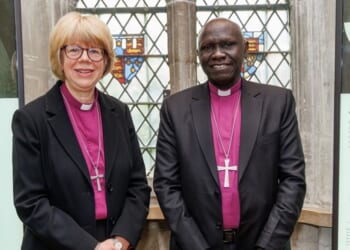
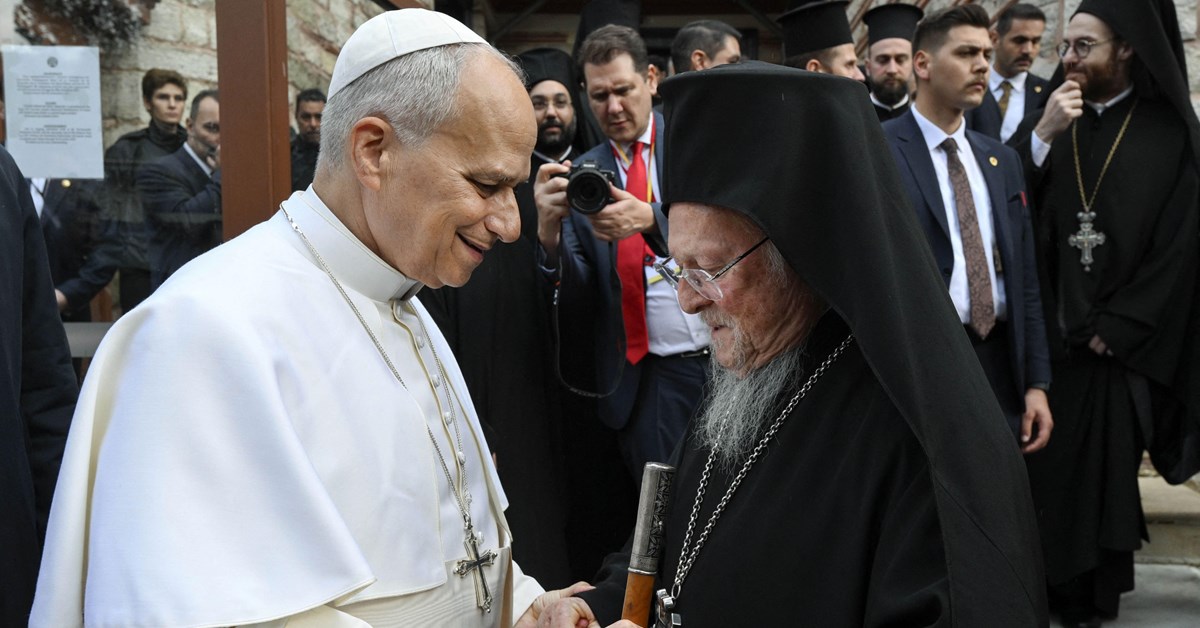
There were echoes of that last Friday when the Ecumenical Patriarch, Bartholomew of Constantinople, and Pope Leo gathered with representatives of the Orthodox, Anglican, and Protestant Churches, to mark the 1700th anniversary of the assembly that set out the ecumenical manifesto that became the foundational manifesto of Christianity across the denominations.
The celebrations of this ancient stand for unity were, however, marked by a conspicuous division. The absence of the Russian Orthodox Church — estranged by geopolitics, ecclesiastical rivalry, and the ongoing war in Ukraine — underscored how easily Churches can become captives of the very forces that the Nicene Fathers resisted.
Nicaea teaches that the Church’s unity is rooted not in ethnicity, empire, or national memory, but in the person of Christ — true God from true God — who abolishes the hierarchies of tribe and territory. How different this is from President Putin’s vision of the Holy Rus as a land chosen by God — a pseudo-historical fantasy in which fragments of medieval identity have been reassembled to justify modern imperial ambition. The Russian Church’s attempts to confer spiritual legitimacy on his nationalism reveals how a Church entwined with political myth-making loses its Nicene clarity.
The Eastern and Western Patriarchs came together just as their political counterparts were manoeuvring in their various interest groups and alliances to attempt to work some alchemy on President Trump’s peculiar proposals for bringing an end to Russia’s war on Ukraine.
In contrast, the moment in which the church leaders came together — setting aside their differences about the filioque clause — carried a resonance far deeper than any diplomatic encounter. The Nicene basilica over which they prayed was in ruins, but it had sent out a living message that has sustained Christianity, in almost all its denominations, for nearly 17 centuries. “The power of this place does not reside in what passes away,” the Patriarch of Constantinople said, “but in what endures for ever.”
To confess Christ as being eternally begotten, not made, is to declare a truth that does not originate in national destiny. To proclaim belief in “one holy catholic and apostolic Church” is to reject the fragmentation of the Body of Christ into competing civilisational blocs. To affirm the Spirit who proceeds is to insist that unity is given, not ideologically contrived.
Last Friday, we were reminded of a vision of truth that outlives empires, a unity that transcends nationalism, and a hope that politics — even at its best — can never manufacture.