THE German artist Hans Holbein first came to England in 1526, and the Paul Mellon Centre for Studies in British Art has published this authoritative and richly illustrated volume in preparation for that anniversary. On a first reading, it is evident that there is no need for any other. This goes well beyond biography, and offers an overview of early Tudor art patronage and collecting in a period that was dominated by artists from the Continent.
Dr Goldring is well placed to have written and researched this, after her 2014 study of the patronage exercised by Elizabeth I’s favourite, Robert Dudley, and her spellbinding account of the painter Nicholas Hilliard, published five years later. It amply fleshes out last year’s exhibition at the King’s Gallery (Arts, 16 February 2024).
Many questions remain unresolved. We do not know how often Holbein (c.1497-1543) returned to Basel, where he had first moved from Augsburg in the early 1510s, and where he left his first family behind. He later established a second family, in London. Nor do we learn what he believed.
He was raised as a Catholic in South Germany, and his early patrons, like Erasmus, Archbishop Warham, and Sir Thomas More, were prominent adherents of the Old Religion. Throughout the difficult years of Henry VIII’s reign, as the break with Rome became inevitable, Holbein deftly switched patrons at the English court.
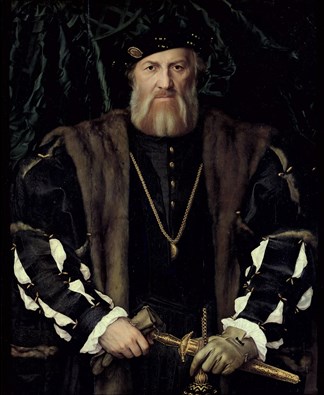 © Staatliche Kunstsammlungen, Dresden, Gal-Nr 1890/Bridgeman ImagesStill in Germany, Holbein’s Charles de Solier, Sieur de Morette (c.1534-35) is held by the Gemäldegalerie Alte Meister, Dresden: one of the plates in the book
Diarmaid MacCulloch’s seminal work on Thomas Cromwell has highlighted the prevalent religious tensions of the time, but was the celebrated portrait of Cromwell (Frick collection, NY) painted by Holbein, or by a member of his workshop, or by a later copyist? On his desk, with a poorly rendered tablecloth, is a letter of appointment from Henry, but styled incorrectly, and a jewel-encrusted volume turns out to be Cromwell’s own Book of Hours, now in a Cambridge library.
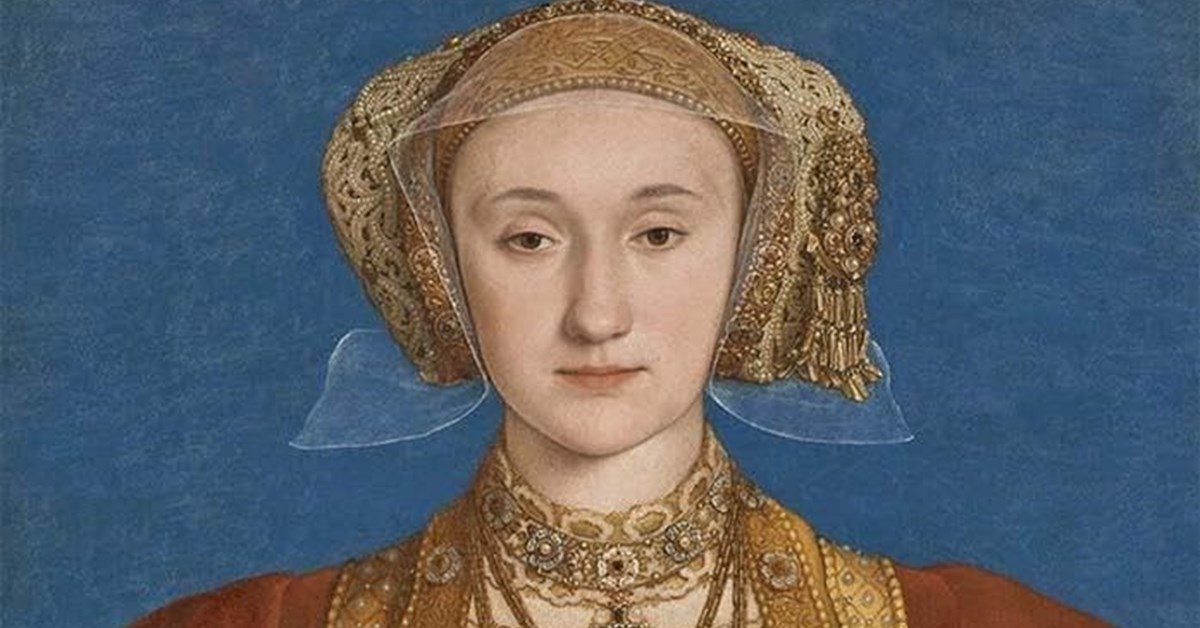
Goldring gives full weight to Holbein’s inventiveness as a designer and a worker in precious metals, while breathing life into the individuals whom he portrayed and sketched, often with remarkable haste: a three-hour sitting had to suffice for his portrait of Christina of Denmark, Duchess of Milan, one of many of possible royal wives.
His will, dated 7 October 1543, was witnessed by four Netherlandish London residents; seemingly composed in some haste, during an outbreak of the plague, it makes no provision for his wife or any of his studio.
Canon Nicholas Cranfield is the Vicar of All Saints’, Blackheath, in south London.
Holbein: Renaissance master
Elizabeth Goldring
Paul Mellon Centre for Studies in British Art £40
(978-1-913107-50-5)
Church Times Bookshop £36