THE British Government should review UK trade with China to avoid complicity in forced labour or religious persecution, according to a new report from Christian Solidarity Worldwide.
The report on levels of freedom of religion or belief in China finds that religious-freedom violations have evolved from “the closure or demolition of community sites or the arrests of clergy” into “more subtle and systemic forms of control, extending across a wide spectrum that includes education, law, technology, international trade and cultural expression”.
It argues that new laws passed by the authoritarian government in Beijing have created a complex legal framework that “entangles” religious individuals and communities, and that legislation is being “weaponised” for political repression.
In relation to religious groups — Christian house churches, unregistered Roman Catholic groups and online churches, Uyghur Muslims and Tibetan Buddhists — the report warns that Beijing’s stated policy of “sinicisation” amounts to “strict suppression”.
The report, The Supremacy of the Party: China’s weaponisation of legislation and policy to curtail freedom of religion or belief (FoRB), defines the “sinicisation” of religion as moves to reshape religions to make them consistent with Chinese Communist Party ideology, and to promote allegiance to the party and to President Xi Jinping. An article in the report by a Chinese columnist, Ansel Li, argues that sinicisation has taken on “a sharper edge” since 2023, “moving from rhetoric to policy”.
“Digital surveillance has become a core tool for the sinicisation of religion,” the report says. For example, Beijing’s Administrative Measures for Internet Religious Information Services require that online religious information must “advance the sinicisation of religion, and actively guide religion to adapt to socialist society”.
The measures also stipulate that any service providing information about doctrine or religious activities, online or through instant messaging tools, must obtain a licence and employ content reviewers “familiar with national religious policies”. Online missionary work is prohibited, and online churches are classified as “exploiting superstition”.
The report highlights the case of Kan Xiaoyong and his wife, Wang Fengying, who founded an online church called the Home Discipleship Network. They were arrested in 2021. He was charged with “using superstition to undermine law enforcement for his continued preaching of the gospel”. He was later also charged with fraud and “illegal business operations”. A co-worker and three female believers were also arrested, and tortured during interrogation. Pastor Kan was sentenced to 14 years, the co-worker to ten years, Wang to four years, and the three others to between three and seven years in prison.
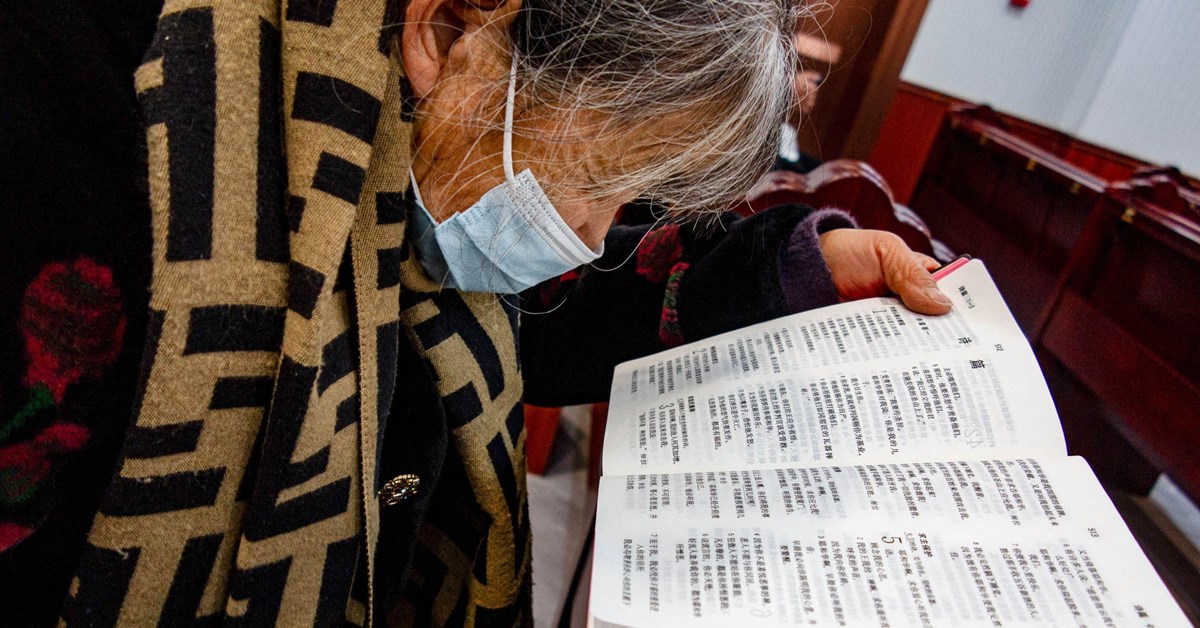
It also mentions the case of Ma Yan, a Christian in the Ningxia region sentenced to nine months for “organising an illegal gathering” after holding Bible studies. This, the report notes, is consistent with the prohibition on religious activities outside approved venues. Ningxia, it adds, has been a pilot region for religious sinicisation, and “has in recent years extended its control measures from Islam to Christianity . . . in accordance with the directive to “strengthen the Party’s leadership over religious affairs”. The increased risk of criminalisation has plunged house churches into “a deepening survival crisis”.
The report’s international team of authors argue that the European Union, as China’s top trading partner, should “leverage EU-China trade and diplomatic relations, linking economic agreements, investment deals, and strategic partnerships to measurable improvements in FoRB”.
The authors urge the UK Government to ask China to amend legislation that impinges on the right to FoRB, to review Britain’s trade engagement with China, and to demand the restoration of demolished religious buildings and the cessation of policies aimed at erasing religious and cultural identities.
The Bishop of Winchester, the Rt Revd Philip Mounstephen, who has raised concerns in the House of Lords about religious repression in China, told the Church Times that the report revealed “how very serious the situation in China has become, particularly for Christians who want to proclaim that Jesus is Lord”.
He continued: “Forcing them to abide by an ideology which is wholly alien to them is a fundamental denial of their freedom of religion or belief. And we need to be very awake, not only to the threat to liberty that this poses for Christians in China, but for people across the Chinese diaspora.
“Indeed, there are evident threats to our own security from China. Therefore I think that the British Government needs to be extremely cautious and careful in its dealings with China. And we cannot always let trade considerations trump vital issues such as freedom of religion or belief and broader human rights.”