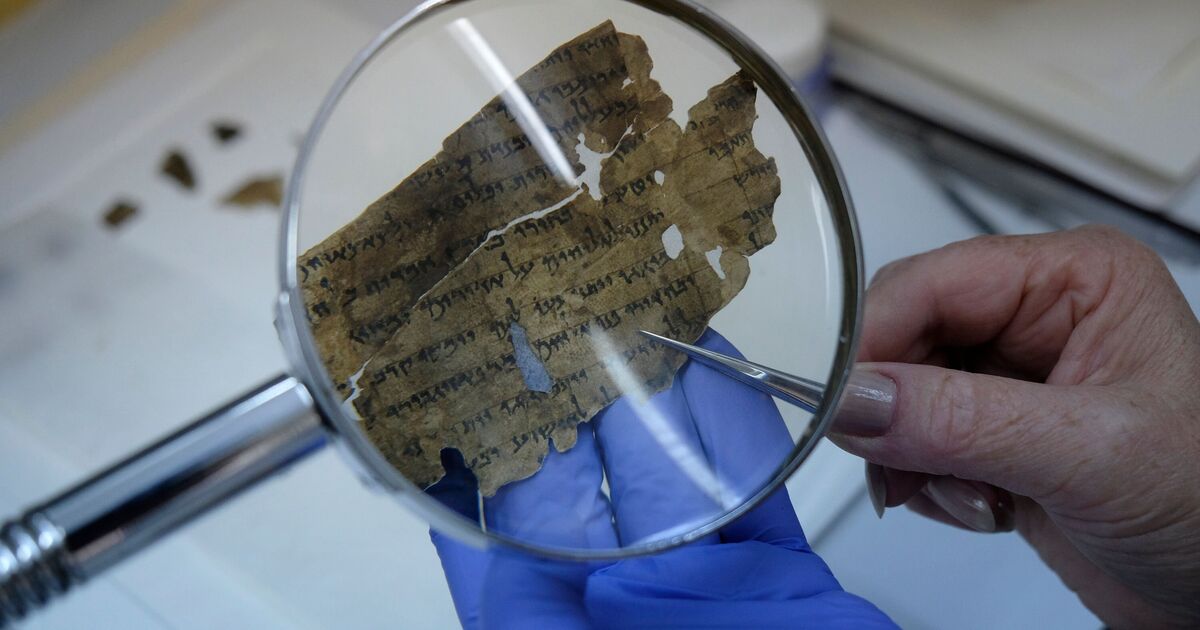
A scientist believes he has cracked the writing system on the Dead Sea Scrolls after more than 70 years of mystery. The ancient ‘Cryptic B’ manuscript was made of heavily damaged fragments, covered in scripture of an unfamiliar alphabet.
Discovered in caves near the West Bank between 1947 and 1956, the scrolls and are among the oldest surviving biblical manuscripts, written in Hebrew, Aramaic, and occasionally Greek. While the ‘Cryptic A’ scroll was deciphered in 1955, the Cryptic B had long been considered impossible to read. But researcher Emmanuel Oliveiro of the University of Groningen believes he has been able to correspond each symbol with a letter to reveal biblical writings.
They are believed to relate to familiar biblical phrases about the end of days, including divine judgment and the coming of a Messiah, reports the Daily Mail.
There are reportedly references to Judah, Jacob, and Elohim (meaning ‘God’), and the word Yisrael (meaning ‘Israel‘).
One fragment references “the tents of Jacob,” which are found in Jeremiah 30:18 and Malachi 2:12. While it does not directly quote the passages, it is believed to have an affinity with biblical themes. Another fragment references “Elohim” and “your glory”.
The fragments also included references to dates and rulers, such as the use of “the second year” and “the fifth month”, which may reflect specific historical dating conventions.
The manuscripts were produced by the Qumran, a Jewish community known for preserving religious texts, that lived near the Dead Sea more than 2,000 years ago.
Labelled 4Q362 and 4Q363, they are very damaged and worn, with some fragments measuring just millimetres. The leather is cracked, darkened or frayed.
Distorted letter shapes on Cryptic B made it appear undecipherable for decades. There is significant variation between the manuscripts, and the use of an unfamiliar alphabet may indicate that it was intended for a select audience, such as priestly elites, enhancing the text’s sacred status.