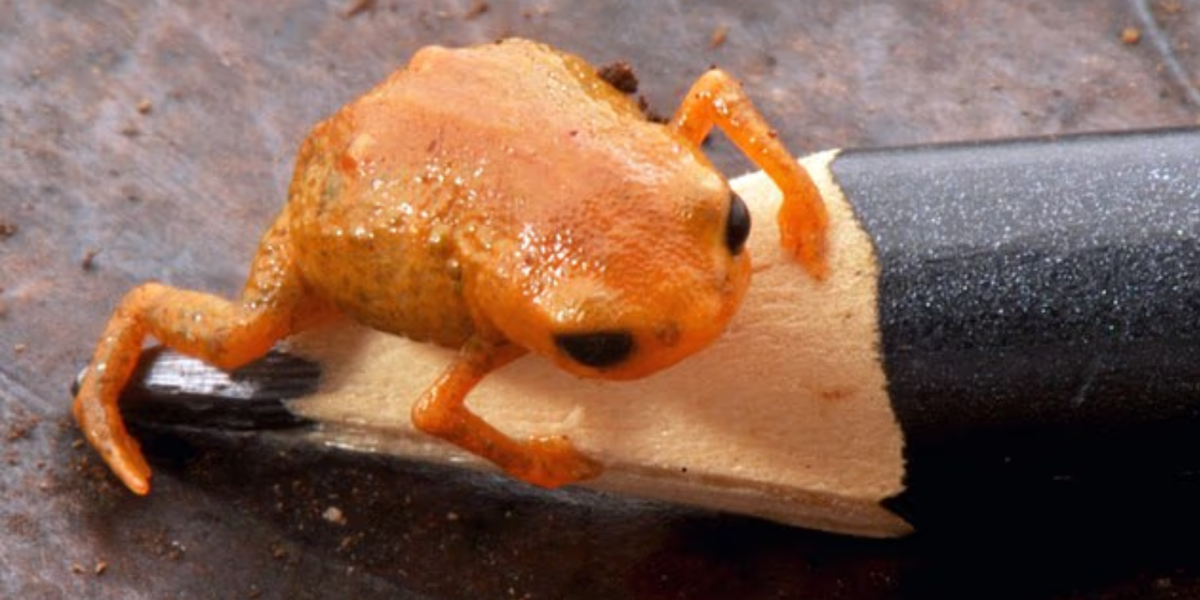
A previously unknown species of miniature “pumpkin” toadlet has been identified by biologists working in the tropical rainforests of Brazil.
The tiny amphibian, sporting a vivid orange body adorned with distinctive green and brown speckles, was discovered within the cloud forests of the Serra do Quiriri mountain range in the southern Atlantic Forest region.
Researchers have classified the creature as a new member of the Brachycephalus genus and bestowed upon it the scientific name Brachycephalus lulai, after Brazilian President Luiz Inácio Lula da Silva.
The diminutive frog possesses delicate limbs and striking jet black eyes, according to the scientists who documented the find.
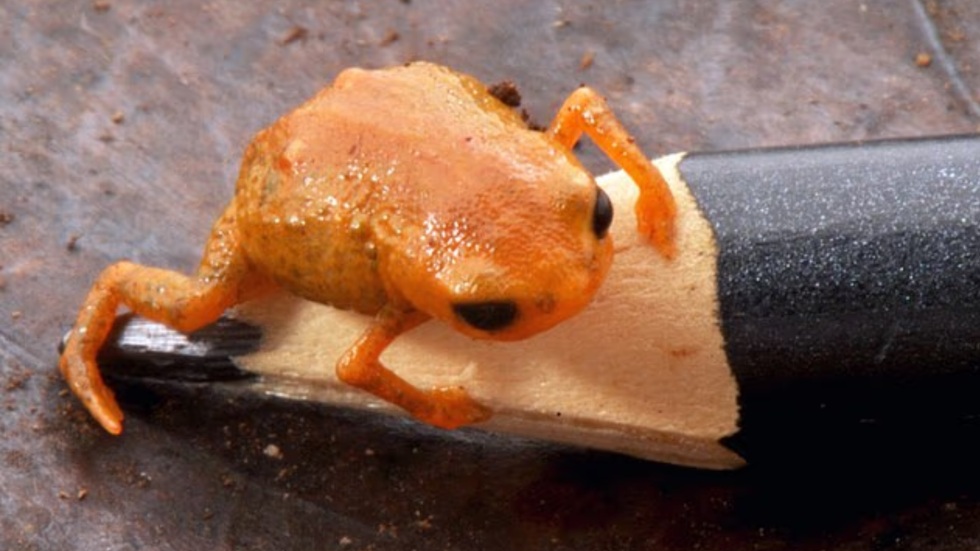
A previously unknown species of miniature ‘pumpkin’ toadlet has been identified
|
LUIZ RIBEIRO
The species ranks among the smallest four-legged creatures on the planet, with males measuring a mere 8.9 to 11.3 millimetres in length – roughly equivalent to a large pea.
Female specimens tend to be somewhat larger, ranging from 11.7 to 13.4 millimetres.
The entire frog is scarcely bigger than the tip of a pencil, as photographs of the discovery demonstrate.
These miniature amphibians inhabit damp leaf litter on the forest floor, where their bright colouration stands out against the dark organic matter.
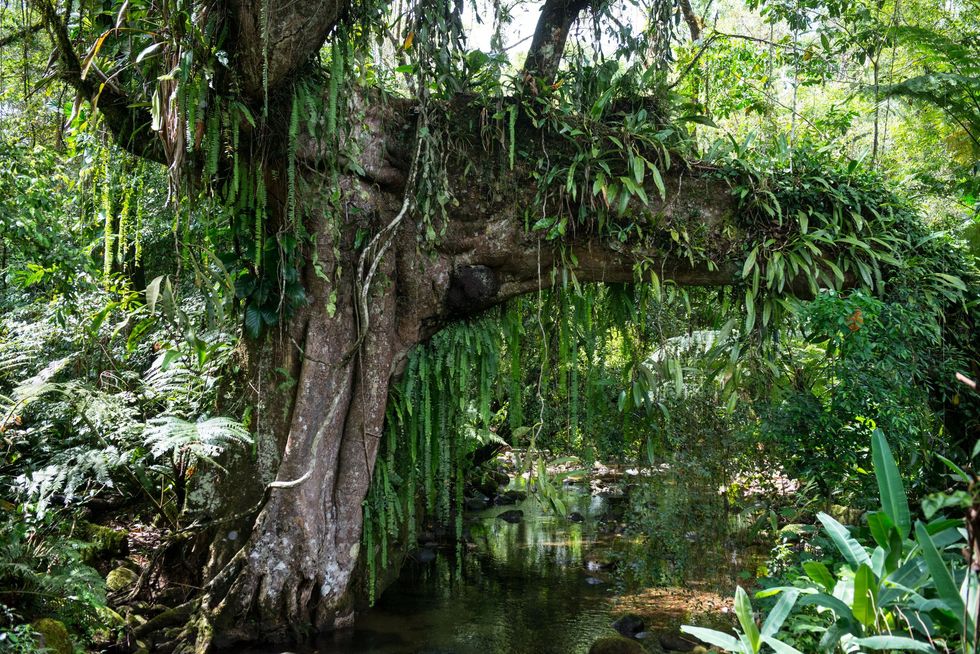
The tiny amphibian was discovered within the cloud forests of the Serra do Quiriri mountain range
|
GETTY
The species’ genetic makeup and anatomical characteristics distinguish it from related frogs discovered in neighbouring areas.
The research team tracked down this particular specimen by following its unusual mating call, which differs markedly from other Brachycephalus species inhabiting the region.
The distinctive song comprises pairs of brief sound bursts, enabling scientists to pinpoint the frog’s whereabouts in the dense forest undergrowth.
To verify that they had indeed encountered a previously undocumented species, the researchers employed multiple analytical techniques.
ANIMALS – READ THE LATEST:
DNA sequencing confirmed the creature’s genetic distinctiveness, whilst CT scanning allowed examination of its skeletal structure.
“As a result of this work, we discovered and herein described a population collected on the eastern slope of Serra do Quiriri as a new species based on several diagnostic features,” the team wrote in their PLOS One paper.
Brachycephalus species are microendemic, existing only within extremely restricted geographical areas, which renders them particularly susceptible to extinction.
B. lulai itself occupies a habitat spanning just a few square kilometres of high-altitude Atlantic Forest.
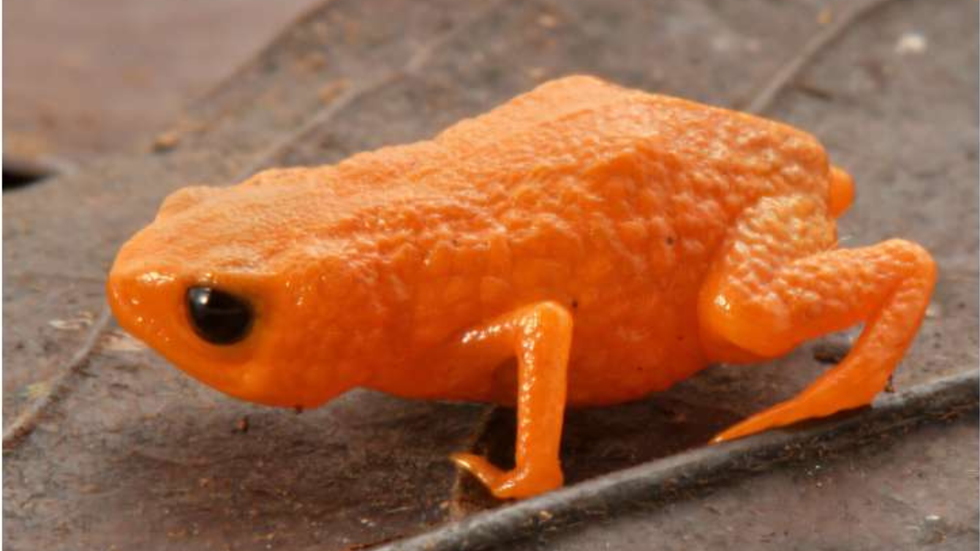
The species currently holds a ‘least concern’ classification, indicating no immediate extinction risk
|
LUIZ RIBEIRO
Despite this vulnerability, the species currently holds a “least concern” classification, indicating no immediate extinction risk.
The researchers note this assessment reflects “the absence of observed ongoing decline and the apparent lack of plausible future threats,” though they stress that systematic monitoring remains essential.
The discovery has nonetheless prompted renewed appeals for enhanced protection of these fragile ecosystems.
“We seek to encourage the expansion of conservation initiatives focused on the Atlantic Forest as a whole, and on Brazil’s highly endemic miniaturised frogs in particular,” the scientists said.