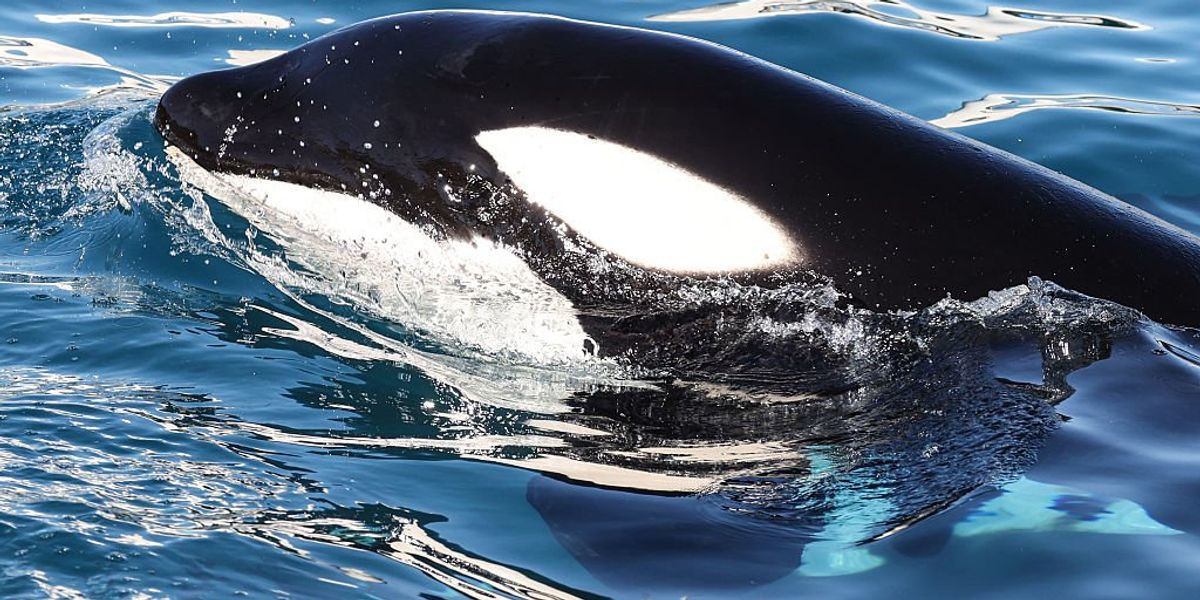
Scientists have confirmed for the first time a potentially lethal pathogen circulating among whale populations in Arctic waters, following an innovative surveillance effort using drones to collect breath samples.
The virus, known as cetacean morbillivirus and sometimes called “the measles of the ocean”, has been linked to mass die-offs of marine mammals globally since researchers first identified it in 1987.
An international team led by Nord University, working alongside King’s College London and The Royal (Dick) School of Veterinary Studies in Edinburgh, made the discovery after gathering respiratory samples from whales in Norway.
The research team employed an ingenious method to gather samples without causing stress to the marine mammals. Consumer drones equipped with sterile Petri dishes were flown directly above the whales’ blowholes, hovering briefly to capture droplets expelled when the animals surfaced to breathe.
This exhaled spray, commonly referred to as “blow”, contains respiratory droplets that can be screened for pathogens using advanced molecular techniques.
The sampling campaign spanned nearly a decade, running from 2016 to 2025, and covered humpback, sperm and fin whale populations across the Northeast Atlantic. Researchers collected material from locations including Norway, Iceland and Cape Verde.
Laboratory analysis revealed the presence of cetacean morbillivirus in humpback whale groups swimming in Norwegian Arctic waters. The pathogen was also detected in a sperm whale displaying signs of ill health, as well as in a stranded pilot whale.
Professor Terry Dawson from KCL’s Department of Geography, said: “Drone blow sampling is a game-changer. It allows us to monitor pathogens in live whales without stress or harm, providing critical insights into diseases in rapidly changing Arctic ecosystems.”

An international team made the discovery after gathering respiratory samples from whales in Norway
|
GETTY
The investigation additionally uncovered herpesviruses among humpback whales.
However, the team found no trace of avian influenza virus or the bacterium Brucella, despite both having been previously associated with cetacean strandings.
The researchers have raised concerns crowded winter feeding areas, where whales congregate alongside seabirds and human activity, could create conditions ripe for viral spread.
Helena Costa, lead author from Nord University, emphasised the need for ongoing monitoring, saying: “Going forward, the priority is to continue using these methods for long-term surveillance, so we can understand how multiple emerging stressors will shape whale health in the coming years.”
The findings were published in the journal BMC Veterinary Research.