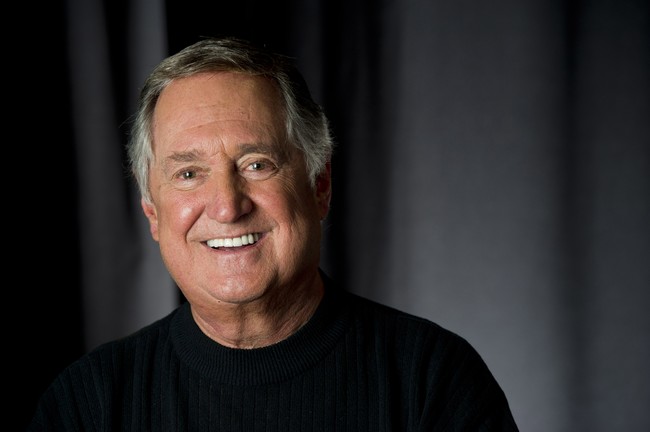
Neil Sedaka started his career in 1952, at the age of 13. I can’t remember what I was doing at that age, but it certainly wasn’t crafting No. 1 hits that would be sung and recorded for decades. With his songwriting partner Howard Greenfield, Sedaka pinned 10 number one hits alone between 1958 and 1962. Sedaka’s signature song, “Breaking Up Is Hard To Do,” was released in 1962 and is the one that has been recorded the most. “Love Will Keep Us Together,” (1975) made famous by the iconic duo, The Captain & Tennille, won Sedaka a BMI award for “Most Performed Song.”
As much as I loved other artists’ renditions of Sedaka’s work with his songwriting partners, it was Sedaka’s own ebullient tenor and his ability to deliver a lyric that I most enjoyed. One personal favorite is “Solitaire,” originally recorded in 1972 and produced for wider release in 1974. Next to Sedaka’s recording, Karen Carpenter’s cover absolutely slays.
I also loved this lesser-known gem, “Should’ve Never Let You Go,” which Sedaka wrote and recorded in 1980 with his daughter, Dara.
In 2007, Sedaka celebrated 50 years in show business with a concert at New York’s Lincoln Center. Guests in attendance were the artists whom he wrote for and elevated their careers: The Captain & Tennille, Natalie Cole, Connie Francis, and Clay Aiken, among many others. Longevity is a big deal, especially in the fickle world of music and entertainment. With almost 70 years in the business, Sedaka has earned his place in entertainment legend, writing and co-writing over 700 songs and recording more than two dozen studio albums. He is a five-time Grammy nominee, gained a star on the Hollywood Walk of Fame in 1978, and in 1983, he was inducted into the Songwriters Hall of Fame.
Sedaka was a testament not only to longevity but also to reinvention. He was a comeback kid several decades over, and even though his career ebbed and flowed with the change in music styles, Sedaka managed to remain active and relevant throughout, writing, producing, and performing well into his 80s. In 2022, Sedaka officially retired from songwriting, selling his voluminous catalog to music management house Primary Wave Music. But this was not the end of Sedaka’s presence or popularity. Unlike many of his contemporaries, Sedaka embraced the zeitgeist of new media. His legendary ethos was parlayed to a new generation with his posts on X, YouTube, and TikTok. When Sedaka did a duet with his grandson, Michael, a talented songwriter, singer, and pianist in his own right, Sedaka instantly became a TikTok sensation.
@neil_sedaka_official “Laughter in the Rain” 1975 We wanted to share this oldie but goody. #fyp #Viral #laughterintherain #neilsedaka ♬ original sound – Neil Sedaka
Last year, Sedaka and Michael appeared on “Good Day New York,” and at 85, Sedaka did a fun medley of his most popular hits.
WATCH:
Back in 1966, Davy Jones, Carole Bayer Sager, and me in the studio during the sessions for “More of the Monkees”. Carole and I produced a song we wrote together, “When Love Comes Knockin’ at Your Door”, and I even got to play piano on the track. #throwbackthursday pic.twitter.com/Ir4f1zjZHl
— Neil Sedaka (@neilsedaka) January 29, 2026
Sedaka’s songs continue to gain new life, giving inspiration to generations of singers and songwriters. When Sedaka lived and recorded in England, Elton John was an admirer and a collaborator. You can hear John’s signature voice on 1975’s “Bad Blood,” which Sedaka wrote with Phil Cody. Most surprisingly, the great Stevie Wonder names Sedaka as an influence.
“I saw Stevie Wonder not long ago on television and he was asked, ‘Who is your inspiration?’ And he said, ‘Neil Sedaka. They used to call me ‘Whitey’ in Detroit because I liked and played Neil Sedaka records.’”
Sadly, the prolific and renowned singer-songwriter has passed on. The Sedaka family announced the death of the beloved husband, father, and grandfather on Friday.
— Neil Sedaka (@neilsedaka) February 27, 2026
Another iconic music legend, Pat Boone, paid tribute to his longtime friend.
Hello, friends.
I’m saddened by the news of Neil Sedaka’s passing. We grew up in the business and stayed in touch through all the years. He was a guest on my SiriusXM show and we recently just met up at the diner down the street and reminisced like old friends do. Neil wrote and… pic.twitter.com/z7w3XHnxun— ThePatBoone (@Pat_Boone) February 28, 2026
Hello, friends.
I’m saddened by the news of Neil Sedaka’s passing. We grew up in the business and stayed in touch through all the years. He was a guest on my SiriusXM show and we recently just met up at the diner down the street and reminisced like old friends do. Neil wrote and recorded so many great hit songs – his grand music legacy will live on forever.
Fellow collaborator and Monkees’ legend Micky Dolenz also paid tribute.
I was saddened to hear of Neil Sedaka’s passing. A rare talent, he gave us many hits and co-wrote “When Love Comes Knocking at Your Door” with Carole Bayer Sager, beloved by Monkees fans too. My thoughts are with his family and all who cherished his music. #NeilSedaka #M pic.twitter.com/R9SFGN9p4j
— Micky Dolenz (@TheMickyDolenz1) February 27, 2026
As did singer-songwriter Stephen Bishop.
I am deeply saddened to hear about the passing of my friend Neil Sedaka. I have been a fan since his early days as a songwriter in the Brill Building.
We did a show together in 1977 and became fast friends. He was a kind and incredibly talented man with a wonderful sense of humor. He will be greatly missed, his songs and legacy are truly iconic. They will continue to be loved and cherished for generations to come.
My heartfelt condolences to his family, friends, and fans. Rest easy, Neil. You will be missed.
Love and Sunshine,
Your forever pal
Steve
Along with Bishop, Sedaka was among the innovative songwriters and creators of the Brill Building, which launched the singing and songwriting talents of the likes of Neil Diamond, Carole King, and so many others.
While he initially pursued classical music, he was bitten by the pop music bug as a teen. At the age of 13, a neighbor heard him playing piano and introduced him to her son, Howard Greenfield, who was three years older. However, the pair began a songwriting partnership that was to take them to the top of the pop charts multiple times over the following 25 years.
Sedaka began performing during his years at Abraham Lincoln High School, and after graduating he formed a doo-wop group with classmates called the Linc-Tones, named after the school. The group released several singles that were local hits before Sedaka left in 1957 to launch a solo career; the Linc-Tones evolved into the Tokens, who scored a global smash in 1961 with “The Lion Sleeps Tonight.”
Sedaka parlayed that success into a solo deal with the RCA Victor label, and soon had hits of his own with “The Diary,” “Oh! Carol” (written for Carole King — the pair had dated in high school — who followed with “Oh! Neil”), ” Stairway to Heaven,” “Calendar Girl,” “Little Devil,” “Happy Birthday Sweet Sixteen,” “Next Door To An Angel,” “Breaking Up Is Hard To Do” and others.
However, the advent of the Beatles and the British Invasion signaled a major change in pop culture, and Sedaka sidelined his solo career and focused on songwriting. He and Greenfield wrote hits for Frank Sinatra (“The Hungry Years”), Elvis Presley (“Solitaire”), Tom Jones (“Puppet Man”), the Monkees (“When Love Comes Knocking At Your Door”), the Fifth Dimension (“Workin’ on a Groovy Thing”) and others.
Neil Sedaka was born on March 13, 1939, to his parents, Mordechai and Eleanor. He was raised in the Brighton Beach section of Brooklyn, and his mother worked part-time in a department store to pay for Sedaka’s first piano when he was nine.
Sedaka learned to play music as a child and attended Juliard School of Music. He was 13 when he began a decades-long partnership with friend Howard Greenfield, who was a lyricist. The two began to hit up music companies, and by 1958 they had their first hit, “Stupid Cupid,” as recorded by Connie Francis.
Sedaka was, of course, a singer himself, and he signed to be the one behind the microphone at RCA in 1959, per his official bio from the Songwriters Hall of Fame. Beginning that year, Sedaka was second to Elvis Presley in terms of records sold for five years, selling a staggering 40 million records.
Sedaka is survived by Leba Strassberg, his wife of 64 years, his children Marc and Dara, and grandchildren Charlotte, Amanda, and Michael.
Editor’s Note: Hollywood, academia, and liberal elites are out of touch with the average American.
Help us continue to report the truth about what 77 million patriots voted for by joining RedState VIP and using promo code FIGHT to receive 60% off your membership.