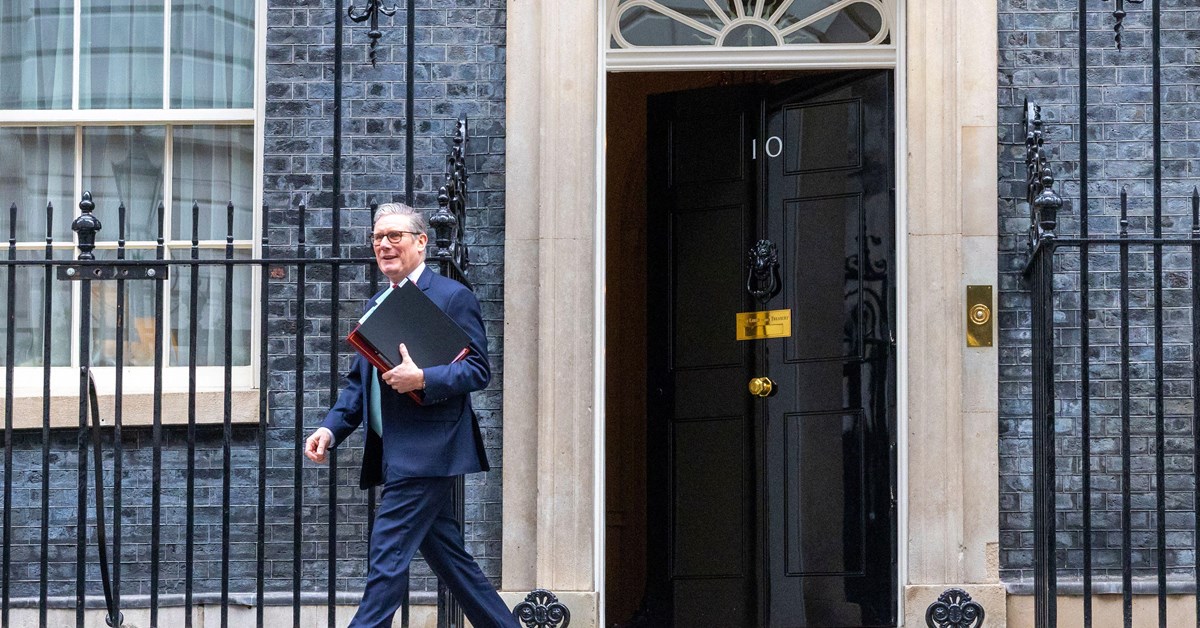
THE Labour Party “looked over the precipice” this week and decided not to jettison Sir Keir Starmer. On Monday morning, it appeared to be a genuine possibility that the Prime Minister might be toppled. But when no one rallied behind the call by the leader of the Scottish Labour Party, Anas Sarwar, for the PM to resign, the momentum faltered.
One by one, the members of the Starmer Cabinet tweeted their support for their beleaguered leader. They had looked into the abyss, the Energy Secretary, Ed Miliband, said, “and they didn’t like what they saw.”
In the abyss, they confronted the possibility that they might not keep their jobs in a post-Starmer Cabinet — and also the reality that they could not agree on a single obvious candidate to replace the incumbent; so a Tory-style psychodrama would follow Labour’s regicide. Tweets appeared in rapid succession, and unity was discovered as ministers began to rally publicly around the Prime Minister.
But it was not spontaneous loyalty. The 10 Downing Street inner-circle staff co-ordinated it, and even penned the wording. One minister admitted: “We’ve all been made to tweet.” And the unity was superficial. Ministers all declared support for Sir Keir, but in the broadest of generalities. The Deputy PM, David Lammy, spoke of the party’s “mission”; the Chancellor, Rachel Reeves, of “turning the country around”; and the Foreign Secretary, Yvette Cooper, of the PM’s “global leadership”; and the Health Secretary, Wes Streeting, lauded his boss’s “integrity”. It was an endorsement of commitment, but without any details on the specific policies of the Government’s trajectory.
The language created the appearance of unity, but left underlying disagreements unresolved. It was loyalty to the institution, not necessarily to a direction of travel.
Two senior figures were more forthcoming. Andy Burnham, who may yet become the greatest threat to the PM (30 January), called for the Government to be a bolder and more ambitious champion of the “underdogs of Britain” — and use public ownership to bring “lower rents, lower water bills, lower energy bills, lower rail fares, lower bus fares”. It required “a more inclusive way of running the party”.
It was a clear call for the Government to move to the Left. Mr Miliband was more overt, talking of “the class divide” and saying that “Keir . . . exists to change that.”
The Left has already claimed a Starmer scalp. It was pressure by the 100-plus MPs in the soft-Left Tribune group who forced the resignation of the PM’s chief of staff, Morgan McSweeney, who masterminded Labour’s 2024 election victory and the subsequent purge of Corbynites from the party. A “more inclusive” Government will mean that the soft Left (and perhaps even the hard Left) will need to become ministers alongside the old Right and the Blairites.
On Monday, at a meeting of the Parliamentary Labour Party, MPs cheered the Prime Minister to the rafters as he made a rousing speech in which he declared: “I’ve won every fight I’ve ever been in” — evidently forgetting how Labour rebels forced U-turns upon him on welfare cuts, winter fuel, compulsory ID cards, employment rights, and the two-child benefit cap.
The PM has bought himself a reprieve, but with the Gorton and Denton by-election looming this month — and the elections to the Scottish and Welsh Parliaments and English councils in May — it may well be only a temporary one.