Nasa has confirmed exactly when the United States will attempt its first crewed Moon mission in more than five decades.
The space agency revealed on Tuesday that the Artemis II mission could lift off as early as February 6.
A launch window opens on January 31 and extends through to February 14.
The flight will mark America’s return to lunar exploration after a 53-year absence, with the last crewed Moon mission, Apollo 17, taking place in 1972.
Artemis II will blast off from the Kennedy Space Centre in Florida, carrying astronauts on humanity’s first journey beyond low Earth orbit since the Apollo era.
Four astronauts will undertake the 10-day voyage around the Moon before returning to Earth.
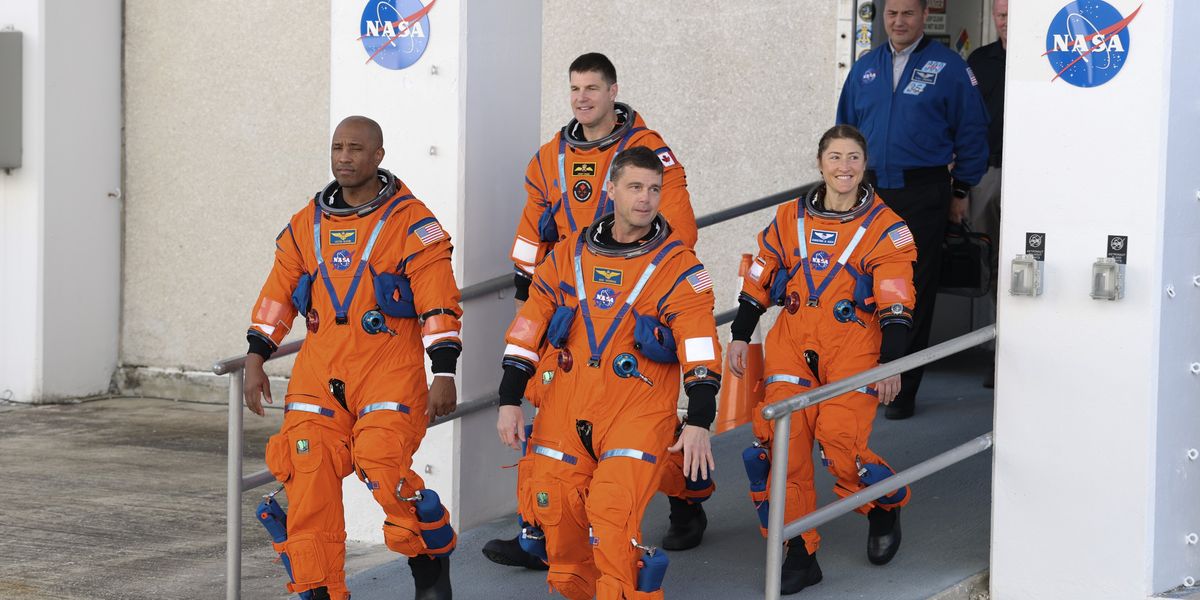
The crew comprises three Nasa personnel and one astronaut from the Canadian Space Agency.
Nasa trio Reid Wiseman, Victor Glover and Christina Koch will be joined by Canada’s Jeremy Hansen.

Nasa trio Reid Wiseman, Victor Glover and Christina Koch will be joined by Canada’s Jeremy Hansen on the 2026 Moon mission
|
GETTY
However, the historic mission will not include a touchdown on the lunar surface.
Instead, the spacecraft will orbit the moon, allowing the crew to travel further from Earth than any humans have ventured in over half a century.
This preparatory flight will pave the way for subsequent Artemis missions that aim to return astronauts to the moon’s surface.
Should the February 6 date prove unworkable, Nasa has identified several alternative launch opportunities.
MANKIND IN SPACE – READ MORE:

PICTURED: Gene Cernan salutes on the surface of the Moon. The last crewed lunar mission, Apollo 17, took place in 1972
|
PUBLIC DOMAIN
The agency has designated February 7, 8, 10 and 11 as potential backup dates within the initial window.
Additional launch windows have been secured for early March and April if circumstances prevent a February departure.
But the exact timing of liftoff cannot be chosen arbitrarily – multiple factors will determine when Artemis II can safely launch.
These include the relative positions of Earth and the Moon, the performance capabilities of the rocket, and weather conditions at the Florida launch site.

The Space Launch System rocket is sitting in wait for its mission inside the Vehicle Assembly Building at the Kennedy Space Centre
|
GETTY
The Space Launch System rocket is sitting in wait for its mission inside the Vehicle Assembly Building at the Kennedy Space Centre.
As for a moon landing, Nasa has told the world to wait until next year.
That next “giant leap” has been reserved for the Artemis III mission, which has been earmarked for 2027.