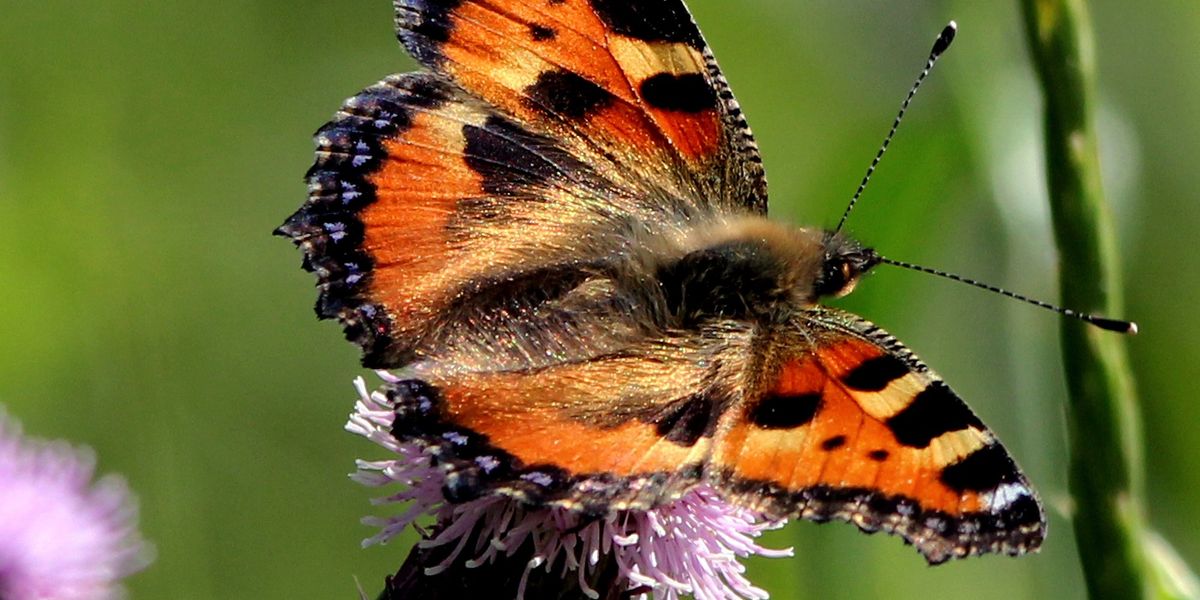
The large tortoiseshell butterfly has been declared a resident species in Britain once more after it was long believed to have gone extinct.
Butterfly Conservation confirmed the species had returned in woodlands spanning Kent, Sussex, Hampshire, Dorset, Cornwall and the Isle of Wight.
This marks the first time in the charity’s 58-year existence that the species has been classified as resident rather than migratory.
Britain’s native butterfly count has now risen to 60 with the insect’s return.
The species had been considered extinct in the country since the last century.
“The signs are really positive, which is lovely,” said Richard Fox, Butterfly Conservation’s head of science.
“It is resident and therefore it is another species to add to Britain’s total, which is good news. It’s not well-established enough yet to say it’s definitely back for good and will be widespread across multiple landscapes – we’re still in that zone of uncertainty at the moment, but there are exciting signs.”
Unlike its smaller relative, the large tortoiseshell lives in trees rather than gardens.

Britain’s native butterfly count has now risen to 60 with the large tortoiseshell’s return
|
GETTY
Its caterpillars feed on elm, willow, aspen and poplar.
The species is larger and does not have the white markings seen on the common small tortoiseshell.
Dutch elm disease was previously thought to have contributed to the butterfly’s disappearance from Britain by the 1960s.
However, experts now believe the UK may have always sat at the northern edge of the species’ natural range.
SCIENCE BREAKTHROUGHS IN BRITAIN – READ MORE:

Large tortoiseshell caterpillars have been discovered feeding on trees in the wild since 2020, first in Dorset and now across a wider area
|
WIKIMEDIA COMMONS
The butterfly thrived during a period of warm summers in the 1940s.
In recent years, and amid warmer summers, growing populations in the Netherlands and France have led to increased migration across the North Sea and English Channel.
Scientists say climate change has also enabled various continental moth species to establish themselves in Britain, including the striking Clifden nonpareil moth.
Caterpillars have been discovered feeding on trees in the wild since 2020, first in Dorset and now across a wider area – confirming the butterfly is successfully breeding in Britain once again.

Growing butterfly populations in Europe have led to increased migration across the English Channel
|
PA
The insect spends winter in hibernation as an adult before emerging in spring to mate and produce eggs.
Adult butterflies from this year’s offspring will take flight during midsummer.
Conservationists hope the current spring sightings will lead to a growing population later in 2026.
Butterfly Conservation has added the species to its first sightings page and is encouraging the public to record any sightings using iRecord, a free “citizen science” app.