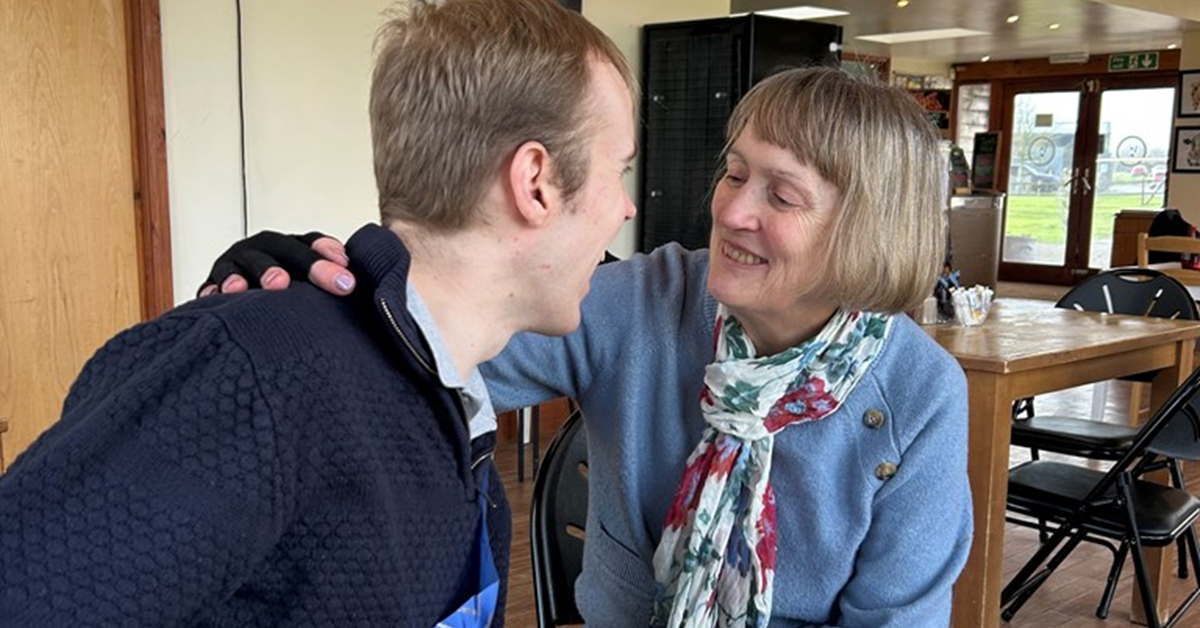
WHEN Sarah Smith became employed as the co-ordinator for Carers Connected, she was caring for her mother. The initiative, from the Christian charity Embracing Age, connects carers via weekly online Zoom gatherings.
“So many carers in a church community are unseen and unheard,” she says. “So often, people are excited by new faces at church; they don’t notice the people who are beginning to come less often because they’re caring for someone. And they [may not] have a proper conversation even if they do come to church. In the end, they can feel it’s just not worth it.
“Many of the people who come to Carers Connected tell us they feel forgotten by their church. They’re in such challenging circumstances, and they need to receive love and comfort. When a carer is exhausted and overwhelmed, with no respite, it can be hard to continue to hope; to believe that God is with them; to trust that he knows what they’re going through; to believe that he has a plan for them, without other people around them to encourage them in their faith, and to pray with them.”
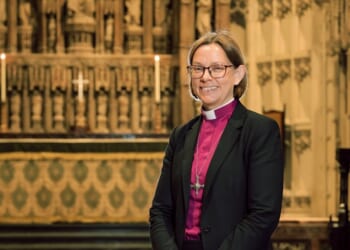
CANON Alice Kemp is the disability adviser for the diocese of Bristol. She has a son with complex physical and learning disabilities, including autism and epilepsy. “His childhood was in and out of hospital,” she says. “He had a lot of challenging behaviours, like smearing poo and vomit, and would have meltdowns when things overwhelmed him.
“We stopped going anywhere, or doing anything. I made sure that my husband had a social life, because I needed him to stay well, but my world just dwindled. Bus drivers and other carers were the only people I saw.”
Often, the only support that she and her husband received was from their church. “The congregation has known Francis since he was a baby, and they adore him. But a new vicar once asked us if we could leave him at home when we went to church. That just broke our hearts.”
Caring is “really tough”, she says. “When you’ve been up all night, and then had a really challenging day, it’s very difficult to find space and time to be able to think and reflect. Trying to have a quiet time every day is incredibly hard, and you have to find much more adaptable ways to meet your spiritual needs. I could never go to a home group, for instance.”
There is, of course, access to services and sermons for Christians online. “Even so,” Mrs Kemp says, when you’re a carer “it can be really hard to join anything, because life is chaotic.
“A lot of churches did really good online provision during [Covid], but now this is reduced to just streaming a service — and, actually, a lot of our spiritual development comes through our connections with other people, and being able to have meaningful conversations and explore what we think.
“I know that if I don’t nurture my spiritual self, I lose a part of my being. So, there’s a constant wrestling, almost, for my spiritual development.” Churches can help by acknowledging this, she says.
RACHEL FREEMAN (not her real name) cares for her husband, who, three years ago, developed an unidentified disorder which means that he now needs a wheelchair to go out. “He’s in quite a lot of pain, and he gets very tired,” she says. “It has restricted what we can do quite considerably.”
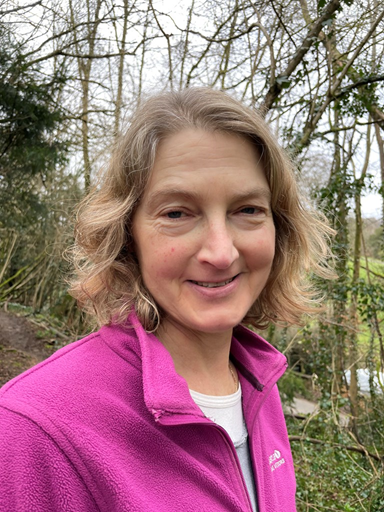 Sarah Smith, Carers Connected co-ordinator
She still gets to church on Sundays, and attends a brief prayer meeting in the week, but little else. “I’ve asked friends from church not to ring, because my husband finds conversation about Christian things very difficult.”
It is her faith that sustains her, she says. “Sometimes God feels close, sometimes he doesn’t, [but] this has been my one secure relationship, I suppose, when earthly things have not been quite how I’d imagined.”
Most of the joy she experiences comes at church, she says, “when the worship works, on a day when I feel uplifted, particularly by the music.
“The nine-o’clock service is quieter and much more traditional, and I find that, on the whole, much more helpful. I stay on for the 10.30 service because I run the team that operates the projector, but also . . . because some of the songs deal with mental-health problems and difficulties of that nature, and I appreciate that.”
She also appreciates the way in which her church family “still has an expectation that, although there are a lot of things I can’t do, there are still things I can do for God”. She occasionally leads the Wednesday-morning prayers “on the understanding that, if it is a particularly bad morning, I can ask somebody else to do it, instead”.
Not everyone has found their church so affirming. Dr Penny Pullan spoke to the Church Times in 2021 (Feature, 15 October 2021) about her experience over 30 years, after her then fiancé, Malcolm, contracted myalgic encephalomyelitis (ME). “I don’t think we had problems with God once we got used to it,” she recalls now. “What damaged us spiritually was some other Christians’ responses.
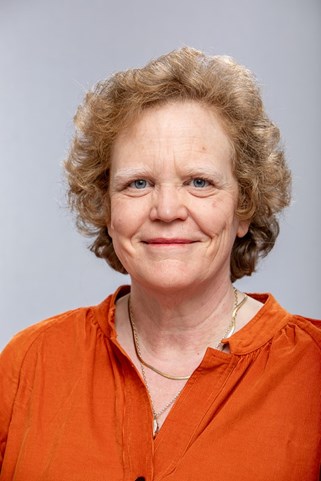 Dr Penny Pullan
“When someone has a chronic illness which is not visible to the untrained eye, they and their partner can be worn down by people in church making all sorts of assumptions, and doing things that are exclusionary, without any intent to harm.”
She has just spent a year interviewing working-age Anglicans with “invisible” illnesses such as ME and long Covid, “mainly because I was curious to find out whether the experience we had had was shared by others”. She found that many of them did not feel that they really mattered in their churches.
“That makes it harder for the carers,” she says. “If you’re caring for somebody who has cancer, and they have treatment for six months and then recover, everybody will say ‘Hallelujah!’ But when support is needed for decades, people gradually drift away.”
One thing that she has found “absolutely pernicious” is the rota system that so many churches rely on. “Because they’re inflexible, people are cut out of doing things, and then they’re not seen as doing things, and then they’re less likely to be supported if they disappear, because they’re not seen.”
ANNIE REY conceived when she was 42, and was told that there was a one-in-four risk that her child would have Down’s syndrome. “One thing that wasn’t helpful was people at the church we attended laying their hands on me and ‘declaring this child well’, which I would hang on to by my fingernails.”
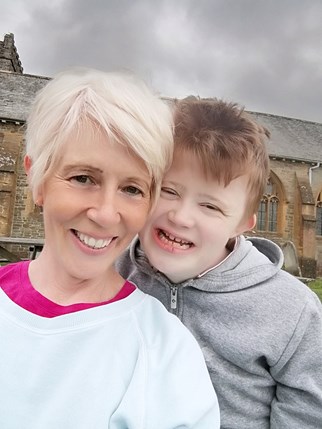 Annie Rey with her son Paddy
After her son, Paddy, was born 19 years ago, and was diagnosed with the chromosomal condition, she didn’t attend church for “quite a long time”. She says: “He really hated big echoey buildings; he didn’t like the noise or the crowds.”
She is soon to preach her first sermon, at Holy Trinity, Roehampton, where her husband, Josh, is now the Vicar, about the spiritual journey she has been on since Paddy’s birth. “I hope it will give some support to people in our congregation who are in a not entirely dissimilar position,” she says.
“Back then, I could see only three explanations, none of which was comfortable. One was that God couldn’t change his chromosomal make-up in the womb. One was that God could change it, but chose not to. The third was that God couldn’t give a toss either way. I think these are thoughts that people are reluctant to own up to; so I want to say that I thought these things, too. In fact, on a bad day I still do.”
Only recently has she arrived at a fourth option, she says, which is that when God withholds from us things that we want, and we believe it is good to want, it can help us to grow. “It’s not a perfect answer, and it’s intensely personal,” she says. Having a child with Down’s syndrome “has been the only thing in my life that has really changed me, and it’s undoubtedly changed me for the better.”
HOW can those who still manage to attend church meetings feel supported by the way in which people relate to them and their caring situation?
The Revd Robin Thomson, a retired vicar, cared for his wife, Shoko, full-time for the last two years of her life, and has written a book about the experience: Living with Alzheimer’s: A love story. Last year, the Good Book Company published a second book, this time of devotions for caregivers: Unfailing Love: 30 devotions to encourage dementia caregivers.
Not avoiding chatting to people who are carers, for fear of saying the wrong thing, is a start, Mr Thomson says. “Sometimes, we think it’s better to say nothing than to say the wrong thing. I think that can be equally unhelpful, because it can give the impression we’re not caring. I think that is a failing of the Englishness in our church.
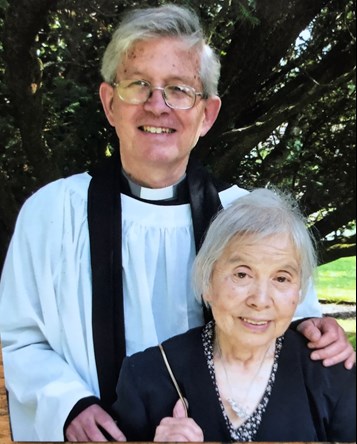 The Revd Robin Thomson with his wife, Shoko
“If people know that we genuinely love them, that communicates, regardless of what we say.”
Not feeling that we need to provide some spiritual truths, is another. “To say that God has a purpose is true, but it’s not always helpful to say it. It’s better to say: ‘What you’re going through is very hard, and I feel for you.’ To realise that somebody else understands that you’re going through a hard time is very powerful,” Mr Thomson says.
“I can’t honestly remember anything that anybody has said to me that has made me feel better — at least, not anything edifying,” Mrs Rey observes.
“Words don’t really wash with me, but if you offer to babysit for a couple of hours, that tells me that you’ve really looked at my situation, you’ve empathised with it, and you’re reaching out in love to help me in a way that a platitude wouldn’t.”
Practical and spiritual support are not that different, she suggests. “There’s a woman at church who, if I’m on the coffee rota, will always come up to the counter and say, ‘I need a glass of milk and a piece of cake for Paddy.’ I’ve never asked her to do that, and that just speaks volumes to me.”
Mr Thomson recalls an occasion when “a couple of friends took my wife to the loo so that I could stay in church. That says a lot. It showed that they understand, and they care.”
WHAT is the most requested prayer from carers who contact Carers Connected? They always need grace and patience, Mrs Smith says, “and continued love for the person [in their care]. Energy and strength come up again and again. And sleep.”
It’s often easy “to ask for prayer for the person we’re caring for”, Mrs Freeman says, “but what can people pray for, for us? I think I would most want people to pray that my Christian life will grow, because when your engagement with the world is restricted, it’s very easy to completely dumb down your response to things, and that can make your emotional and spiritual life very dull.”
“It has amazed me that there seems to be so little available to encourage Christian carers in their caring role and in their faith,” Mrs Smith says.
She adds that church pastoral-care teams need to be proactive. “Identify who the carers are in the church before they stop coming, and find out exactly what the church could do for them. Ask for their specific needs, and then, perhaps, offer practical help. Be proactive in including them: make sure they get the newsletter; make sure that holy communion is taken to their house, if they’d like that.”
At Embracing Age, set up in 2014 to reduce isolation for people in care homes, founded by the Revd Tina English, a former nurse and a self-supporting curate at All Souls’, St Margarets, in Twickenham, the website includes a page for carers which gives information about Carers Connected and guiding principles for churches on how to support carers.
“From our website, churches can also access a free four-session course designed to equip church teams to support carers of those with dementia. Each session includes a video to watch, and questions to discuss together,” Mrs Smith says.
Carers Connected Zoom gatherings run on Wednesday evenings at 7.15, and Thursday afternoons at three. Groups are hosted by two facilitators, and much of the time is given to chatting and sharing experiences, with time for prayer at the end, and a short reflection, worship song, or poem.
At present, it has about 70 members. It is relatively new, Mrs Smith says, having initially set up as support for carers during the pandemic. Because of their caring duties, some members don’t join the Zoom gatherings, “but our weekly emails, hopefully, offer encouragement,” Mrs Smith says.
“We’d love to start another group, but we need more volunteer hosts to do this, who have a heart for carers.”