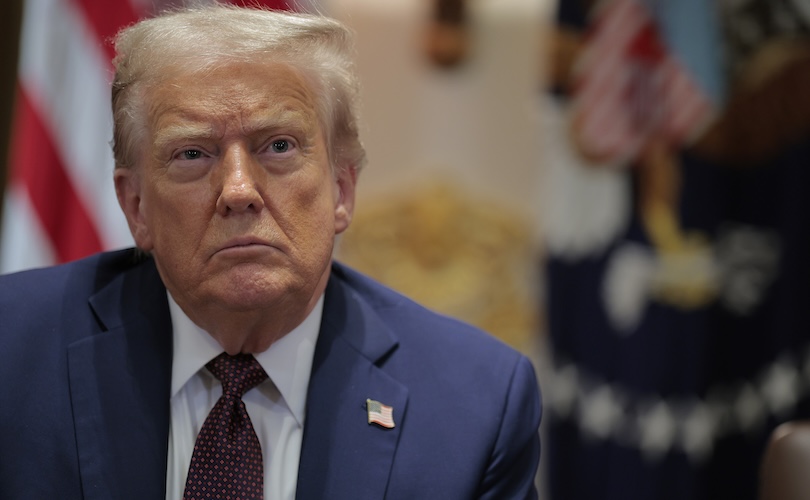
(LifeSiteNews) — Last year, dozens of socially conservative organizations urged the Trump administration to not reclassify marijuana from a Schedule I drug to the far milder Schedule III category. Trump ignored their recommendation and, on December 18, signed an executive order seeking to expedite the process.
While some scholars maintain that the president does not have the ability to unliterary change the classification of drugs like marijuana, it does not seem that any legal objections to the move will be mounted against the administration by lobbying groups, as marijuana use is a rapidly growing industry.
Trump’s executive order notes that Schedule I drugs “are defined as drugs with no currently accepted medical use, a high potential for abuse, and a lack of accepted safety for use of the drug under medical supervision.” To justify the reclassification, the order points to various “studies” and “findings” that show that marijuana has “shown potential to improve patient symptoms for common ailments,” including “treatment of pain, anorexia related to certain medical conditions, and nausea and vomiting induced by chemotherapy.”
A recent study published in the Cochrane Database of Systematic Reviews undermines Trump’s claim. According to a news release published earlier this month on the study, “there is no clear evidence that cannabis-based medicines provide pain relief for chronic neuropathic pain.”
“Researchers reviewed 21 clinical trials involving more than 2,100 adults, comparing cannabis-based medicines with placebo over periods of two to 26 weeks,” the release states. “It is unclear if medicines with mainly THC make any difference to the number of people who experience pain relief of at least 30% or at least 50%.”
The study also said that it is unclear if persons “rate their condition to be much or very much improved” or if they “stop the medication due to unwanted effects, experience serious unwanted or harmful effects, [and] experience unwanted psychological effects (e.g. confusion).”
The report is notable in that its general findings are similar to what other studies have found. In September 2025, the American College of Obstetricians & Gynecologists (ACOG) started advising medical professionals to encourage pregnant women to stop using marijuana due to its negative impact on preborn children.
The report noted that there are a number of harmful side effects that children in the womb suffer from if their mother consumes marijuana while pregnant, including an “increased risk of developing substance use disorder or psychiatric disorders” later in life and “diminished cognitive functioning in verbal reasoning, language comprehension, and executive function.”
A study published in Nature Communications last year also confirmed that THC exposure “seems to impact critical transcripts involved in key oocyte maturation processes, fertilization, early embryo development and implantation.”
Yet another report published in the Journal of the American Medical Association in November 2025 analyzed over 2,500 studies on marijuana from 2010 to 2025. UCLA addiction psychiatrist Dr. Michael Hsu said that the study indicated there is “insufficient evidence” to support the claim that marijuana helps treat acute pain, insomnia, anxiety, and other illnesses.
The report more specifically found that 29 percent of marijuana users meet the criteria for being abusers of the substance. Daily or high-potency use was also found to result in raised cardiovascular risks, such as heart attacks and strokes, among other harmful side effects.
The Cochrane study noted that it used herbal, plant‐based, and synthetic marijuana compared to a placebo or conventional drugs for chronic neuropathic pain in adults. Despite admitting that “our confidence in the evidence is low to very low, and the results of further research could differ from the results of this review” the study is undoubtedly part of a growing body of evidence that clearly suggests that a consensus has been reached on the harmful effects of marijuana and that any supposed benefit its users enjoy are offset by the array of other harmful effects it causes.
President Trump was wrong to reclassify marijuana as a Schedule III drug. As CatholicVote.org, the Family Research Council, and the dozens of other groups that voiced opposition to his initial proposal said last year, reclassifying marijuana “would result in serious harm to public health and safety, with a particular emphasis on the welfare of children.” It is a shame the president did not listen to them.