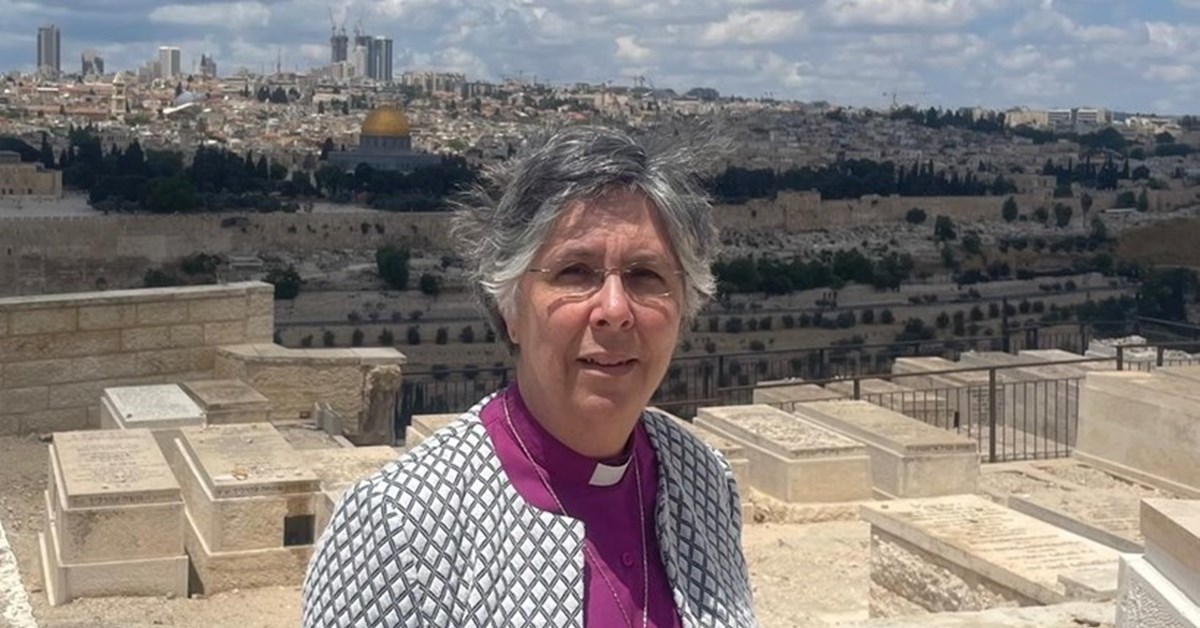
BARELY 24 hours after the first American and Israeli missiles struck Iran last weekend, William Crawley interviewed the Bishop of Chelmsford, Dr Guli Francis-Dehqani, on Sunday (Radio 4).
In contrast with the self-assurance of pundits, she confessed to “mixed emotions”. This included worry — especially that the Revolutionary Guard would simply reassert its authority after much bloodshed and violence to international law.
Yet she could not predict whether the assassination of Ayatollah Khamenei would make the world a safer or more dangerous place, and clung to a small glimmer of hope that a better regime might possibly emerge afterwards, and was shedding few tears for the brutal Khamenei.
Mr Crawley also took the opportunity to ask her about the growth of underground house churches in Iran, surely one of early-21st-century Christianity’s most remarkable stories.
Times Radio broadcasts some of its sister paper’s podcasts under the banner “The Best of Times Radio”. A good example came on Sunday with an episode of The Business on quantum computing, seeking to explain how it differed from the binary computing with which we are familiar. James Palles-Dimmock, of the British company Quantum Motion, has raised £60 million to develop a cheaper alternative to other pioneers in the field, but, despite his slow and careful explanations, I am not sure that I yet understand the implications of superposition and entanglement.
Regardless of my comprehension, this technology is coming at us rapidly. It seems to hold particular promise for parsing complex and chaotic systems. HSBC and IBM recently carried out a trial of quantum computing for algorithmic trading.
Exponential growth in demand for rare earths is one implication of the explosion in computing power. The BBC World Service’s in-depth documentary programme The Inquiry wondered “Can the world catch China in the rare earths race?” (Friday).
Rare earths are, in fact, common, but difficult to extract in pure form, and processing them is polluting, energy-intensive, and requires enormous capital investment. As a result, Western countries in the 2000s allowed domestic refining capacity to atrophy, while China poured resources into the field. It now controls 90 per cent of the refining of rare earths — something that the United States and the EU are desperately trying to reverse.
Amid those hardest of topics, the story of the young Chinese concert pianist Yirui Weng, on Heart and Soul, warmed the heart (BBC World Service, last Friday). Indifferent to religion when she was growing up, she found herself, while studying performance in Italy, wondering why liturgical language had inspired composers, and was particularly drawn into the meaning of Vivaldi’s Gloria.
Christ’s teachings on forgiveness and loving enemies challenged her childhood presumptions. She began to pray, which, much to her surprise, changed the way she played. Baptised in 2023, Ms Weng offered some profound reflections on why music is so deeply connected to religion.