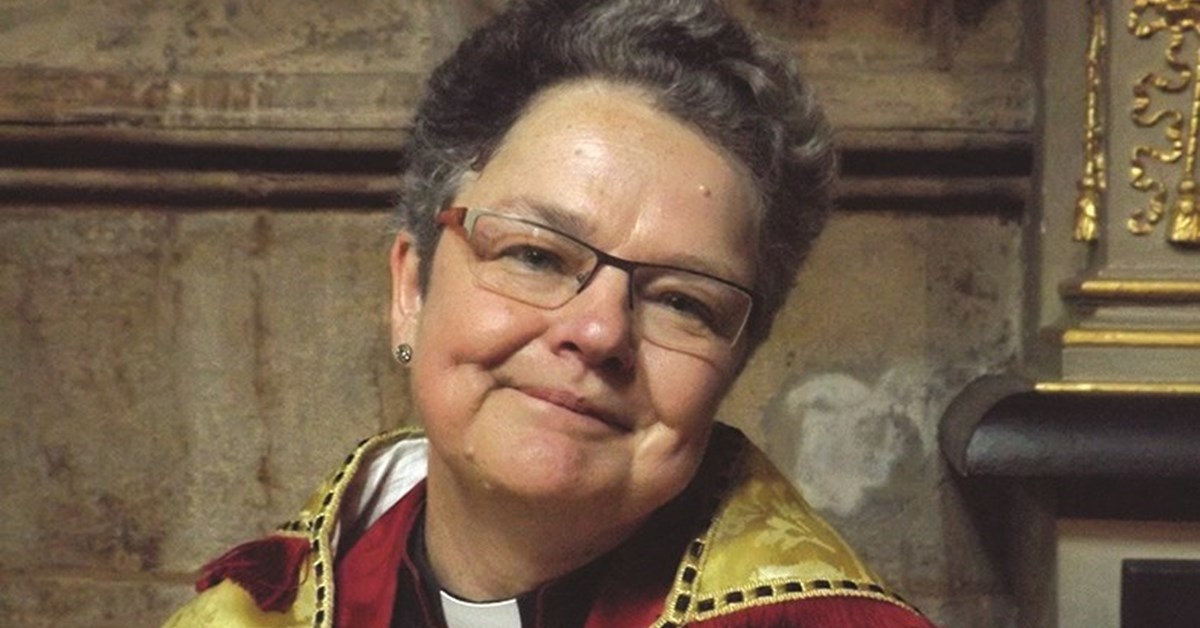
“WHERE, among our bishops, are those with the courage to act from love?” the Dean of Bristol, the Very Revd Mandy Ford, asked on Sunday, as the House of Bishops prepares to finalise decisions on the Living in Love and Faith (LLF) process.
She joined the Dean of St Edmundsbury, the Very Revd Joe Hawes, who — alongside organisations campaigning for greater inclusivity for LGBTQ+ people — last week called on the Bishops to change their minds (News, 11 December).
On Tuesday, the Bishops are due to confirm decisions announced in October, which would effectively forestall the introduction of stand-alone services of blessing for same-sex couples and maintain the current ban on clergy entering same-sex civil marriages (News, 17 October).
Groups opposed to any change to the Church of England’s current position have also made their voices heard, albeit behind closed doors. On Friday, the directors of the Alliance — a network of church organisations opposed to the changes brought by the LLF process — wrote to the Archbishop-designate of Canterbury, the Archbishop of York, and other members of the LLF programme board.
The letter, seen by the Church Times, says that the Alliance is “grateful” for the decision made in October, and confirms that, as a result, the directors were “glad to be able to pivot the Alliance Campaign”.
The letter refers to those calling on the Bishops to take a different path. “We can only imagine the pressure that this will be placing on you, and we pray for you as you meet to confirm the decisions that were made in October,” the letter says.
In the letter, the directors of the Alliance, chaired by the chief executive of the church-planting Revitalise Trust, the Revd Sarah Jackson, also express “concern” that a “pathway towards same-sex marriage for clergy” was developing out of those decisions.
A new “dialogue group” is being proposed, they say, and “some of what has been said” seems to indicate that this group is effectively “a steering group with a mandate to bring to General Synod a timeline for the legislative process to explore same-sex marriage for clergy.
“We would have serious concerns if what was agreed in October now appeared to show a clearer pathway towards same-sex marriage for clergy than is helpful or possible for the Church at this time. Indeed, if such a steering group was introduced as the agreed way forward, we would have no option but to return to our original Alliance Campaign.”
The Alliance has previously issued warnings that a “de-facto parallel province” would be created in the Church of England if the LLF process progressed without the synodical processes that the Bishops now seemed poised to impose (News, 27 June 2024).
Owing to the requirement of a two-thirds majority, it currently seems highly unlikely that any further changes will be passed by the General Synod.
PREACHING in Canterbury Cathedral on Sunday, Dean Ford said that she hoped that the bishops would hear her words on the place of gay clergy in the Church of England.
“What I see are parishes up and down the country where gay clergy are preaching the gospel, visiting the sick, and celebrating the sacraments. I see gay clergy running foodbanks and warm spaces. I see gay clergy in prisons and hospitals, in some of the most demanding ministries in the church. I see gay clergy leading Cathedrals, with creativity, wisdom, and humility. I see heralds of the Kingdom. I see the Kingdom breaking out,” she said.
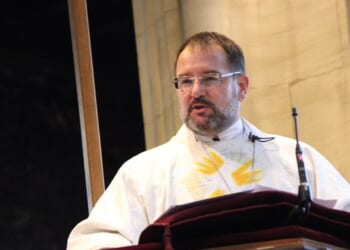
In a sermon preached in St Edmundsbury Cathedral on 7 December, Dean Hawes made a similar plea to the Bishops. He and Dean Ford, he said, had been “closely involved” with the LLF process, and believed that the time had come, “as those who have lived and breathed this often toxic air, to speak to a Church we love, but of which we have come close to despair”.
During the LLF process, those who believed in full inclusion had “pussyfooted around . . . in order to make compromise with those who believe this to be unscriptural, ungodly, unnatural”, he said.
This had resulted in services “which certainly aren’t weddings, where the priest doesn’t actually bless, but in a mealy mouthed compromise, sort of asks God to bless. And which, incidentally, apparently aren’t to be too celebratory so as not to frighten the horses.”
The blessings, known as the Prayers of Love and Faith, are not allowed to be used in stand-alone services, but can be used within scheduled worship.
Dean Hawes also took aim at the rules preventing priests from entering same-sex civil marriages — “marriage which people like me feel called to, long for, are not allowed to enter into”, he said.
“Ordinands have waited and waited, and some haven’t been able to be ordained. In previous years those brave few who defied the Church and got married anyway lost their licences: which means homes and stipends and communities. And the threat still hangs over us.”
Addressing the Bishops directly, he said: “Enough is enough. You may reflect the divisions in the Church, but unlike the Church, you are called to leadership.
“You have a narrow and closing window in which to lead the Church to a place in which it can breathe out this toxicity of institutional discrimination and breathe in something good and life-giving.”
Referring to threats that parts of the Church would leave, he said: “We can hold together, without rickety structures of exclusion.”
Also addressing the Bishops, Dean Ford said: “You have gay neighbours, gay children, gay colleagues at work and gay priests here in your Cathedral and beyond.” Some were called to celibacy, but not all, she said.
“I believe God has called me to faithful, permanent, stability of life with another woman. And that way of life bears fruit, I humbly believe.”