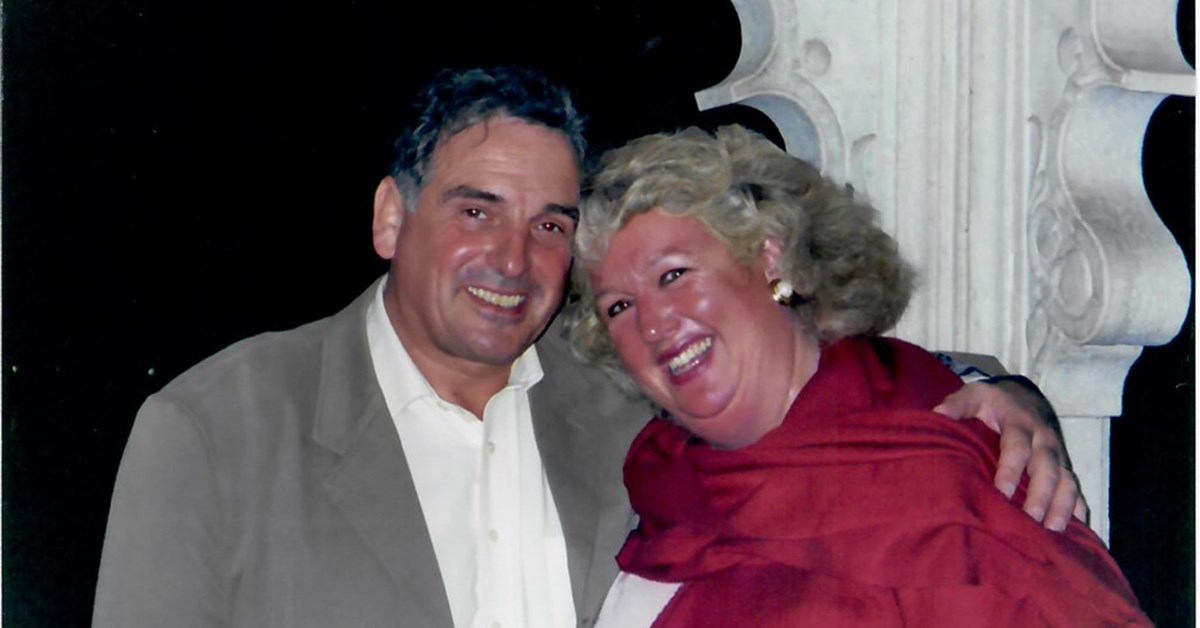
“MAGGIE was a huge personality, highly intelligent: she spoke several languages. Initially, she was diagnosed with ‘semantic dementia’, but it may then have become Alzheimer’s as well.
“I was fortunate in that she retained her personality throughout, although she went ten years without being able to conduct a conversation. She couldn’t do anything for herself, but she did not become aggressive or deeply depressed, and she knew who I was, and was affectionate right to the end, for which I always shall be grateful. I lived with her in the care home four days a week, and enjoyed being with her.
“On balance, my experience of the care home was very good. Most of the time, the standard of care was very good: the people were delightful, and there was a happy family atmosphere. The problem I had was with decisions affecting my wife’s welfare. There were more and more to be made as she deteriorated and complications arose, and I had power of attorney, as well as being her husband, and therefore I was going to make all those decisions. My wife was my responsibility; I was her spokesman. I discovered that people didn’t always understand that.
“One thing I’ve learnt, not just from my own experience but from all the people who have written to me since I wrote the book, is that, once you put somebody into a care home, the staff tend to take over, and they ignore the views of the relatives. They work things out between them — carers, doctors, physiotherapists — and they do so in accordance with their own protocols and regulations.
“I found myself in quite serious disagreement with a lot of these people. Sometimes, their decisions were excessively influenced by the risk to themselves of falling foul of regulations, or the prospect of litigation. I had to confront them and make sure that all decisions were based on my wife’s interest, not theirs.
“For example, I was committed to keeping Maggie exercised. That’s really important for elderly people, but the ‘experts’ invent all sorts of reasons to try and stop them walking. These are nonsense in most cases, but, for people who have been trained in this, it has become almost a religion, and they completely lose sight of the interests of the person whom these rules are supposed to be protecting.
“Of course, there has to be regulation, and probably quite a lot of it; but it has gone too far. It’s not just the regulations themselves: it’s people’s ability to apply them properly. There’s an old saying, that rules are for the guidance of wise men and the observance of fools. A proper professional will adapt the regulation to individual circumstances; the fool will blindly enforce it. And regulations can kill, make no mistake.
“Care homes are small businesses under the weight of a massive bureaucracy. They’ve got lots and lots of bosses to whom they have to report, and they spend their lives being hauled over the coals for one thing or another. It’s no wonder that they feel frightened to make a decision other than just to tick the box and go with the system.
“On many occasions, I had to stop them from sending my wife to hospital, and each time they said: ‘We think you’ve made the right decision. We hope you understand why we can’t make that decision.’ What they meant was that their professional status is at risk if something goes wrong in the care home, but nobody blames them for sending somebody to hospital who then catches something in the hospital and dies.
“I had a consultant surgeon refusing to perform a simple operation because of a supposed risk arising from my wife’s dementia. He wrote to thank me afterwards because I insisted that he do it.
“I have got a lot of support from within the sector. Senior doctors have told me that, but for my interventions, my wife would have died five years earlier at least, and her quality of life would have been much diminished.
“What advice would I give to others caring for a loved one? Everybody has to do what they are comfortable with and able to do, but I’m saying: Don’t let go, and don’t be put off. The earlier you can get power of attorney, the better. You are the customer and you give the instructions. Make clear arrangements. . . Make clear who is making the decisions regarding your spouse’s or parent’s welfare. Is it the care home? Is it the doctor? Is it you?
“You need to get a real sense of the life that [your loved one] is going to lead [in a home] — that they’re not just going to be got up in the morning and dressed, taken for a meal and then sat in front of a television all day.
“You need to have regular contact with the senior management of the home, and regular review meetings where you can say what you like, and what you don’t like.
“What is the home’s policy on continuity of care? That doesn’t get considered properly because there’s no agreed way of measuring it. The [Care Quality Commission] monitor things they can count, like how many falls there have been, or how many missed medications. Continuity of care is much trickier. You need to say: ‘[My loved one] needs at least one or two people who are dealing with her regularly. She doesn’t want strange new people coming in every day to do all her personal stuff.’
“That’s what upset my wife — and, when she got upset, they tried to give her medication. In the end, I gave them a list of carers who were authorised to deal with her, and I told them that, under no circumstances, other than an emergency, was anybody to touch her who was not on the list.
“I know that I have a lot of advantages, and most people are not in a position to be quite as assertive as I was. That is precisely why I’m making a fuss now. I want the system, and the culture, changed, so that other people don’t have to battle with it.
“And churches should talk about these matters, especially churches with elderly congregations. . . A lot of people don’t want to talk about it, and if friends offer to help, they sort of say: ‘Thank you I’m all right.’
“I say: Involve your friends! Most people who offer to help want to help, [but they] need to offer it in a way that won’t easily get knocked back. . . Churches should just encourage people to discuss [these issues] in groups. How do you cope? I mean, the church is a community, and it could help a lot.”
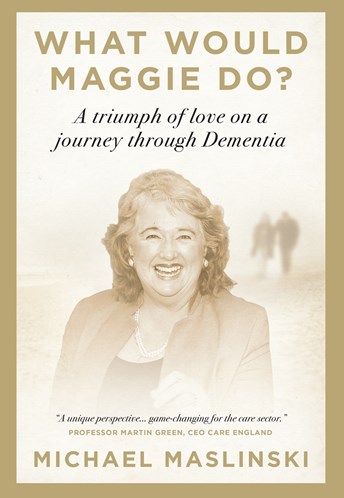
What Would Maggie Do? A triumph of love on a journey through dementia, by Michael Maslinski, was published last month by Unicorn at £20 (CT Bookshop £18); 978-1917458627.