A PROPOSAL for the formation of a new independent Bosnian Orthodox Church could threaten intercommunal tensions in Bosnia and Herzegovina, where religious affiliation is tied closely to ethnic belonging.
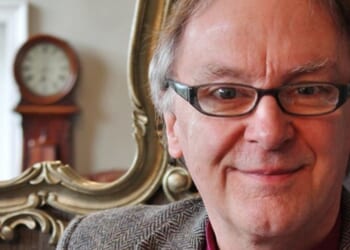
The proposal, set out by a former Grand Mufti of Bosnia and Herzegovina, Mustafa Ceric, has been met with harsh criticism and allegations of stoking interreligious tensions in this Western Balkan country, where there has been a resurgence of religion in the public sphere.
“Autocephaly is not an act of separation, but an act of responsibility. It does not mean the negation of Orthodoxy, but its rooting in the Bosnian historical and cultural space,” Mr Ceric wrote in the weekly Slobodna Bosna.
“The ‘Bosnian Orthodox Church’ would not be against anyone, but for Bosnia: for its sovereignty, its peace, and the dignity of Orthodox believers, who would perceive Bosnia as their only homeland.”
The Interreligious Council of Bosnia and Herzegovina, an interfaith body representing the country’s main religious communities and established in 1997 after the war, denounced the idea as “malicious and irresponsible”. The council includes representatives of the the Roman Catholic Church, the Islamic community, and the Jewish community, as well as the Serbian Orthodox Church, whose Metropolitan Hrizostom (Jevic) of Dabar-Bosna is the chair.
It issued a statement on 13 January calling on all leaders to distance themselves from the suggestions and statements by individuals concerning Mr Ceric’s idea. “Such statements, made in public with obvious intent, unfortunately contribute to the creation and deepening of distrust and the disruption of interreligious relations,” the group wrote.
The Dayton Agreement of 1995 ended several years of war after the collapse of Yugoslavia. The peace accords established a new fragmented government structure dividing the country into two entities: the Bosniak-Croat Federation of Bosnia and Herzegovina, where Croat Roman Catholics and Bosniak Muslims are largely based, and the Serb Orthodox majority in Republika Srpska (the Serb Republic).
Responding to the idea of establishing an independent Bosnian Church, Metropolitan Fotije (Sladojevic) of Zvornik-Tuzla, in the Serbian Orthodox Church in Bosnia and Herzegovina, dismissed the idea, warning that such a move could be perceived as “an act of war”.
“By announcing your Bosnian Orthodox Church, you are, Mr Ceric, for war, not peace, and we know that ordinary people are tired of wars,” Metropolitan Fotije said.
“We hope and pray to God . . . that your idea will not come true, because that would be a disaster for all the peoples living in Bosnia and Herzegovina and Republika Srpska.”